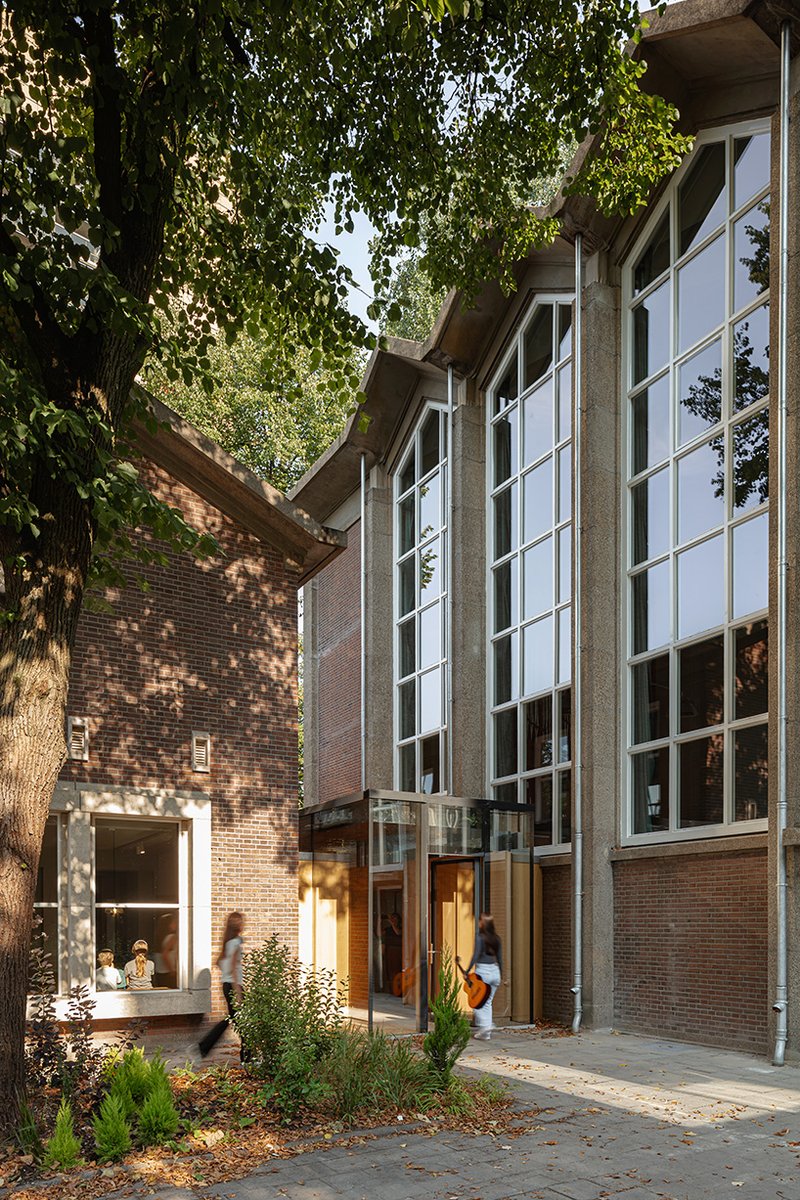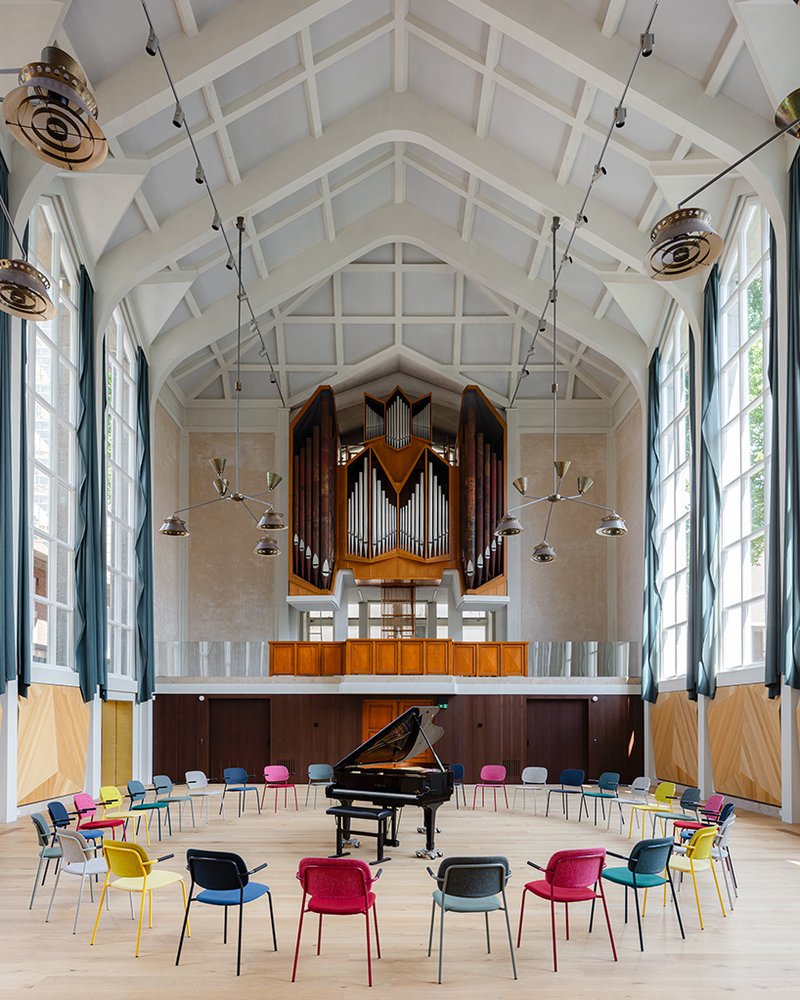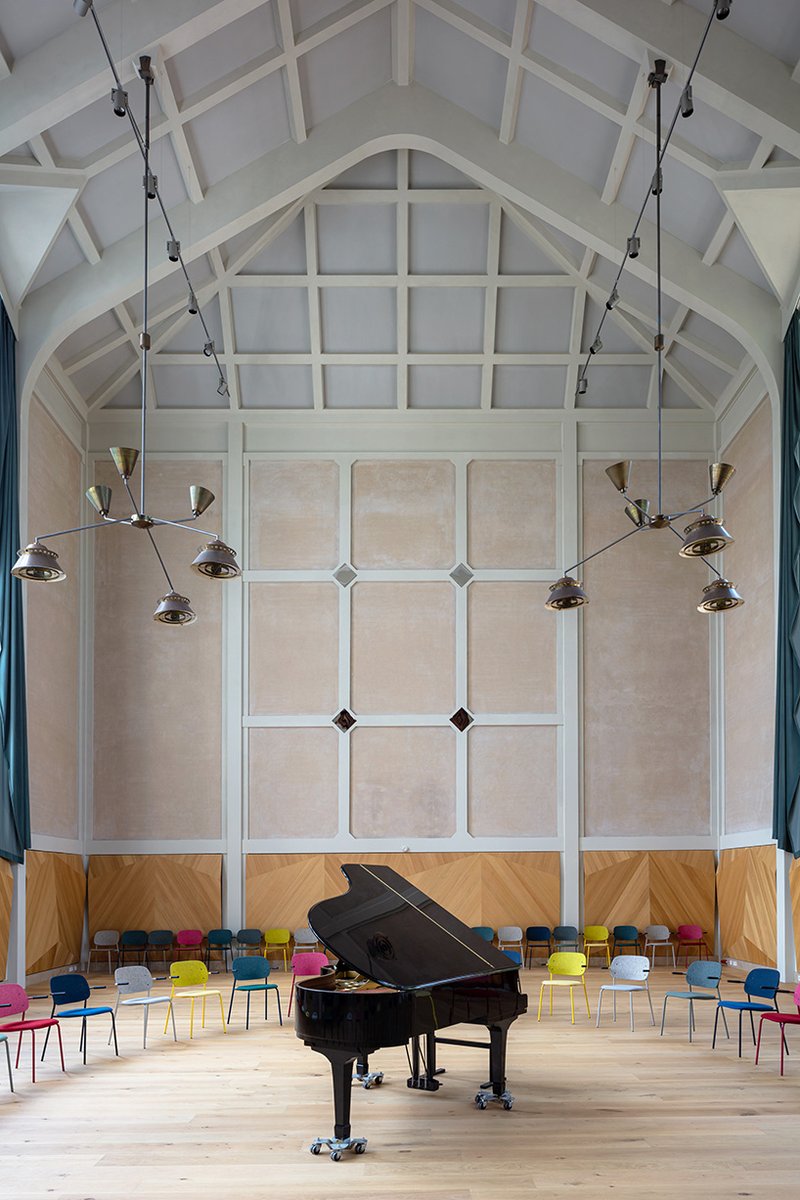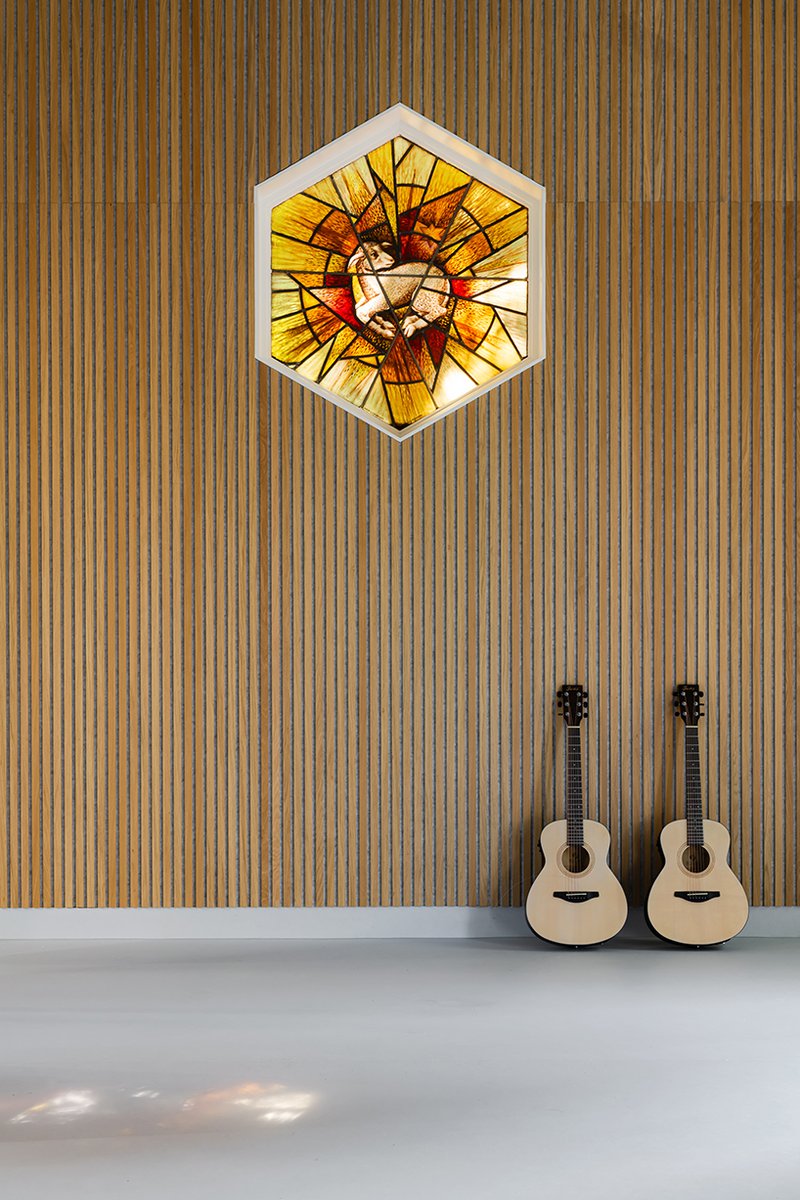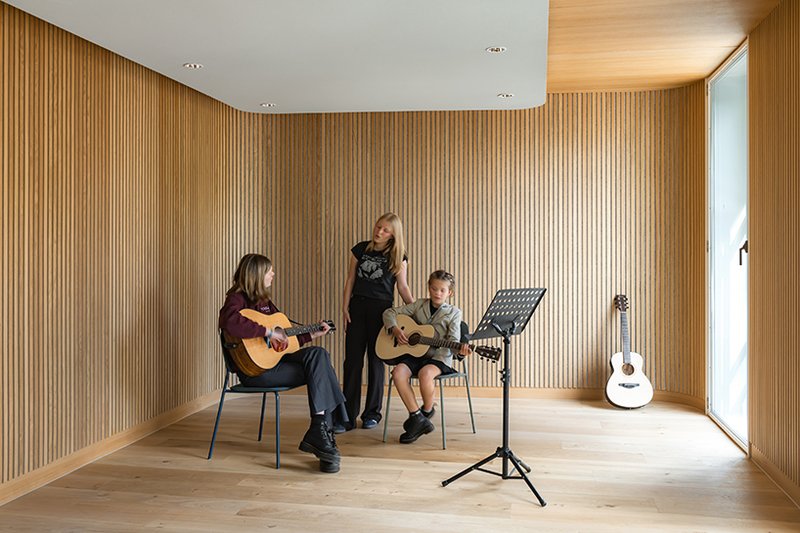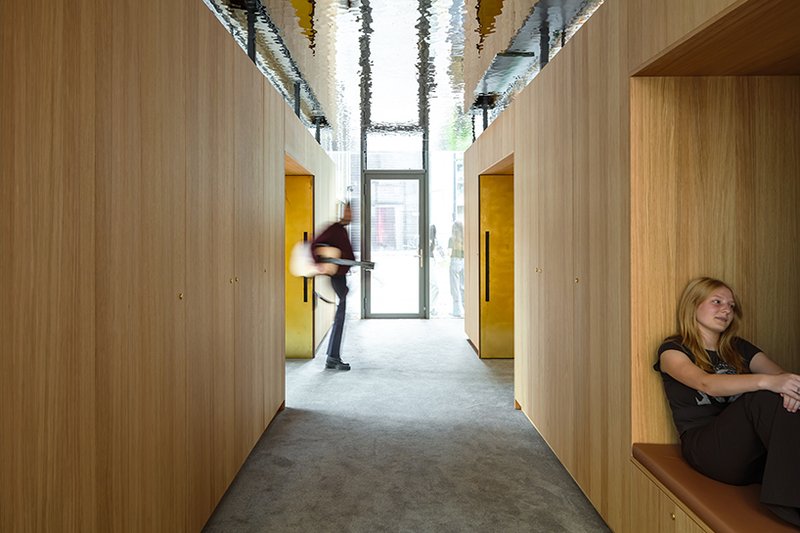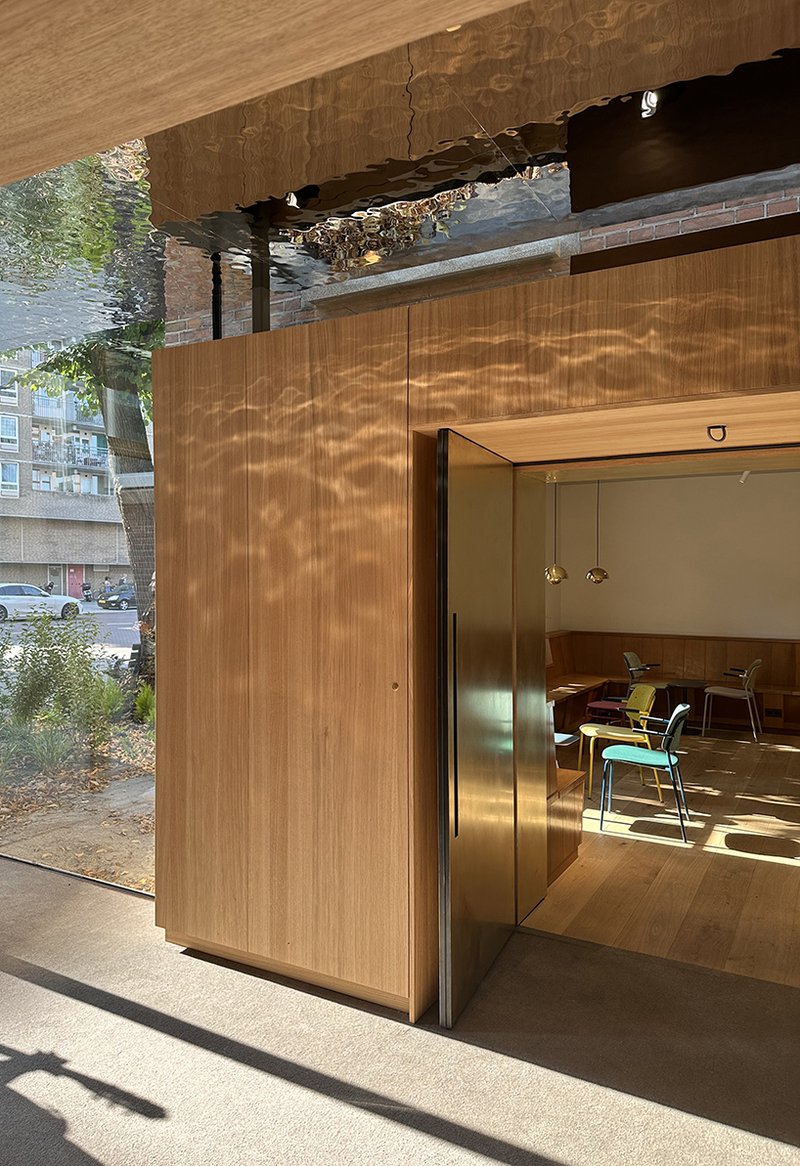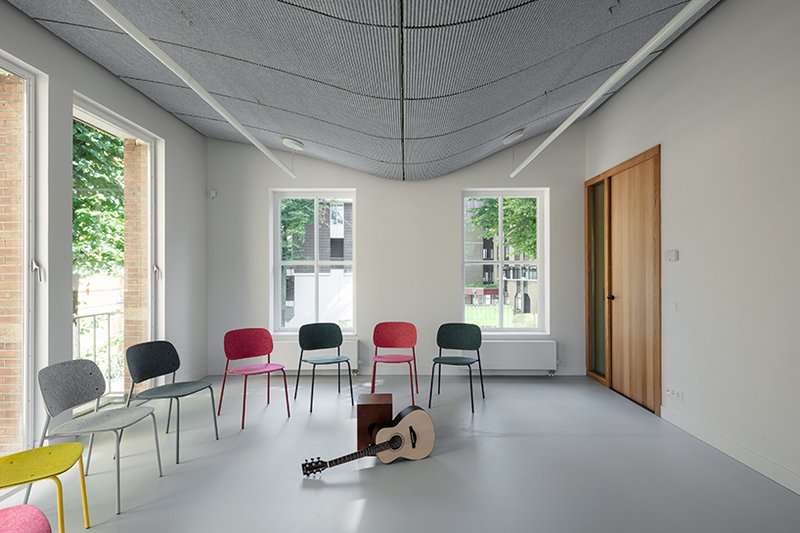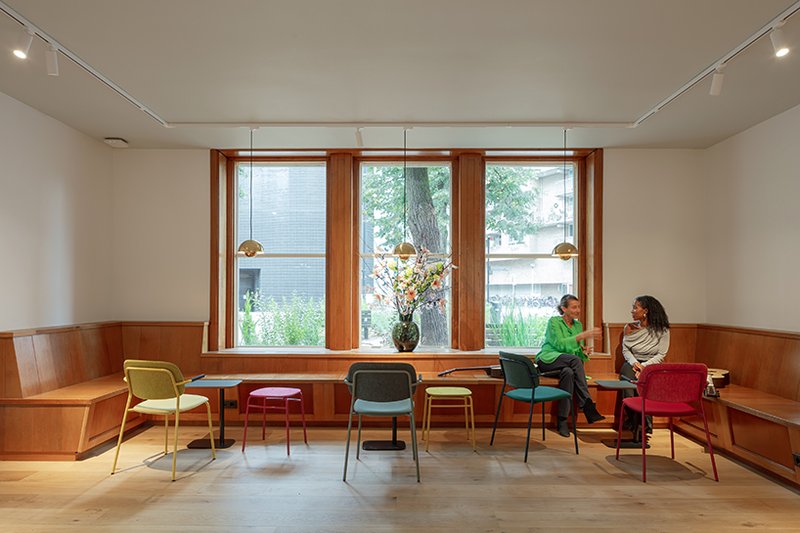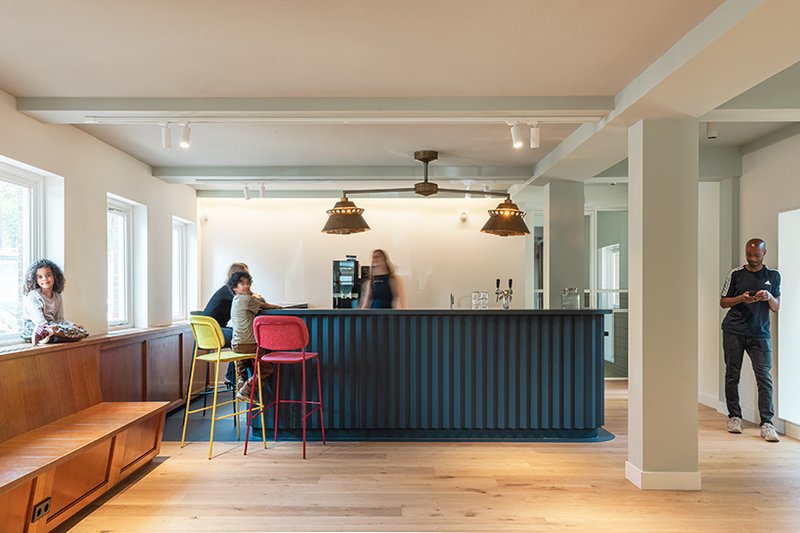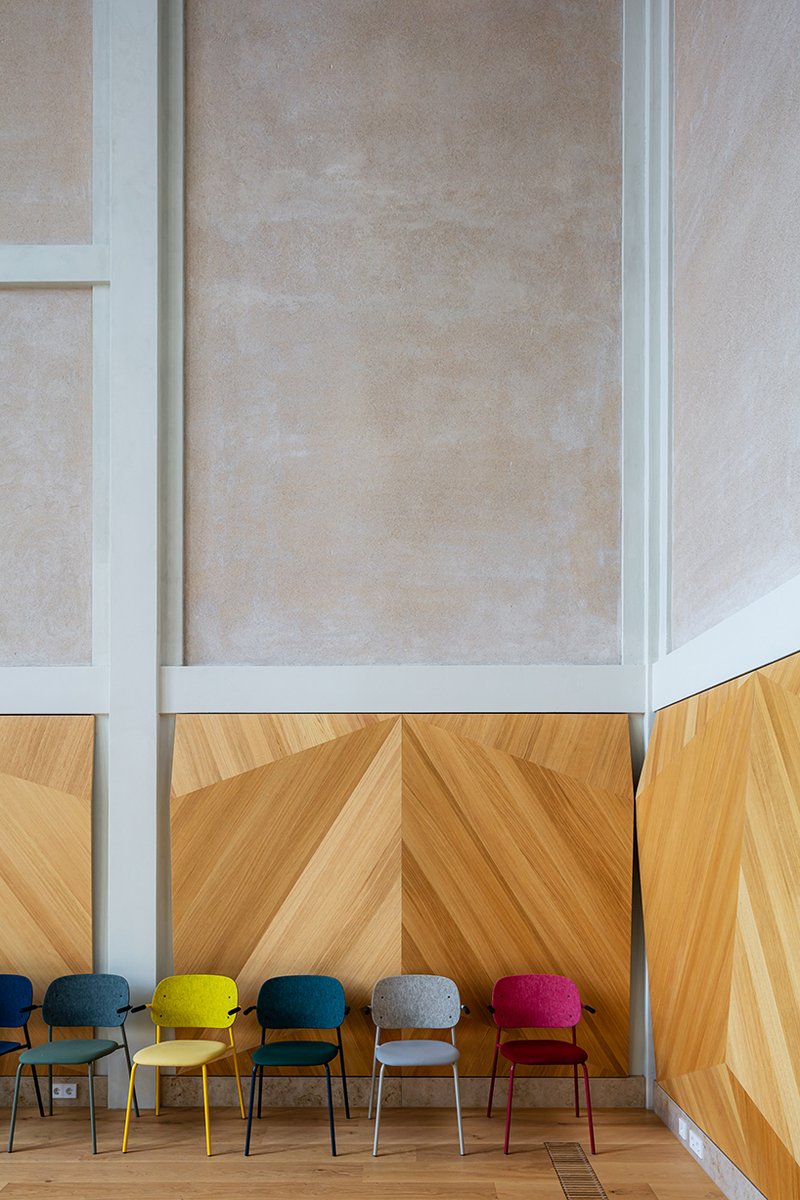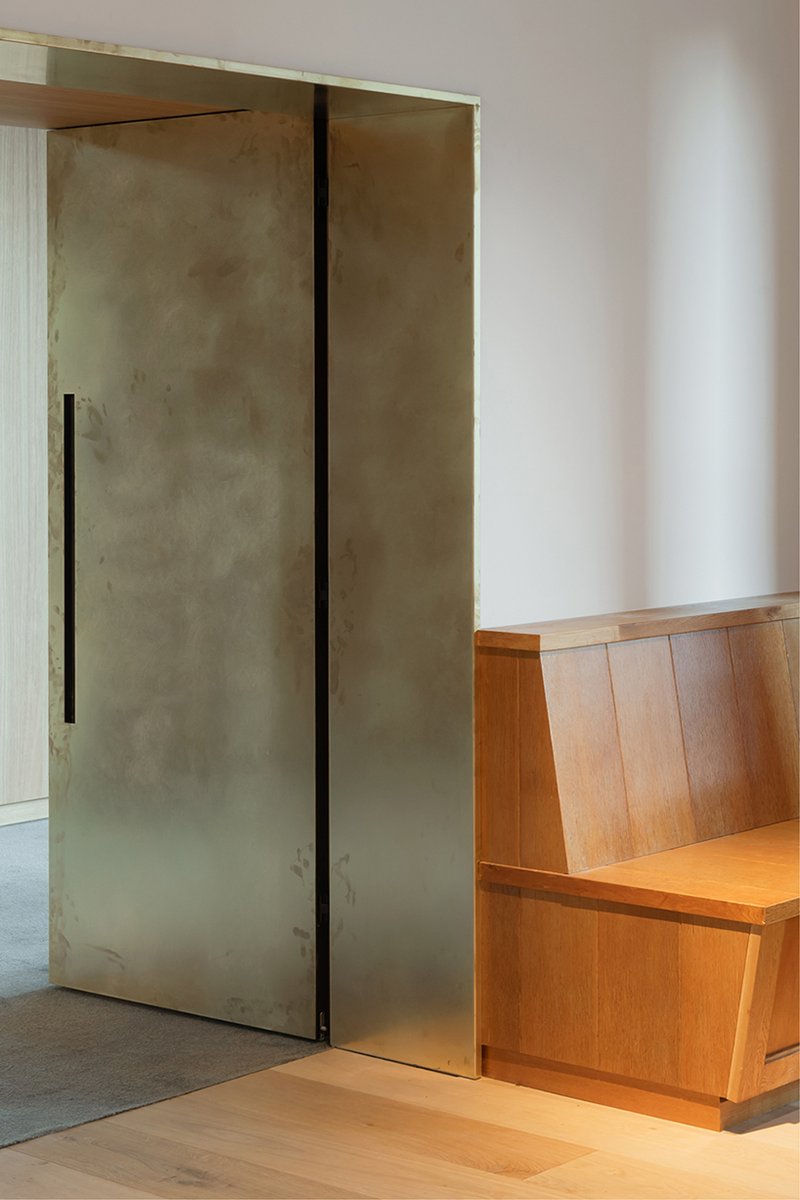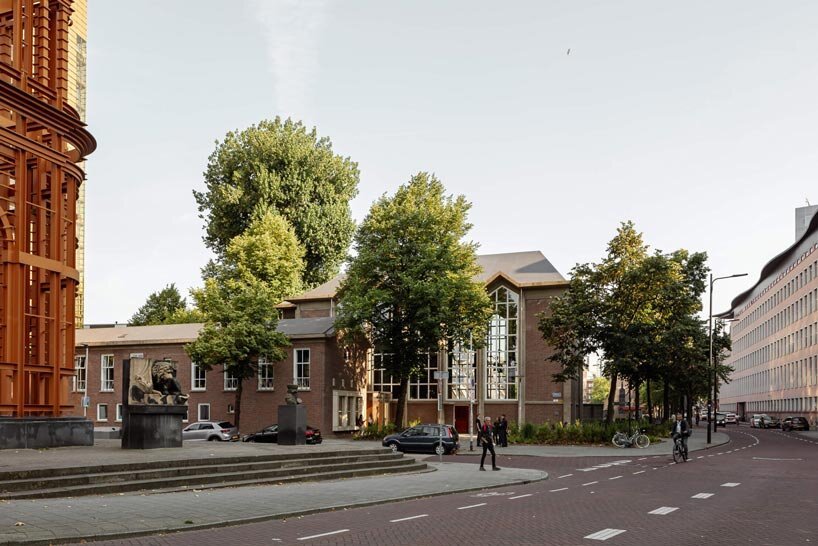
In the heart of Rotterdam, a narrative of architectural poetry unfolds within the walls of the city's last Mennonite church, a relic of 1951's post-war resilience. Now reimagined by the visionary minds of Powerhouse Company into the Muziekwerf, this once solemn sanctuary breathes anew as a vibrant venue for youth-centered musical exploration. Commissioned by the philanthropic beacon, Droom en Daad, this project transcends the boundaries of time, transforming a sober ecclesiastical edifice into a living, breathing cultural hub. The original plastered concrete cassette ceiling, a hallmark of its mid-century inception, emerges as the spatial soul of the main music hall, where notes soar and dreams take flight. Within this sacred framework, the 1954 Flentrop organ stands as a testament to the past, its pipes now echoing with the ambitions of tomorrow's maestros. Beneath the lofty heights, chandeliers of grand elegance descend, casting a warm glow that highlights the hall's monumental scale, yet leaving its structural essence unaltered. A philosophy of circular design weaves through the very fabric of Muziekwerf, where material reuse and sustainable construction strategies intertwine. The pews, once bearing the weight of silent prayer, now serve as both seating and wall paneling in the foyer, their wood narrating tales of devotion and community. Slate tiles, once underfoot in the hallowed sanctuary, now grace the entrance, grounding visitors in the continuity of history. The architectural narrative is further enriched by the meticulous restoration of wooden window frames, their patina preserved as markers of the building’s enduring lineage. Sustainability is not merely a concept here; it is the very ethos. Recycled PET forms the seating, restored Bakelite hardware and lighting fixtures whisper of bygone decades, while climate-positive marmoleum flooring and recyclable PVC roofing embrace the future. New tiles in harmonious ton-sur-ton compositions align with the original finishes, creating a seamless dialogue between past and present. The interior spaces, each a unique symphony of acoustics and functionality, are sculpted with a palette of soft hues and exposed concrete surfaces, revealing a layered history that invites introspection. Design elements such as plaster ceiling clouds and concrete window frames echo the details of the 1950s, ensuring a continuous thread between epochs. Environmental comfort is ingeniously addressed through integrated systems; underfloor heating in music studios liberates the windows from radiators, allowing unimpeded streams of daylight to dance across the rooms. In grander spaces, ceiling-mounted radiant panels whisper warmth, leaving the concrete trusses bare, a testament to the building’s architectural integrity. Light oak flooring and sound-diffusing panels weave warmth and acoustic mastery, reflecting the essence of the original church benches. The gentle embrace of natural light is amplified by the use of blue velvet curtains and reflective glazing on the balcony, channeling illumination into the structure’s upper reaches. Urban connectivity finds new expression through a thoughtfully crafted entrance, the sole new construct within this transformative project. Nestled between neighboring edifices and bordered by a tranquil waterway, this portal features an undulating reflective ceiling, a tribute to the dance of water reflections. This transitional space elegantly bridges the exterior public realm with the interior’s vibrant heart of foyer, offices, and music studios. Enlarged windows and repurposed church benches foster a dialogue between the interior and the bustling public square beyond. In collaboration with Droom en Daad, Powerhouse Company has succeeded in repositioning this once concealed church as a beacon of public cultural resonance. Muziekwerf stands as a testament to the transformative power of adaptive reuse, where material continuity and considered interventions breathe contemporary life into a heritage structure. Within these walls, the architectural identity is not only preserved but celebrated, as a new generation finds its voice in the echoes of Rotterdam’s storied past.