In the serene symphony of modern retail environments, where the cacophony of bustling aisles and the gentle hum of commerce create a backdrop for human interaction, emerges a silent companion. MOBI, a self-driving robotic cart, stands as a testament to the harmonious fusion of technology and daily life, transforming the mundane act of shopping into an experience of poetic elegance.

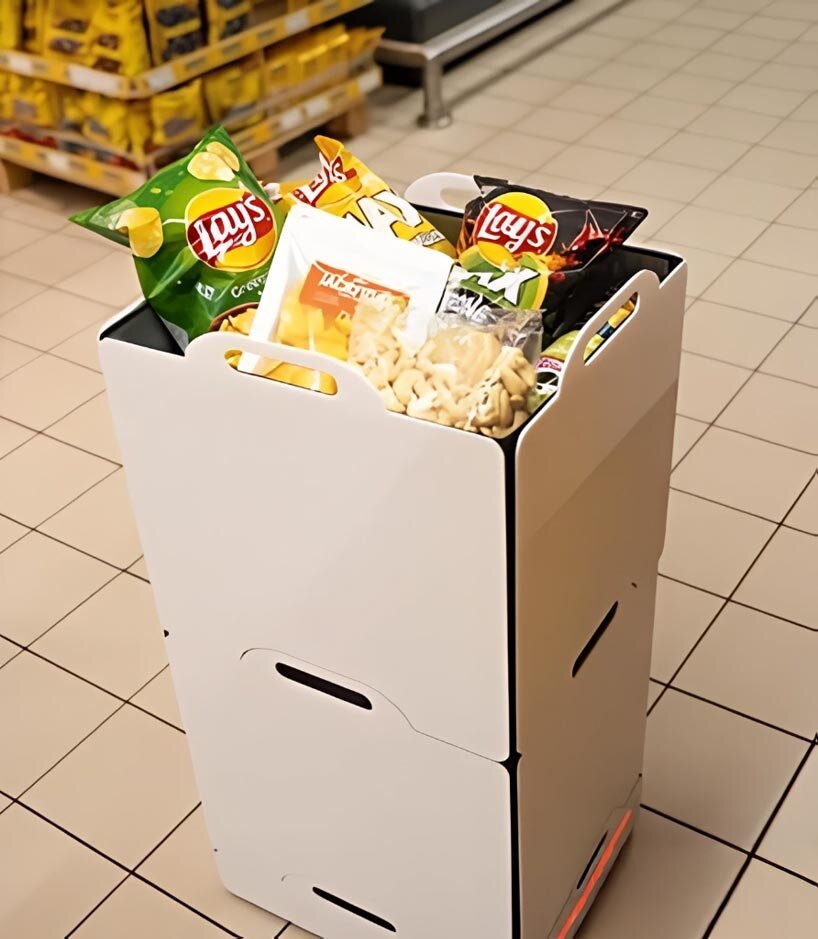
Envision a cart that moves with the grace of a ballet dancer, its every motion orchestrated by the invisible hand of autonomous navigation. Designed by the visionary Andrew Kikta, MOBI is not merely a utility but a statement of modern ingenuity. Its compact form, lightweight yet resilient, is capable of bearing the weight of everyday essentials, up to 30 kg, with an ease that belies its strength.

Picture the cart's journey beginning within the confines of a car trunk, unassuming yet ready to unfurl its capabilities in the labyrinth of retail spaces. As it glides alongside the user, it becomes an extension of their presence, responding to the subtle guidance of a handheld remote, its path unerring, its course steady.
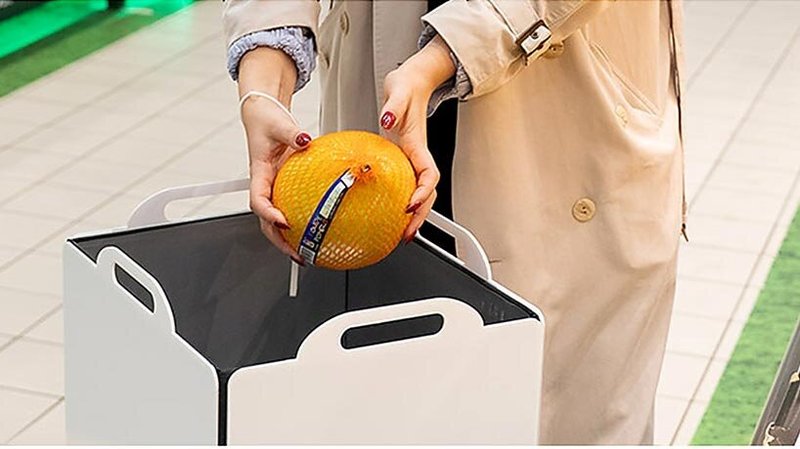
The design of MOBI speaks volumes, not in words but in the silent dialogue of materials and form. Two foldable, multi-purpose containers crown its structure, each a marvel of engineering. With a single, fluid motion, they transform from compact entities into robust baskets, their thermal insulation cradling perishables with care. They can be stacked or used singly, their self-supporting architecture a testament to thoughtful design.

Powered by a battery that pulses with energy for four continuous hours, MOBI's heart beats in rhythm with the user's journey. It is a dance of autonomy and guidance, a partnership in motion, aided by the optional attachment of a tracking device to ensure its presence is never lost amidst the throng.
MOBI's essence is captured not just in its mechanical prowess but in its ability to adapt to diverse retail landscapes. From the intimate corridors of small shops to the expansive avenues of grand grocery stores, it navigates with a quiet confidence. It is a companion for the solitary shopper and the family alike, a facilitator of extended shopping adventures.
In this creation, Andrew Kikta has not merely designed a cart; he has sculpted an experience. MOBI invites us to reconsider the boundaries of utility and elegance, to see the beauty in the convergence of technology and human need. It is a reflection on the possibilities of design, where every line, every curve, and every function speaks to the soul.

In the broader narrative of retail experiences, MOBI stands as a chapter of innovation. It beckons us to step into a world where the ordinary is rendered extraordinary, where the act of purchasing becomes a journey of discovery. As it weaves through the spaces of our modern lives, it reminds us that even in the most routine of activities, there is room for grace and wonder.