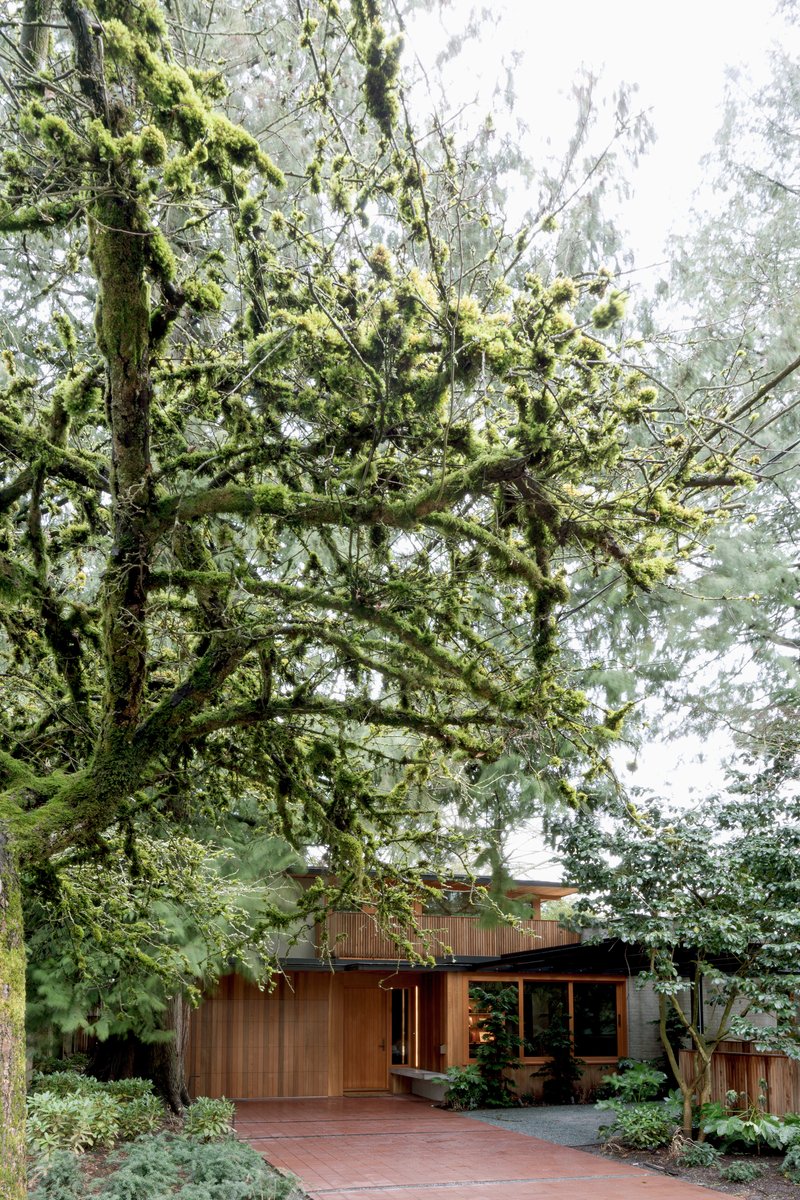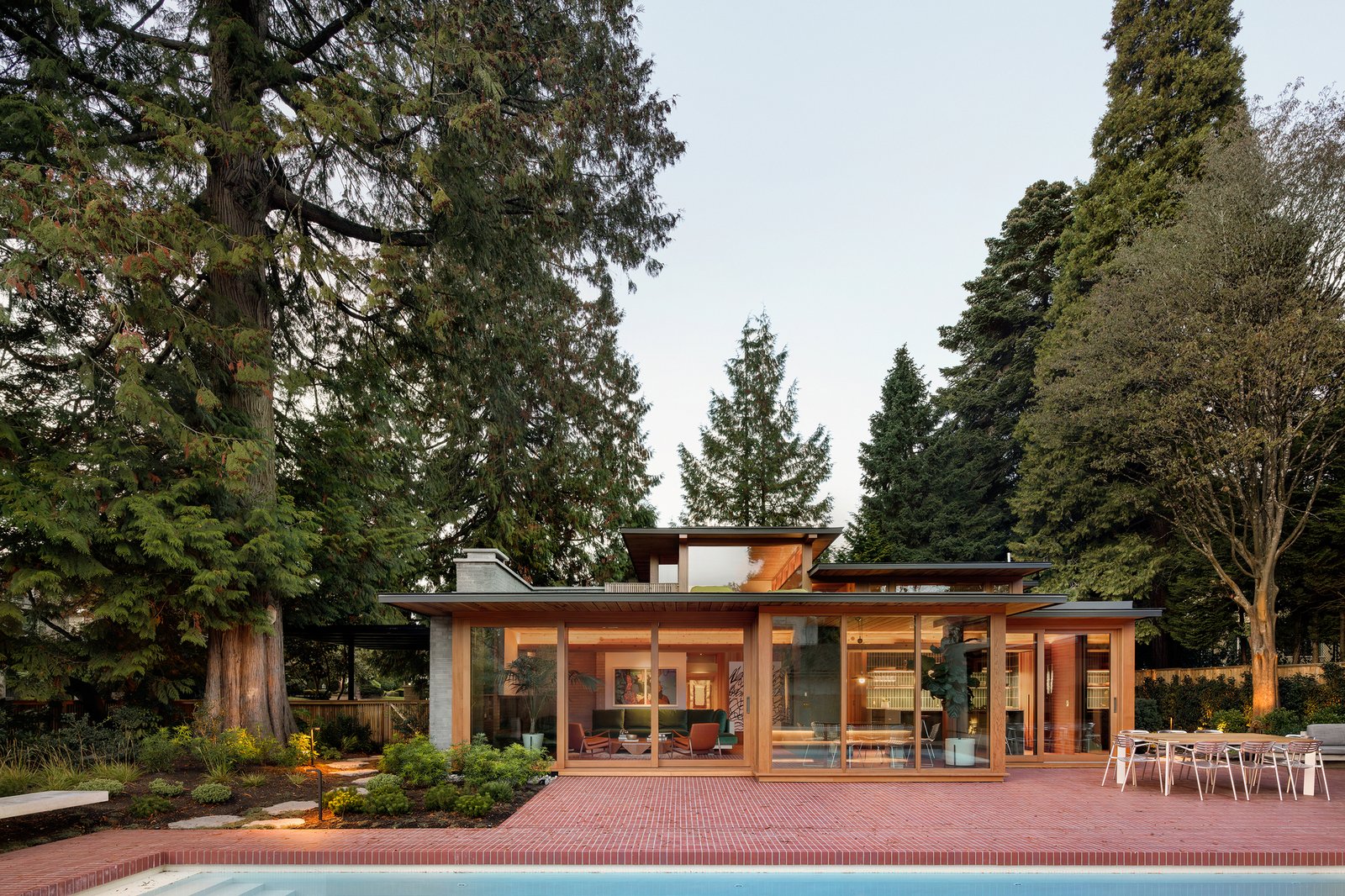
Nestled within the serene embrace of a south-facing slope in Vancouver, the Osler House stands as a testament to architectural resilience and the poetry of materiality. Originally crafted in 1952 and lovingly renovated by Canadian architect Ron Thom in 1982, this mid-century bungalow whispers stories of a bygone era, its presence a rare jewel amidst a landscape where grander structures have staked their claim.
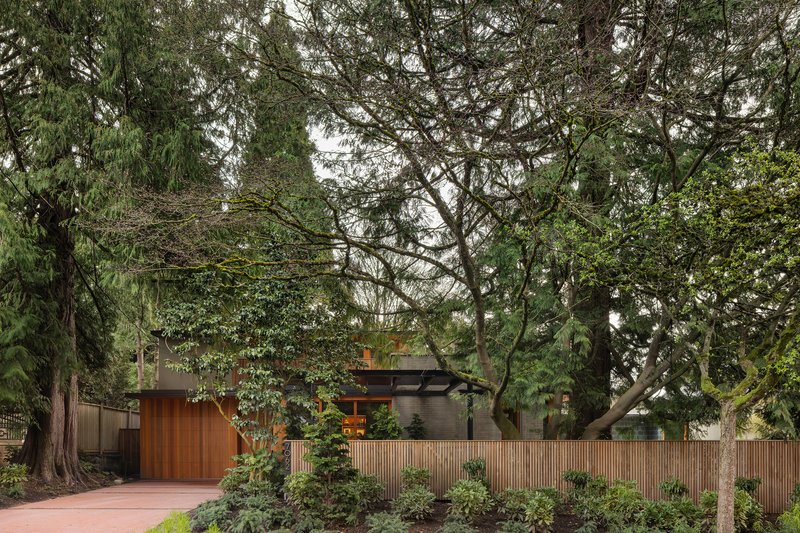
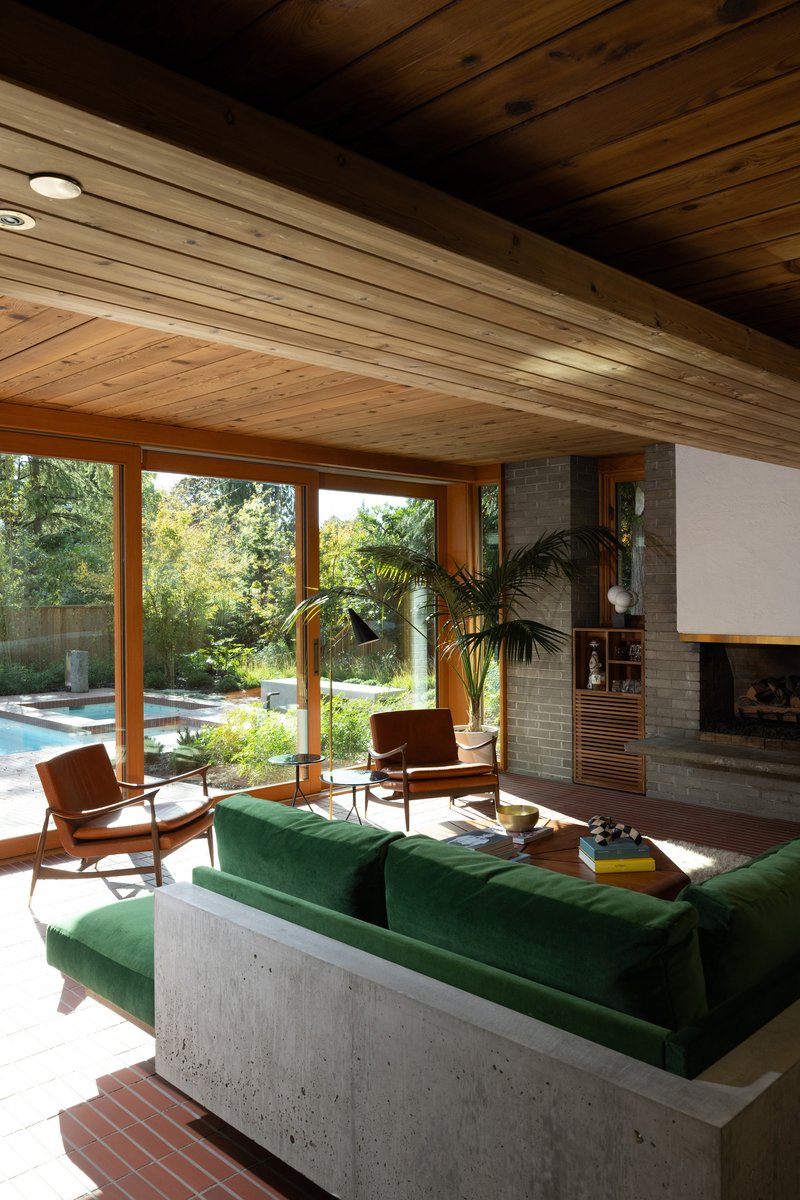
Enveloped by the delicate canopies of flowering trees, the single-story residence with its mezzanine delights in the interplay of light and shadow, its spaces shielded by staggered wooden roof planes. A concrete block fireplace stands sentinel, guarding the living area from the street's gaze, while lofty windows draw the southern light inward, intertwining the home with its verdant surroundings.
The recent transformation of this 240-square-meter dwelling is a symphony of renewal, a delicate balance of seismic, structural, and thermal enhancements. The original wooden structure, once beleaguered by time, now finds new life. A south-facing terrace unfurls its embrace, alongside a tranquil pool and auxiliary pavilion, inviting moments of repose and reflection.
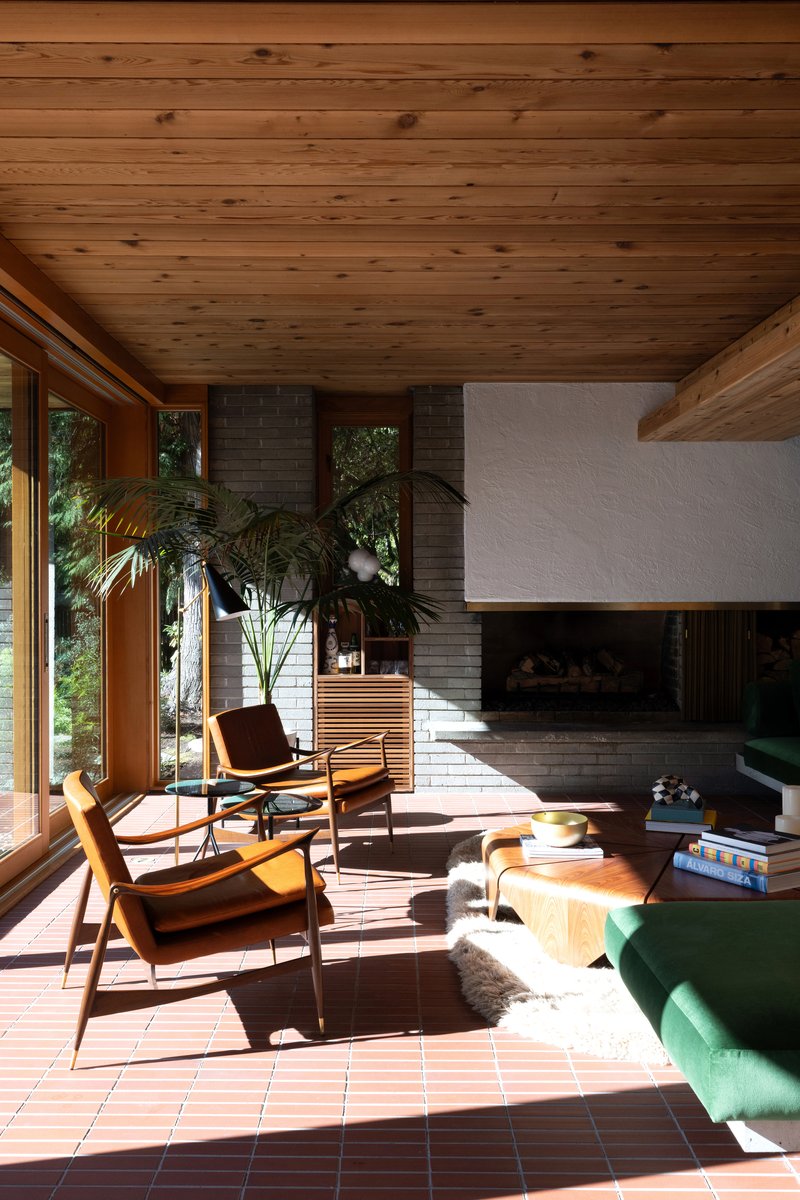
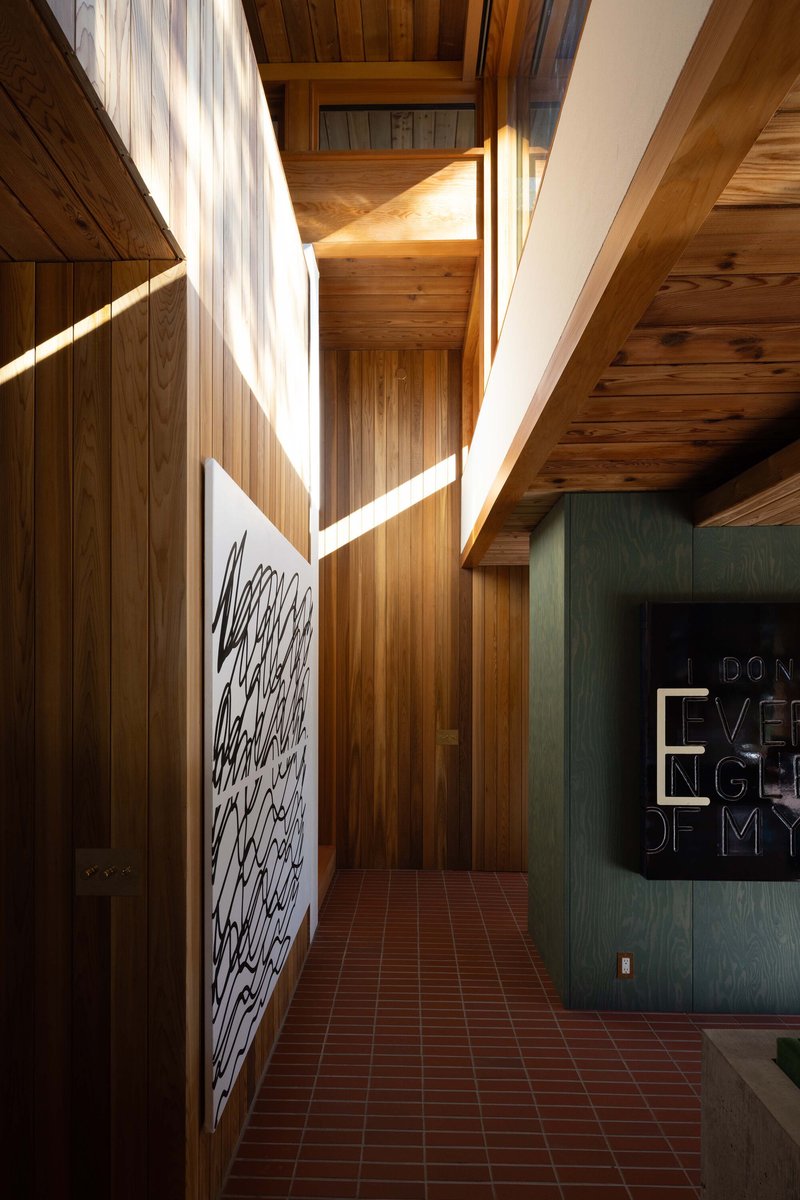
Preservation and innovation dance in harmony here, as the original fireplace and the home's organizational spirit remain intact. Yet, the 1982 staircase has been reimagined, allowing natural light to cascade through the main entrance, forging a seamless connection between the lower floor and the garden beyond. Dormitories and bathrooms have been thoughtfully reconsidered, while bespoke joinery caters to modern sensibilities.
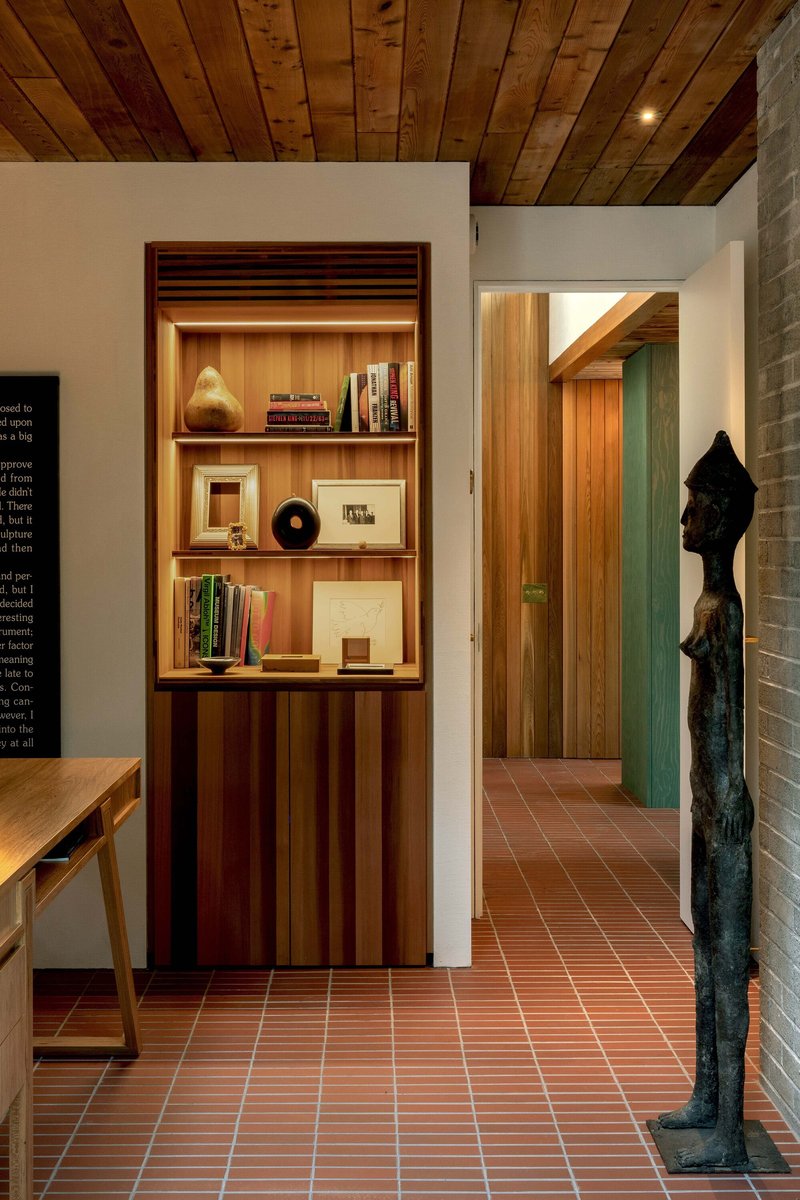
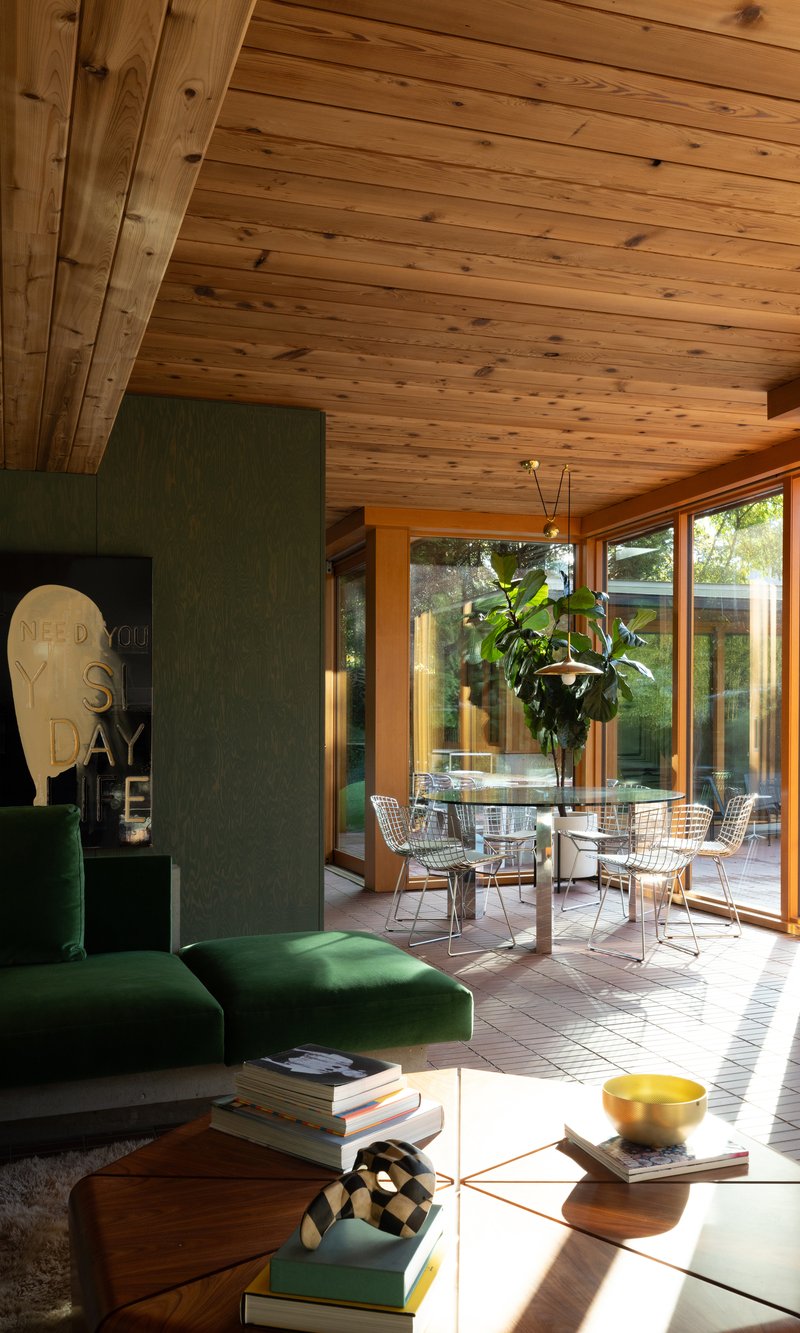
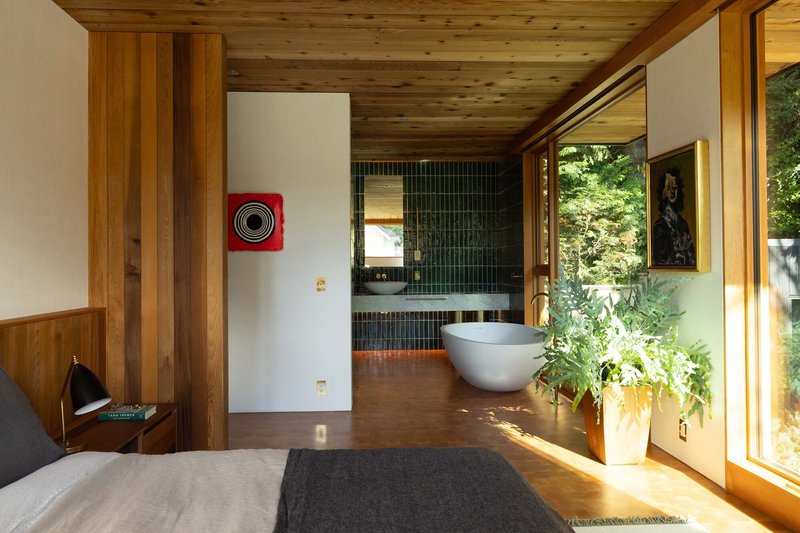
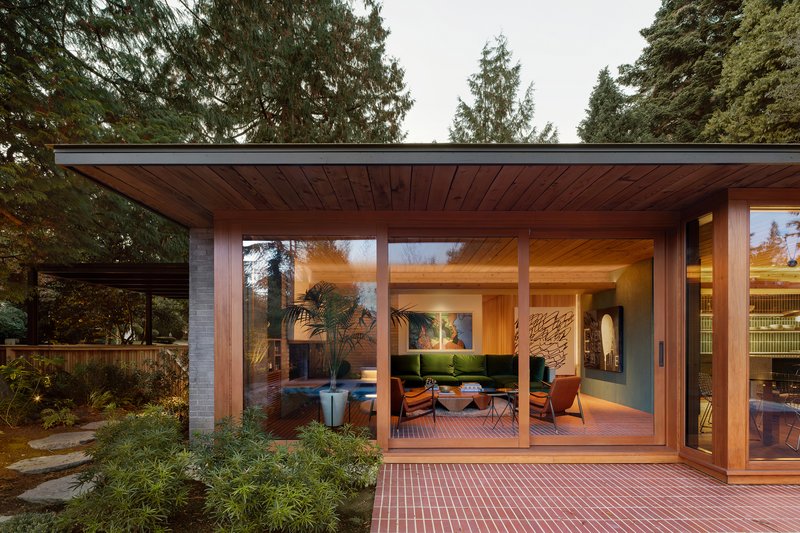
The project’s material ethos draws from the preserved wooden elements and concrete blocks of the original house. Archived documents guided the revival, embracing local timber techniques to craft a narrative both coherent and enduring, echoing the intentions of the original architect. Locally crafted wooden windows have been replaced in situ, their presence reshaping living spaces to frame vistas of the pool, terrace, and master suite, ever enhancing the dialogue with the treetops.
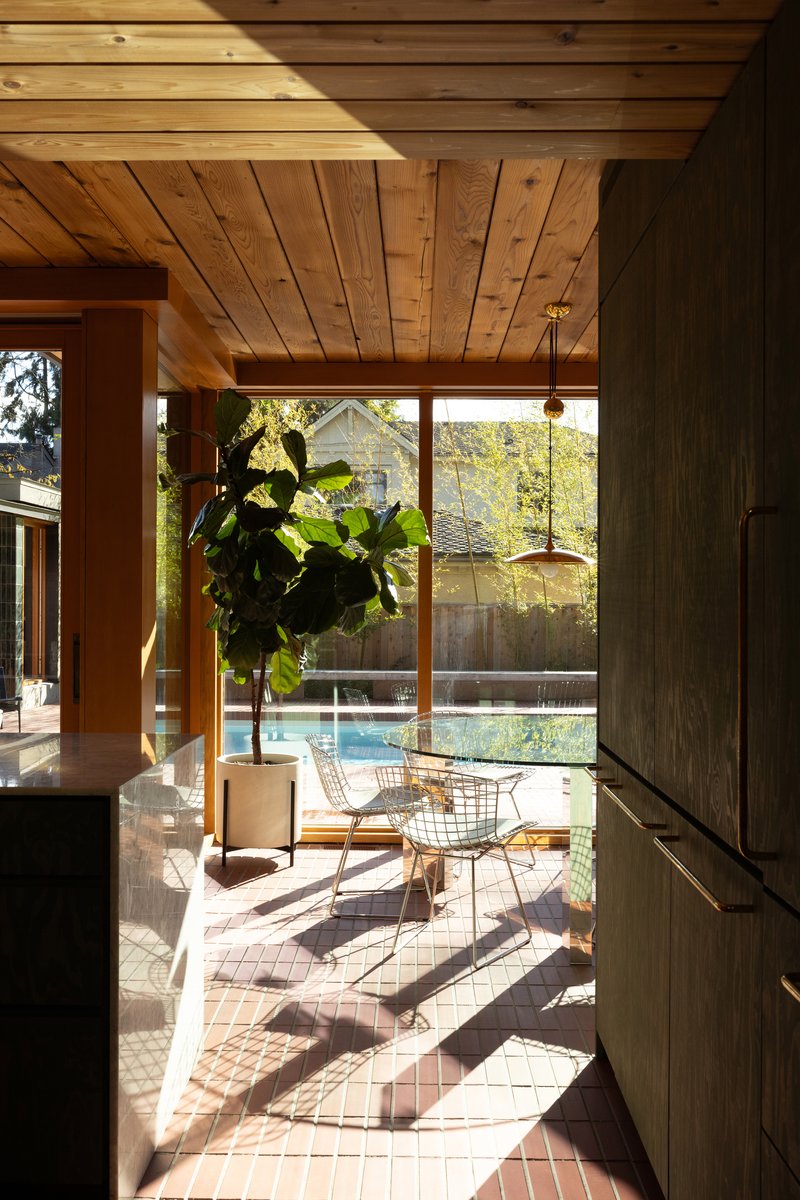
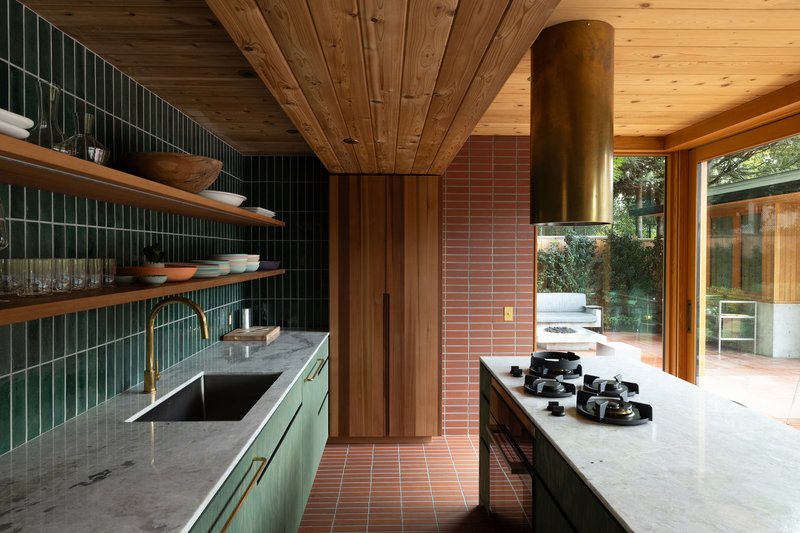
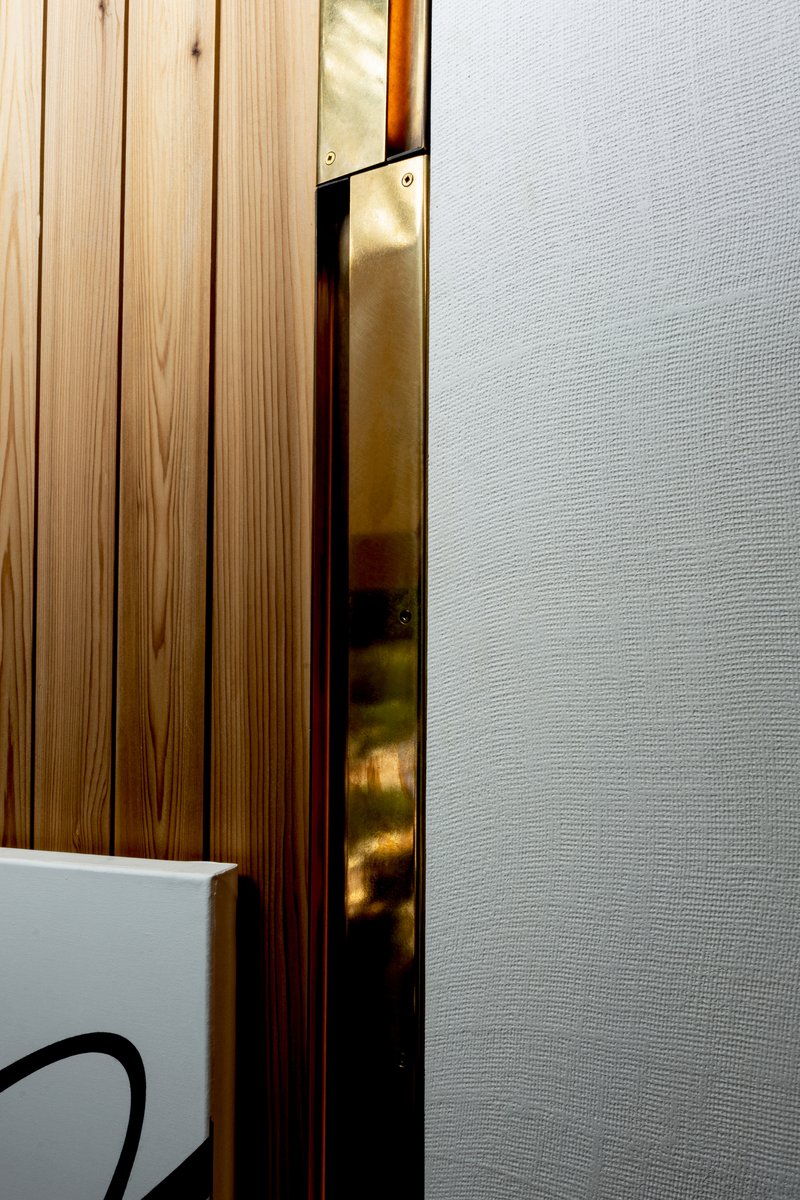
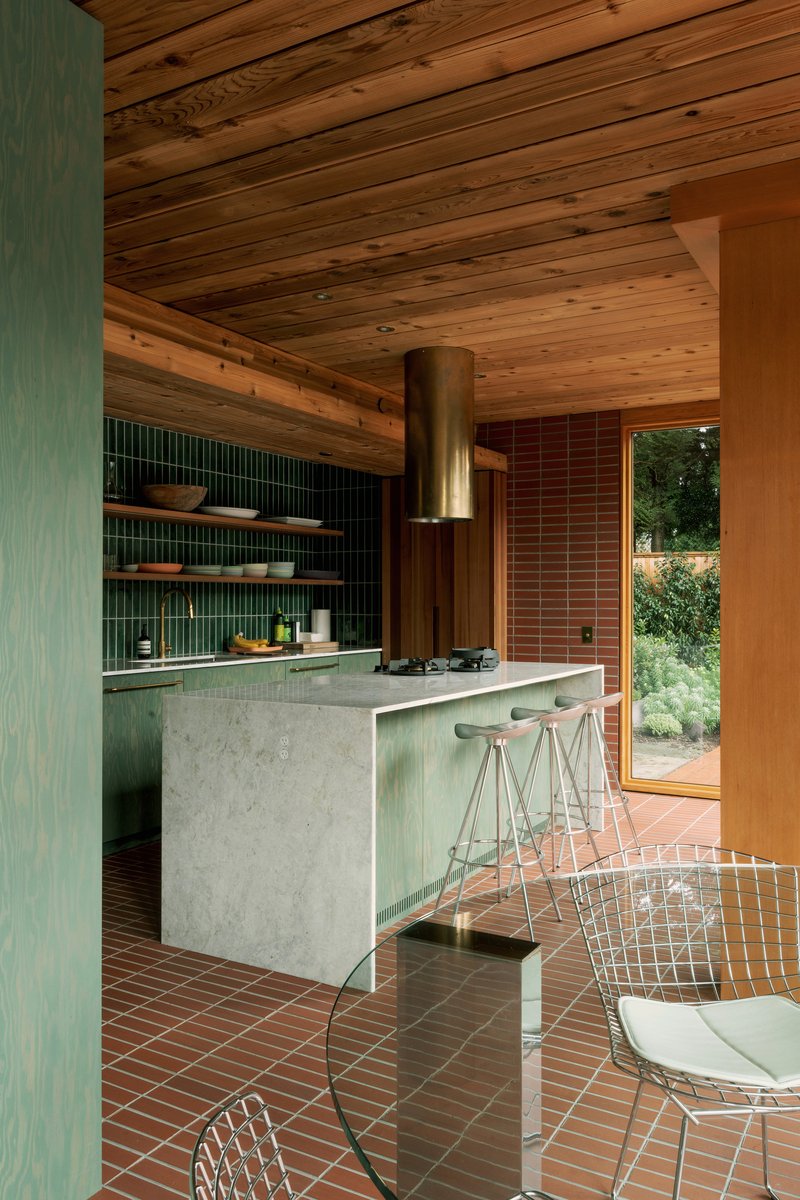
The structural canopy has been meticulously repaired and lovingly anointed with oil, while walls stand rejuvenated, their gypsum-clad surfaces painted to serve as an understated backdrop for the client’s art collection. The upper floors gleam with wooden finishes, whilst the lower and main levels are fortified and adorned with brick tiles that extend gracefully to the sunlit pool terrace. Where function dictates, the brick transitions to a glazed surface, a testament to thoughtful design.
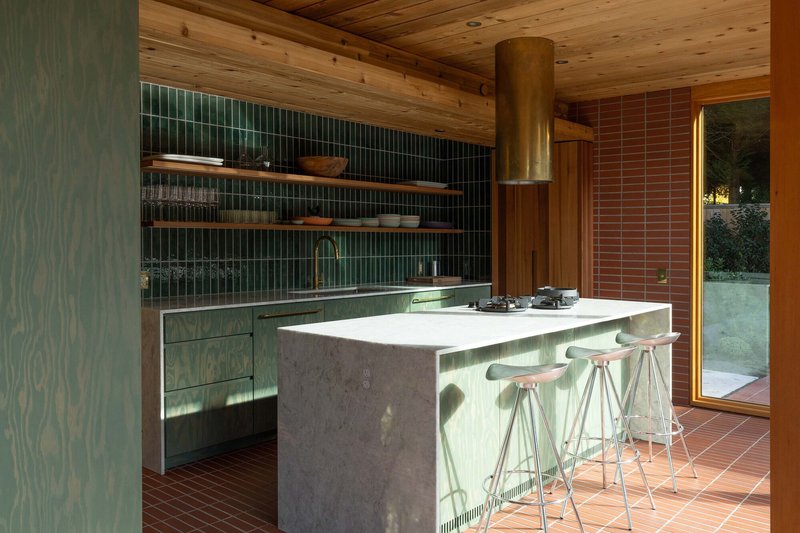
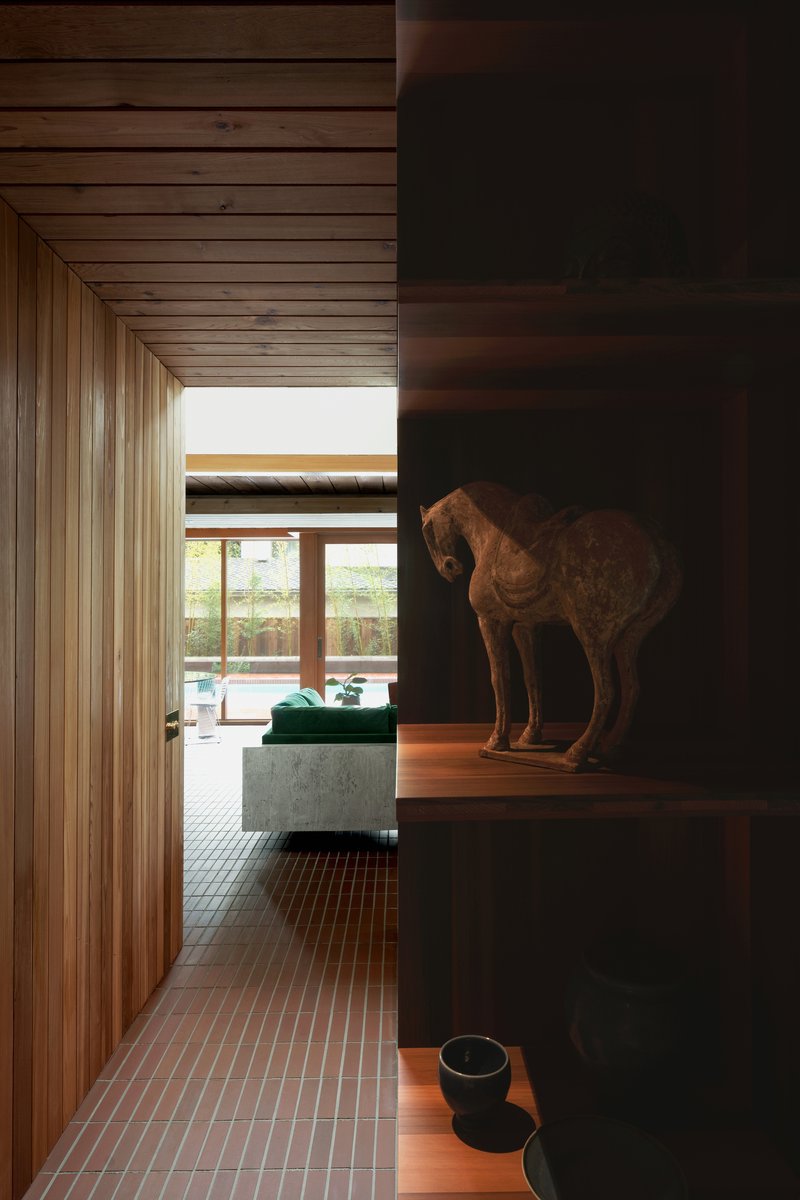
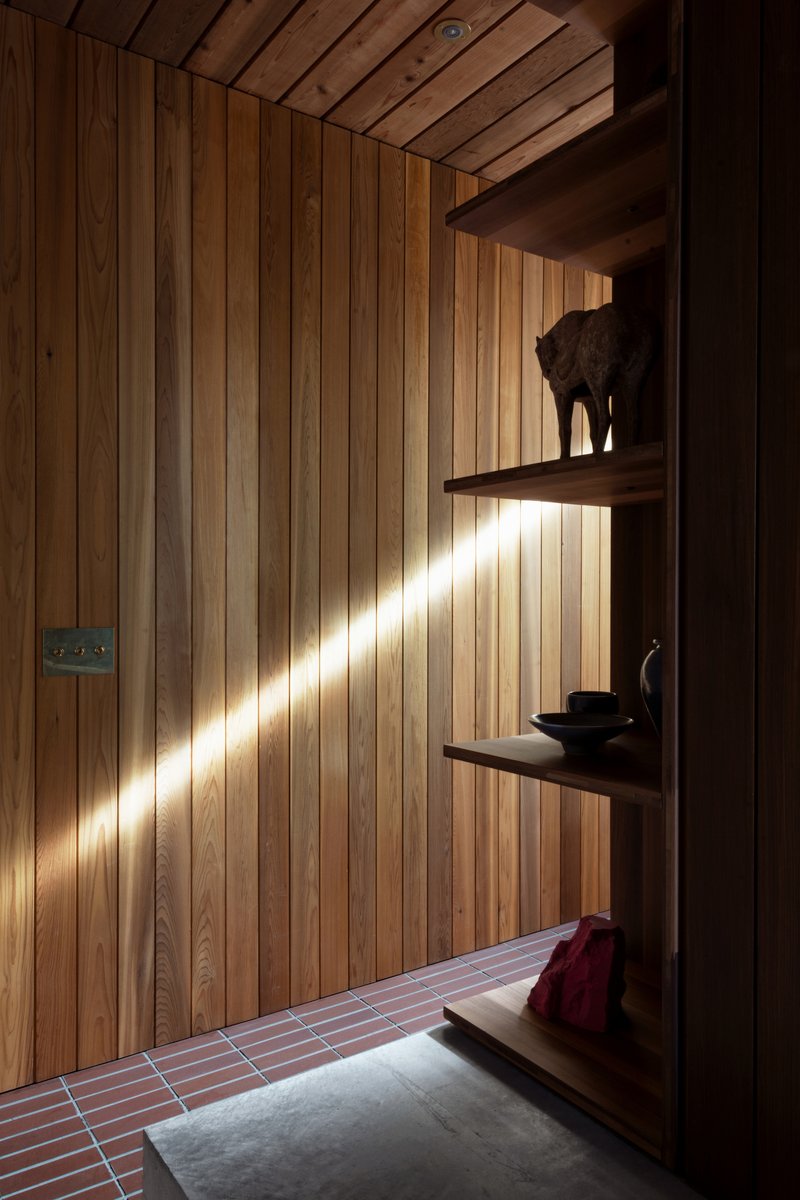
Storage solutions manifest in the form of plywood cabinetry, finished with pigmented oil, their form both discreet and functional, optimizing open spaces while providing concealed kitchen storage. Cedar shelves weave throughout the home, offering a tactile solution for visible storage needs.
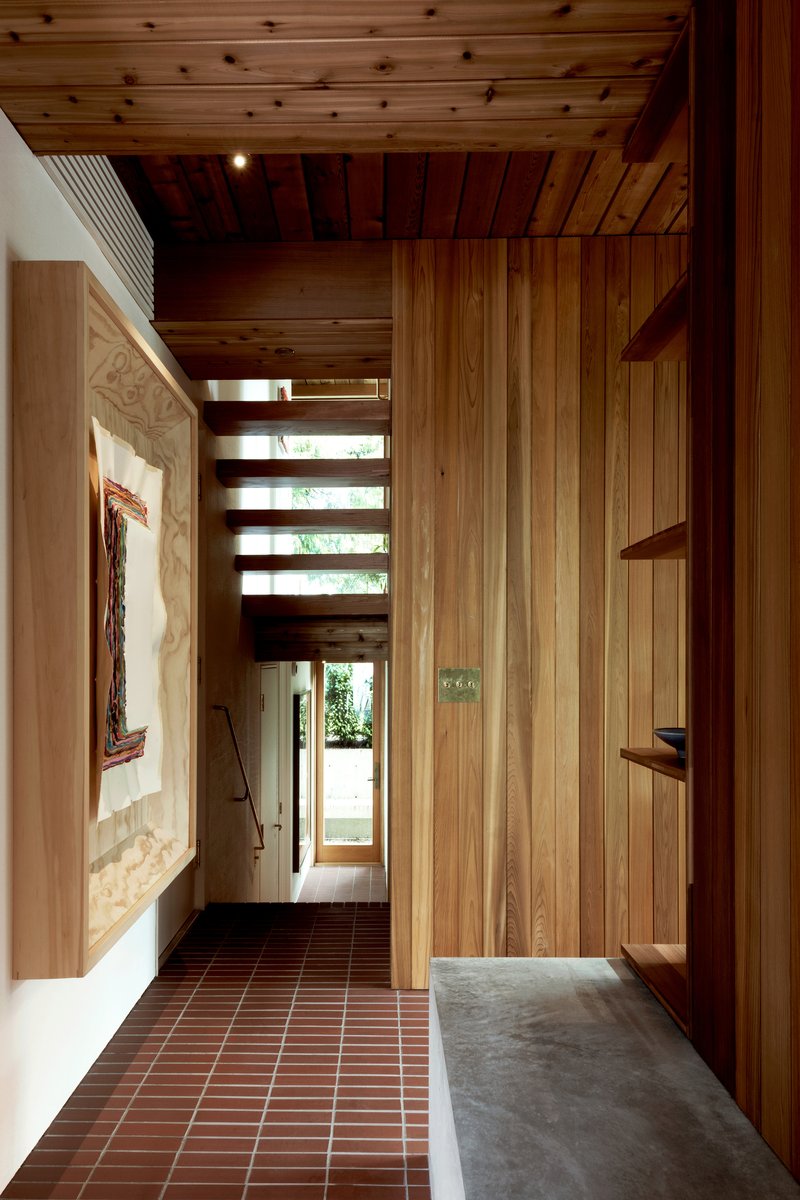
The living room's hearth has been extended, embracing a cantilevered concrete sofa that expands the seating area without encroaching upon the floor's utility. Outdoors, a second concrete sofa shapes an al fresco retreat between the main house and the pavilion, while similarly styled concrete benches grace the entrances and poolside, their presence a quiet echo of the interior's refined design.
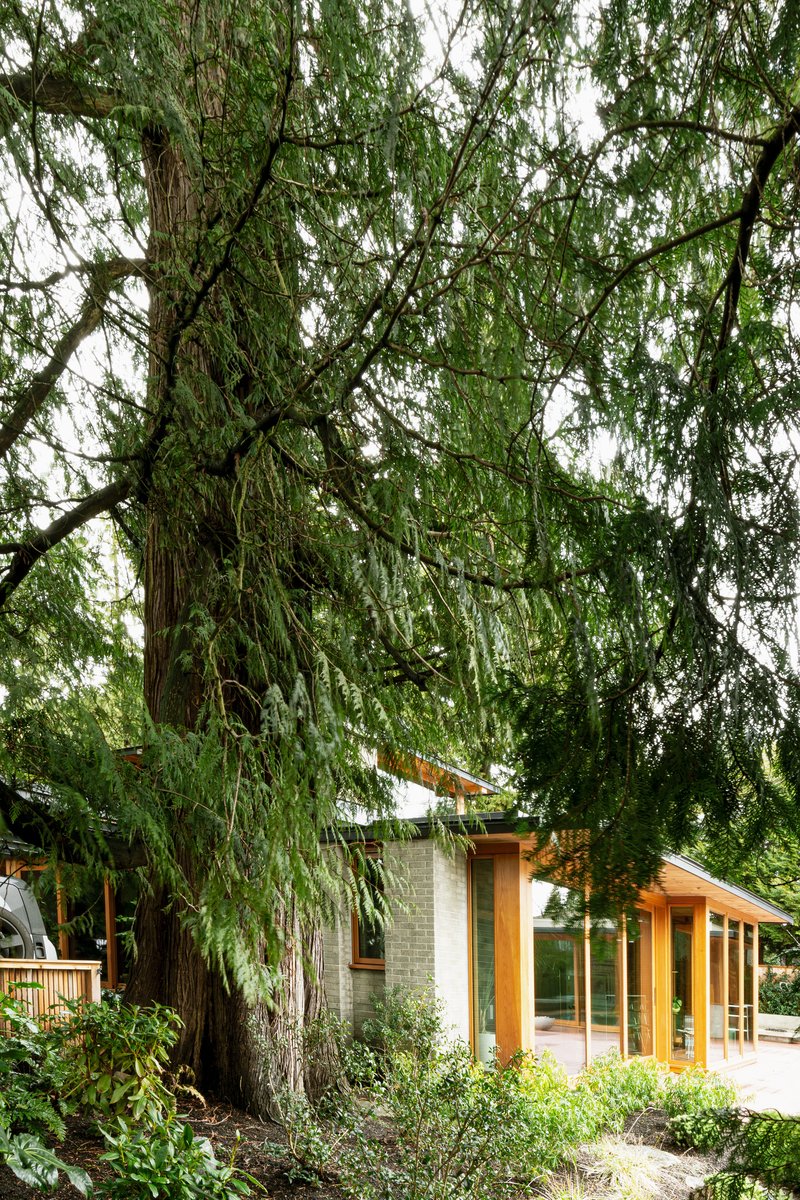
This dwelling, a marriage of past and present, invites one to linger in its spaces, to savor the rich textures of concrete and wood, to bask in the ever-shifting dance of light and shadow. The Osler House stands not merely as a structure, but as a profound experience, a narrative of transformation that honors its heritage while embracing the future.