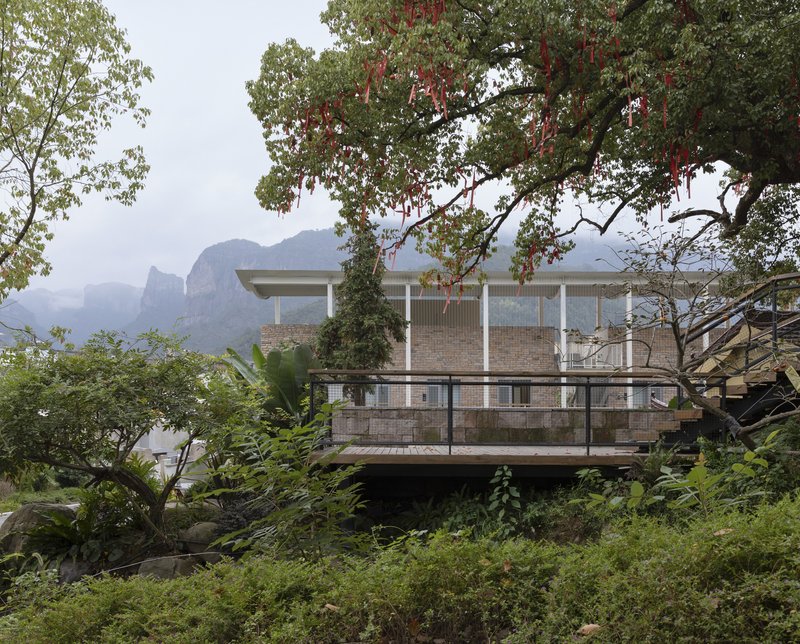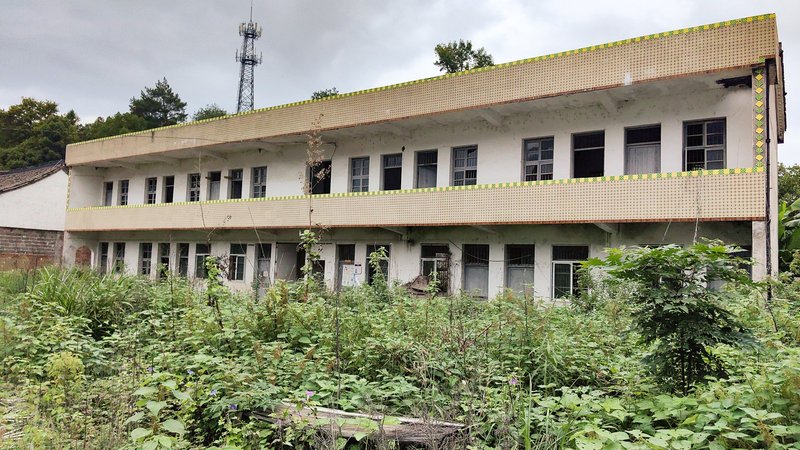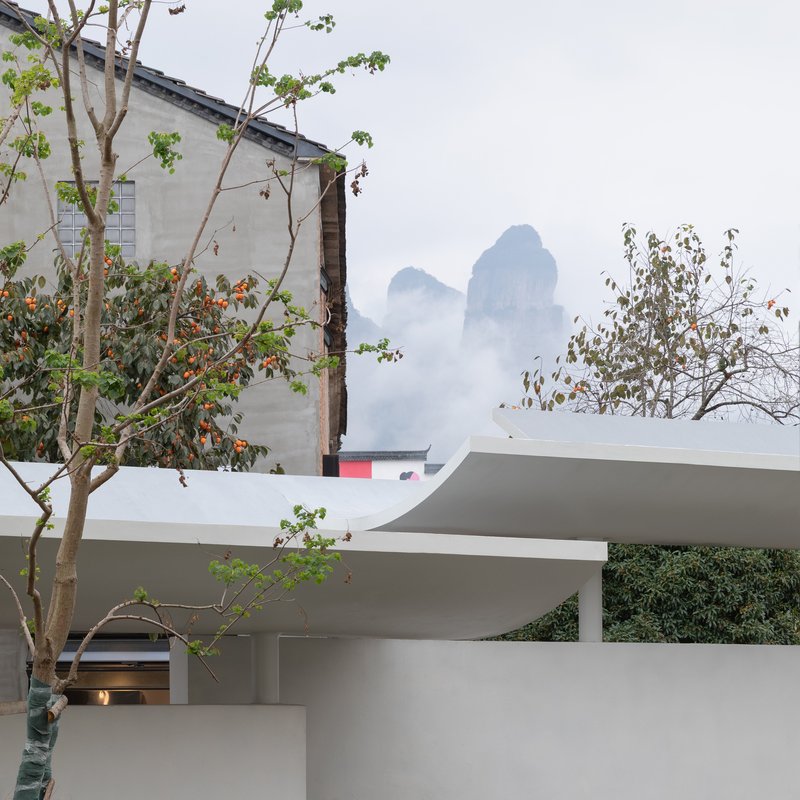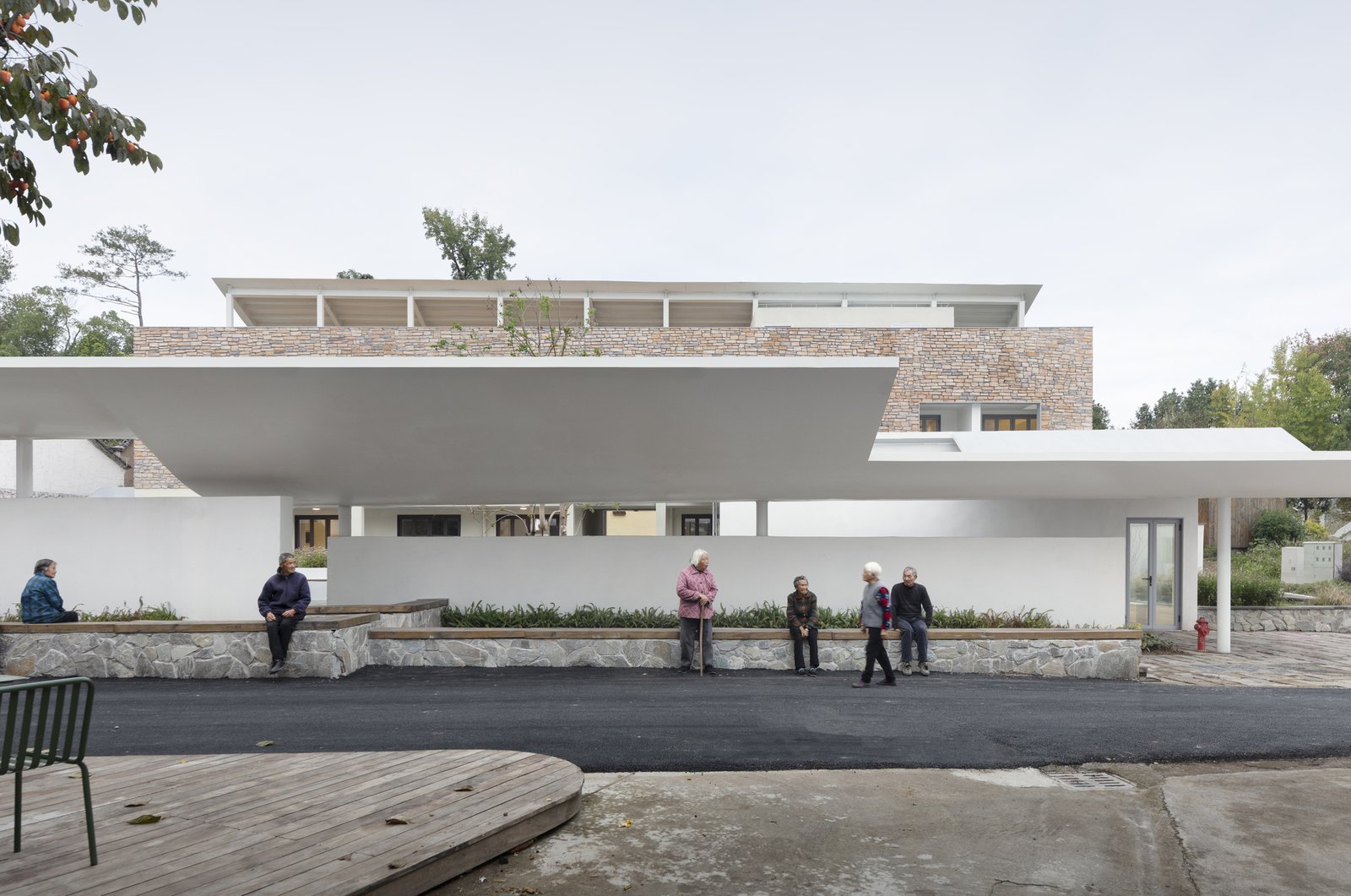
In the tranquil embrace of Xianjing Village, nestled within the scenic folds of Baita City in Zhejiang, lies a testament to the transformative power of architecture. Here, where the gaze is irresistibly drawn to the majestic silhouette of Fanzeng Peak, a once-abandoned primary school has been reimagined into a sanctuary for the creatively inclined. Embracing the untamed beauty of Shenxianju's mountainous backdrop, the local government envisions Xianjing as a haven for design and art. Thus, Hsu & Du Architects embarked on a journey to breathe new life into this forgotten edifice, inviting young artists and students to find inspiration amidst its walls.
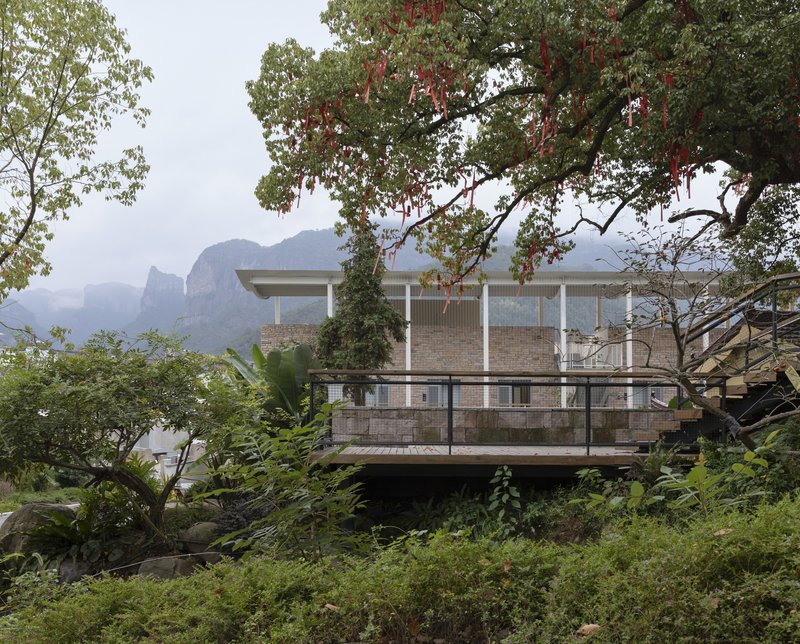
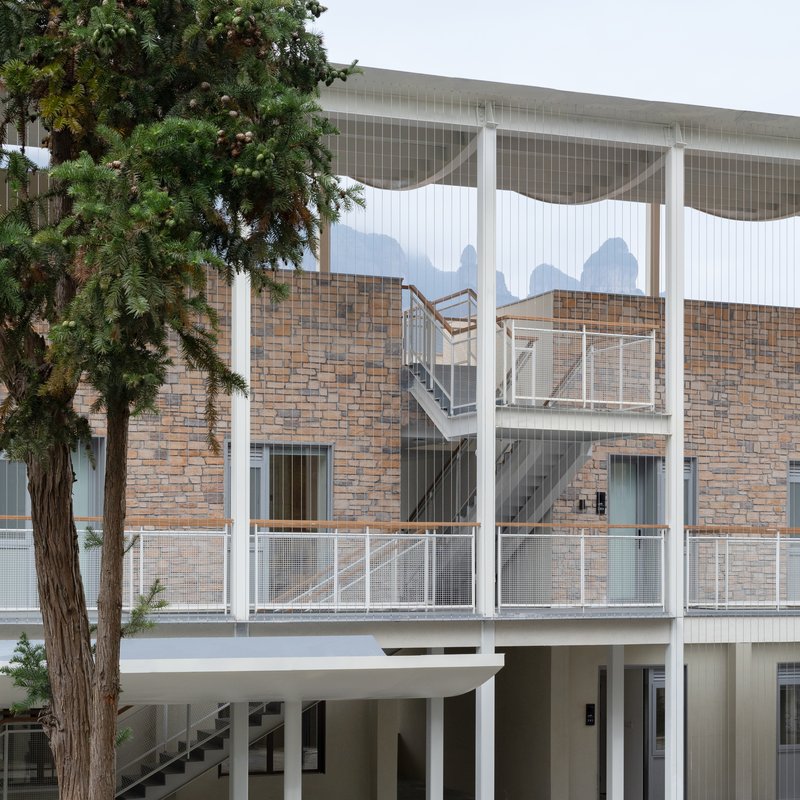
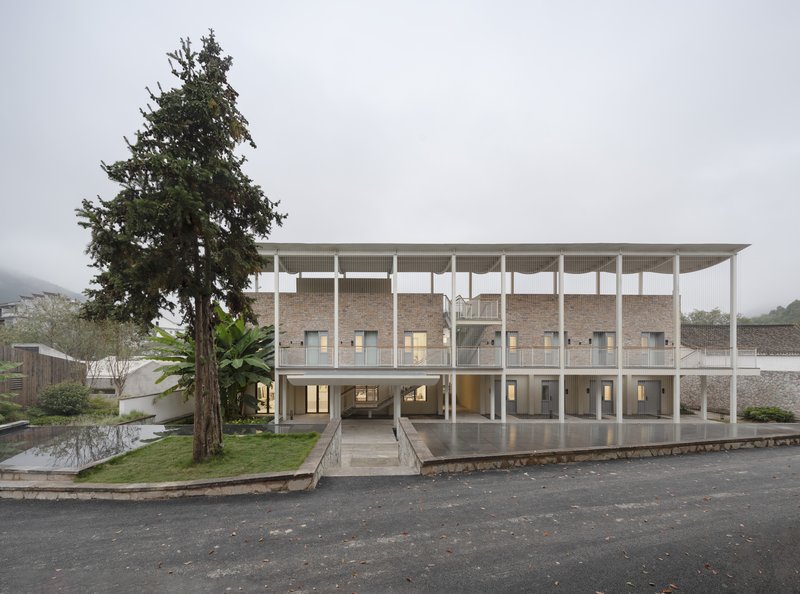
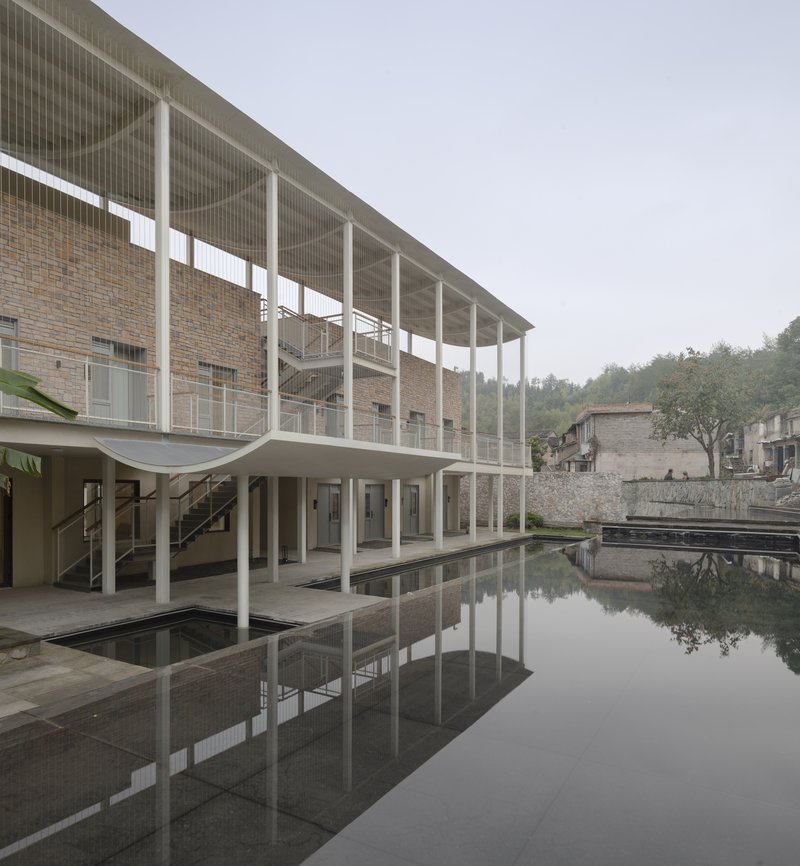
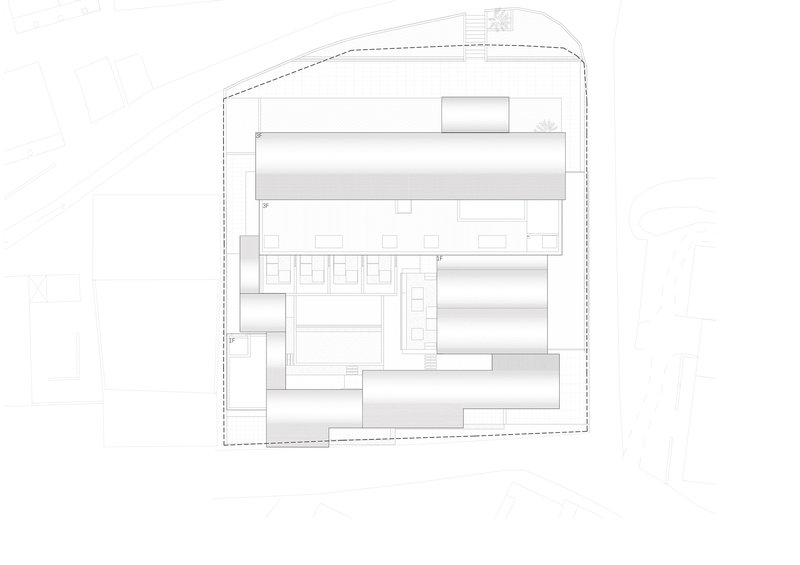
This rebirth, christened Qingyi Lodge, retains the structural integrity of its 1970s and 1980s origins, a steadfast composition of masonry and concrete. Yet, beneath its preserved form, a pulse of innovation throbs. The essence of the project lies in harmonizing with the landscape, allowing the natural grandeur of Fanzeng Peak to permeate the living spaces. The architects, with a touch of poetic vision, removed the weathered wooden roof, unveiling a rooftop terrace that offers an unbroken dialogue with the sky and mountains.
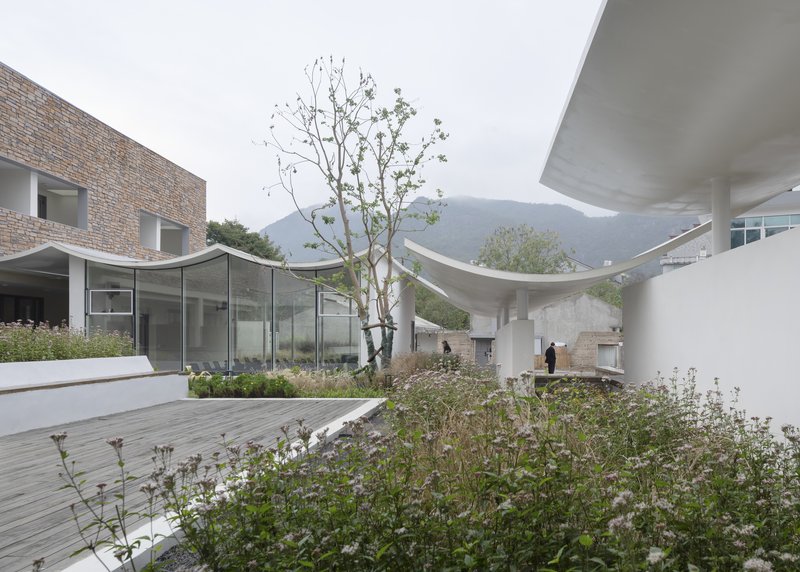
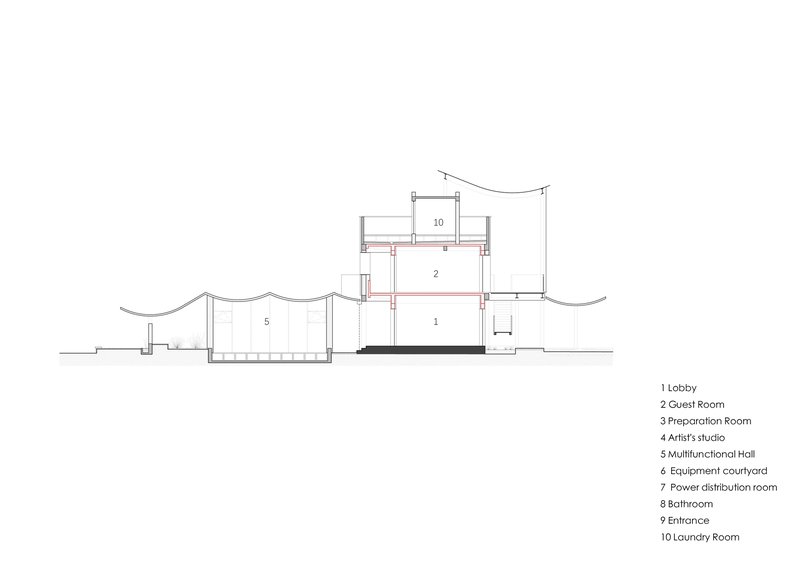
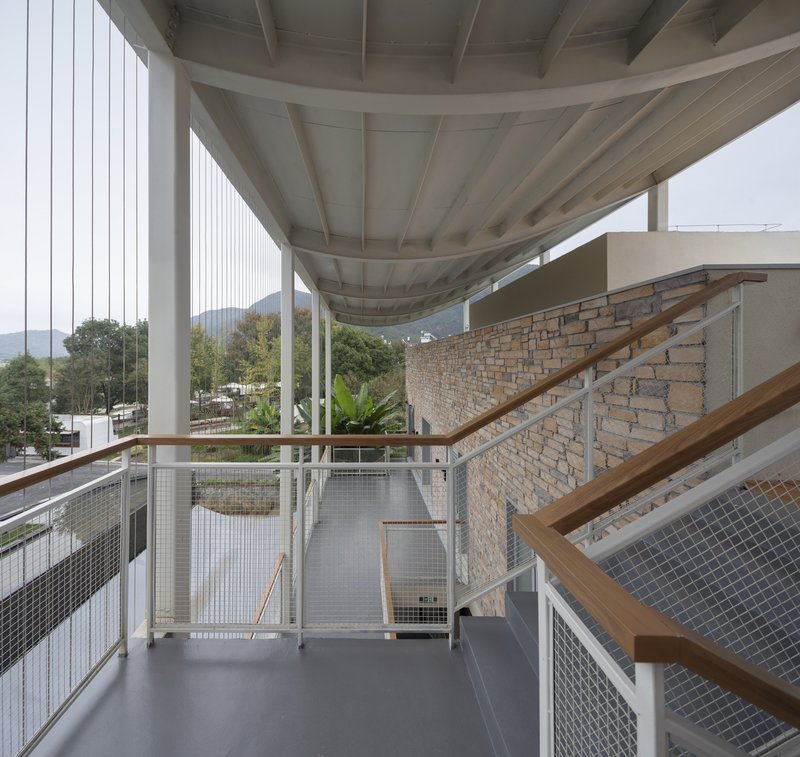
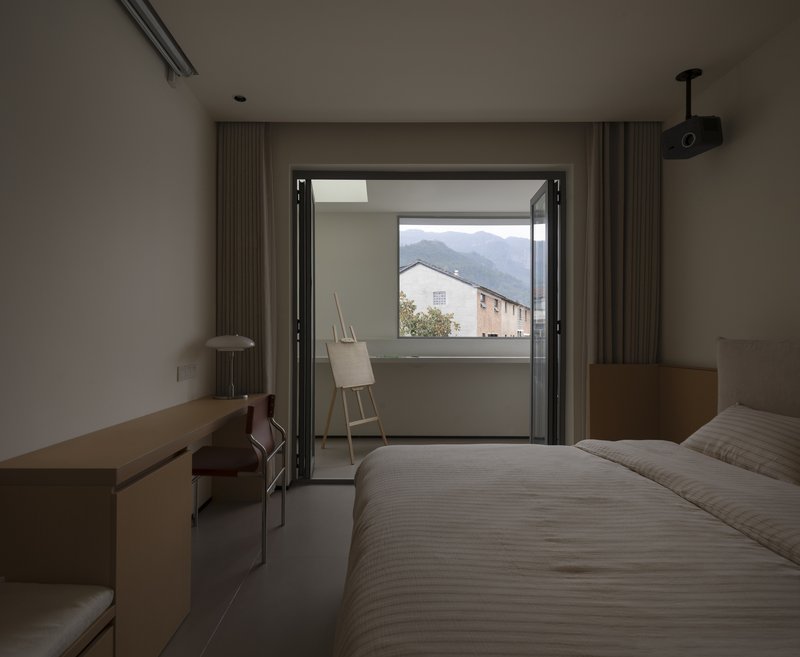
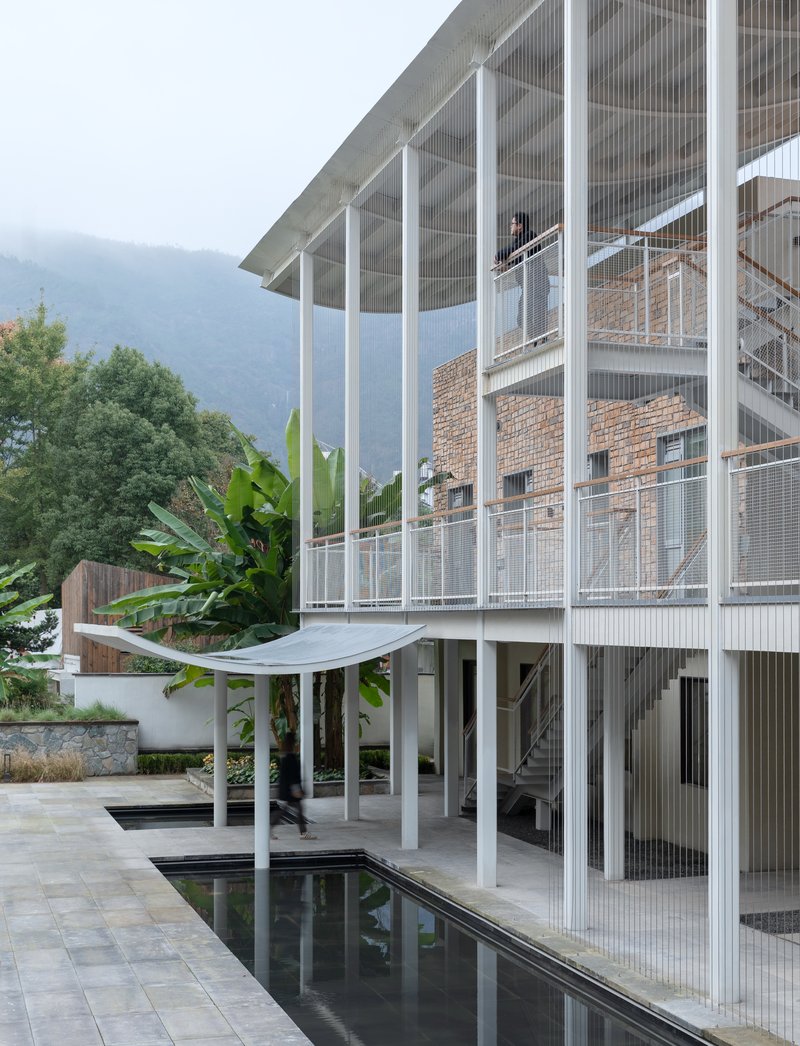
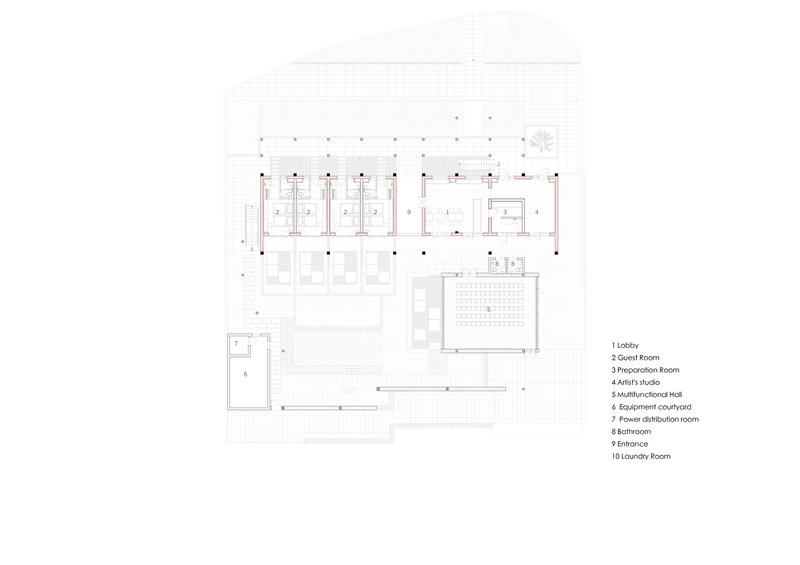
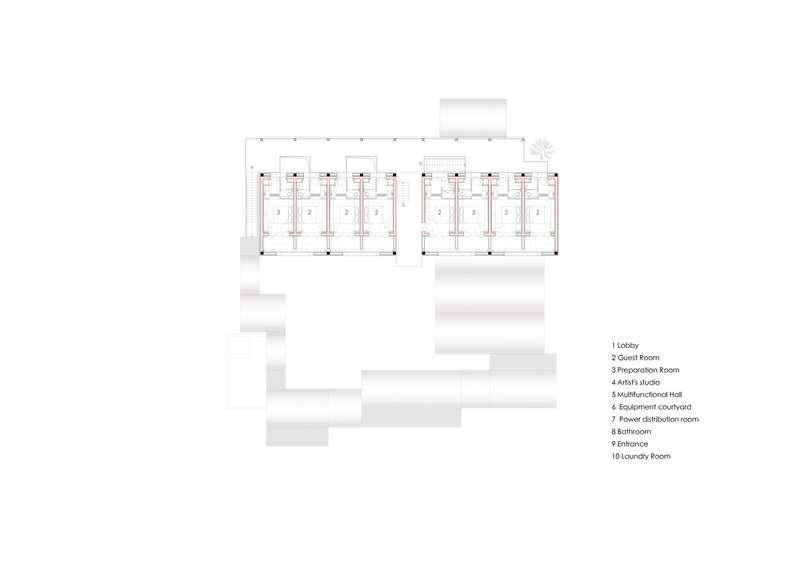
Within the confines of former classrooms, intimate lodging units now reside, each a canvas for contemplation. The transformation is elegant, with sliding glass panels replacing conventional frames, inviting the outside in. A newly forged metallic corridor on the northern facade guides guests to their quarters, while the southern passage metamorphoses into a serene veranda. This vantage point, opening toward the peak, becomes a stage for artistic endeavor, its left flank a dedicated drawing haven, where skylights invite a constant dance of light across the canvas.
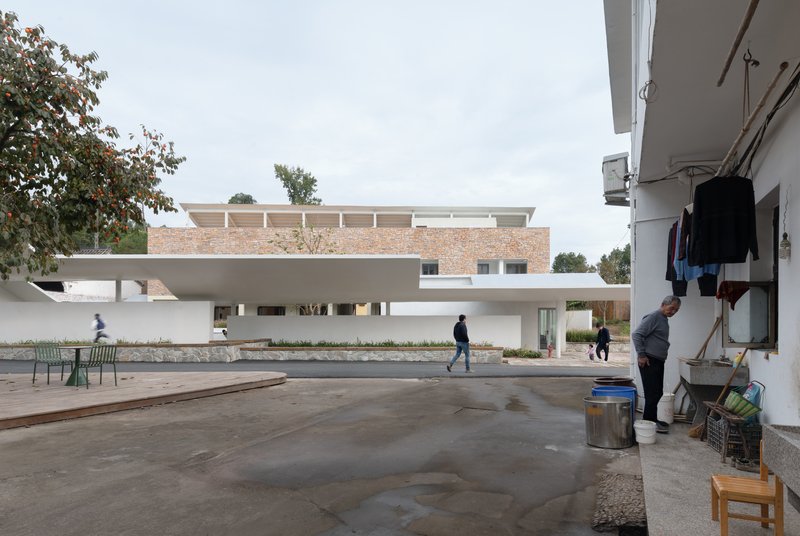
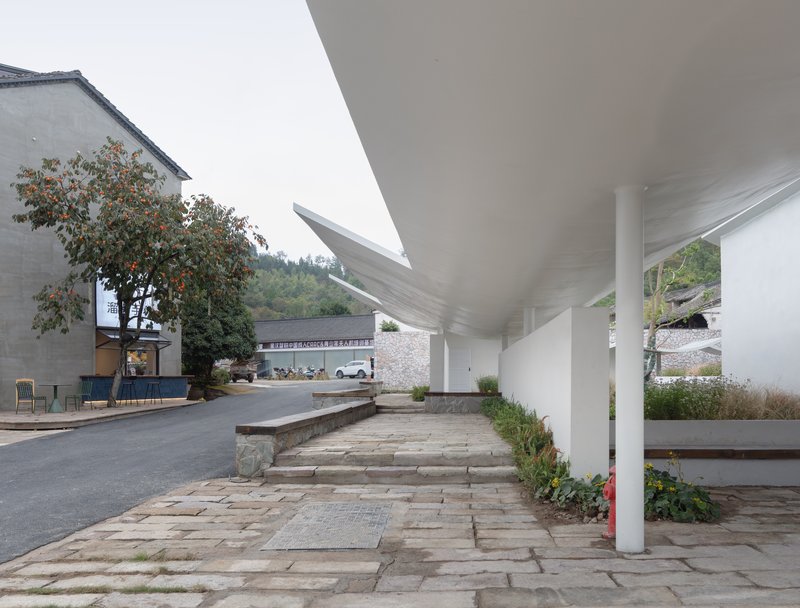
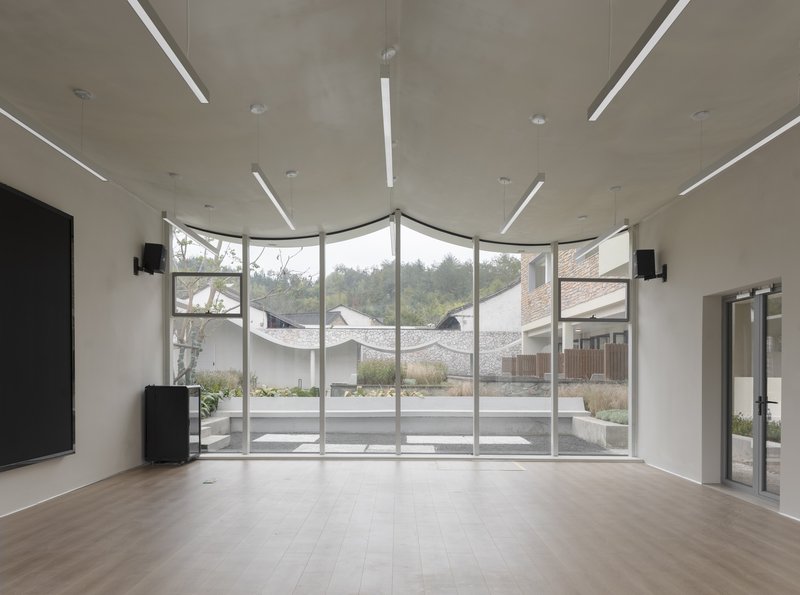
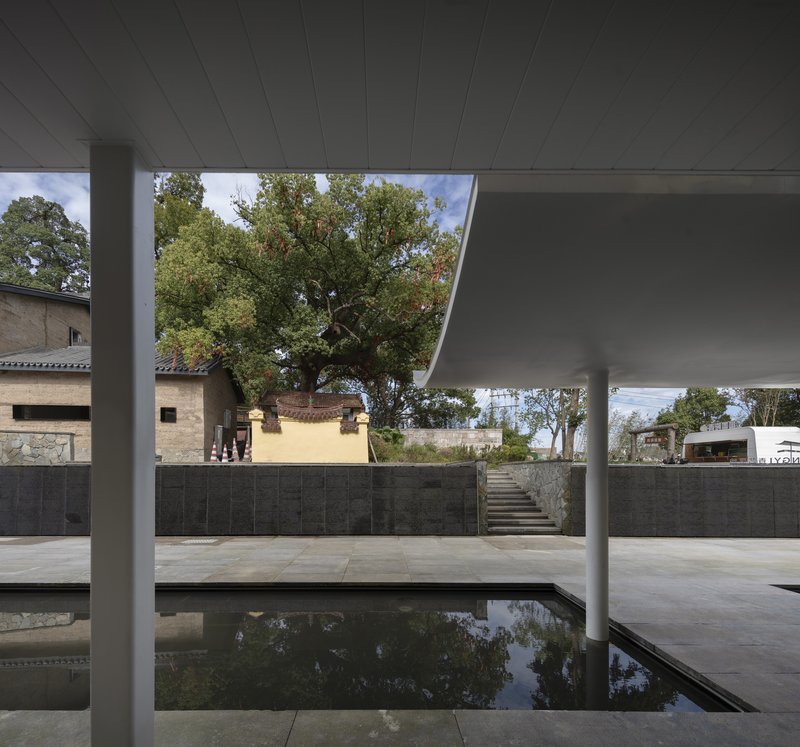
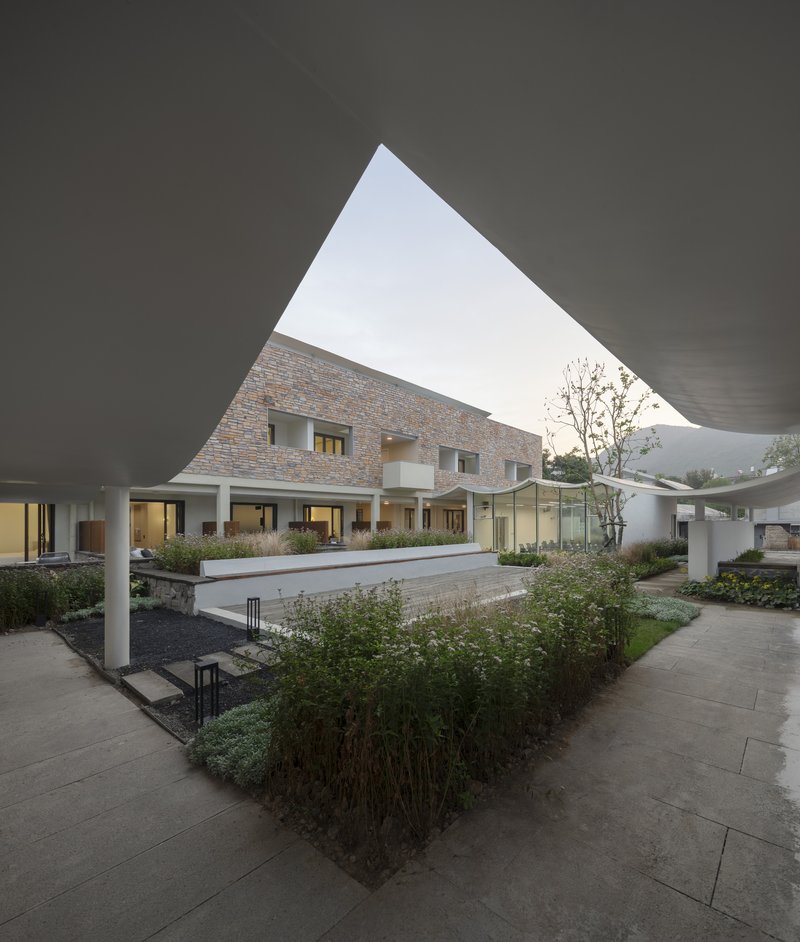
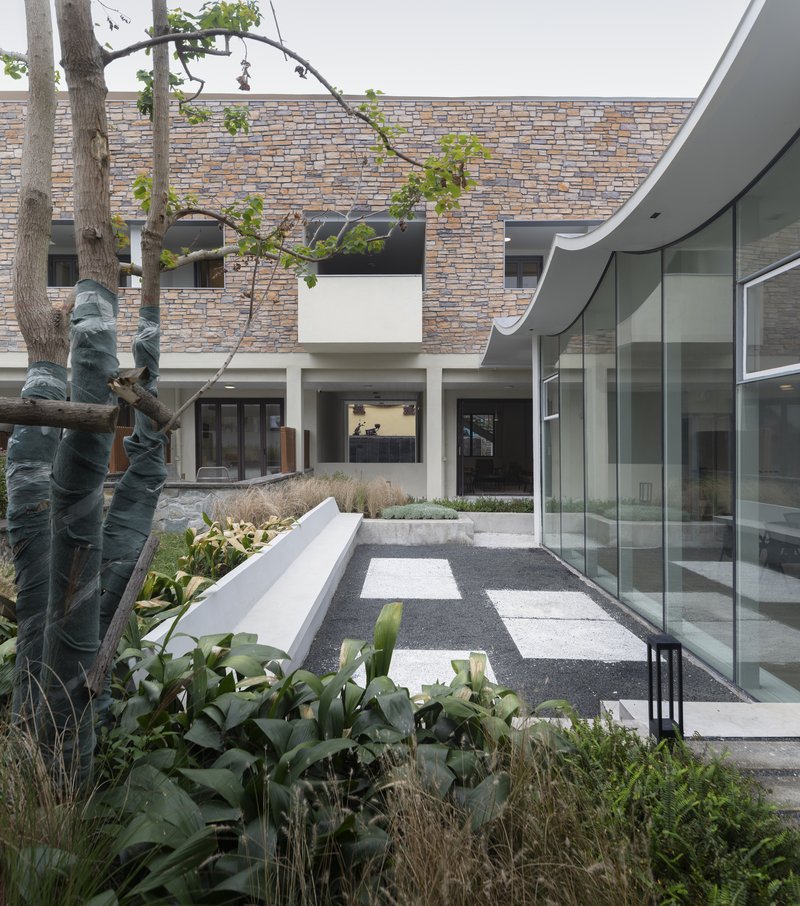
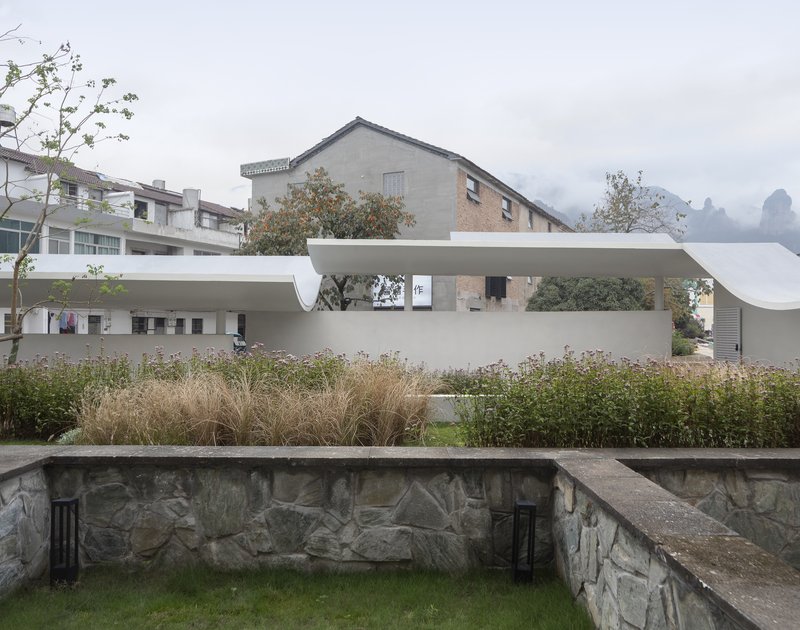
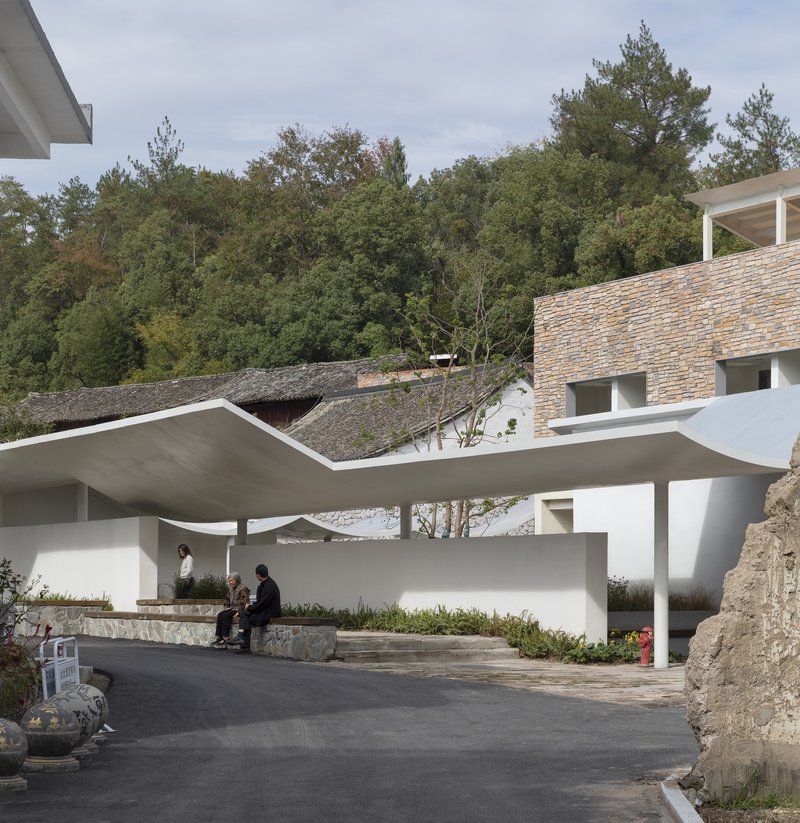
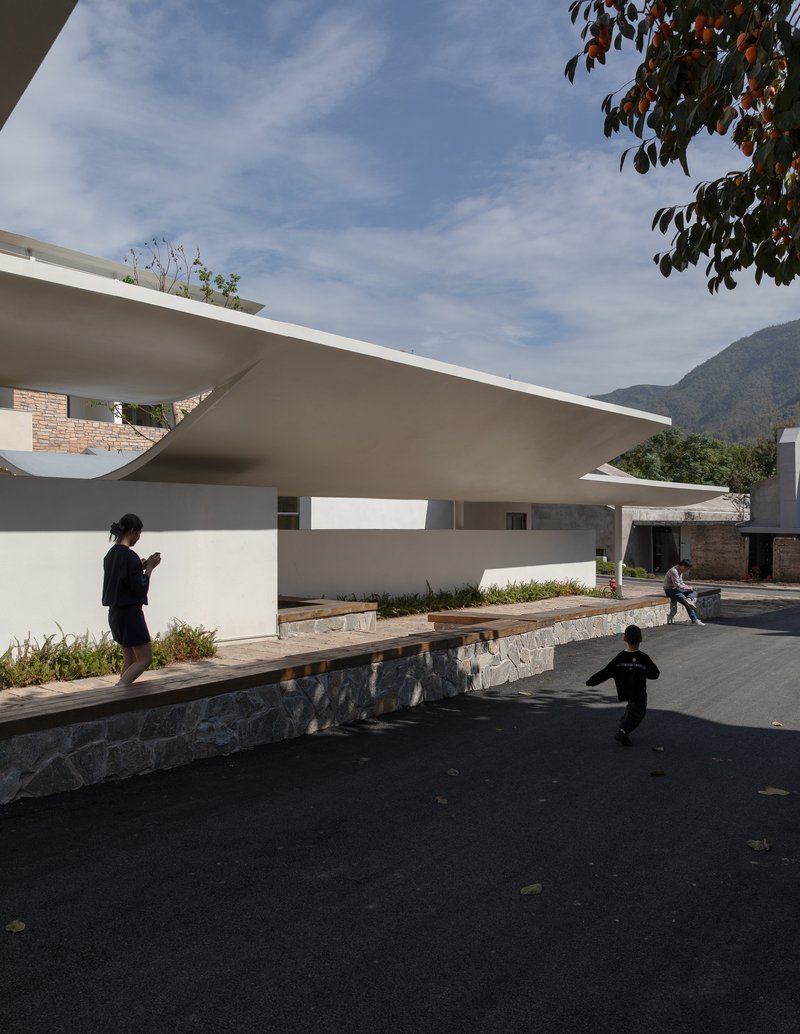
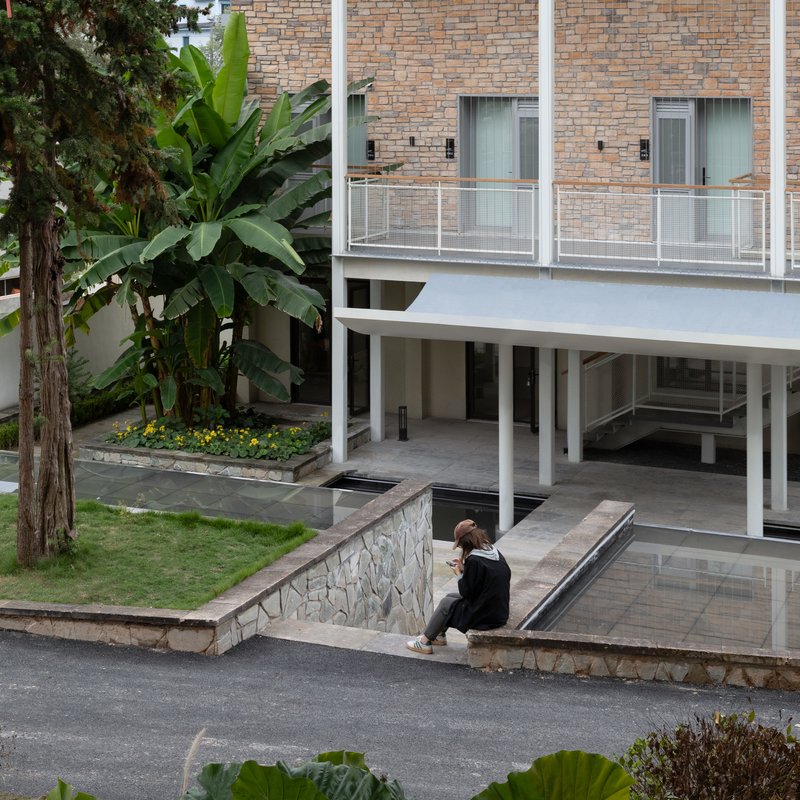
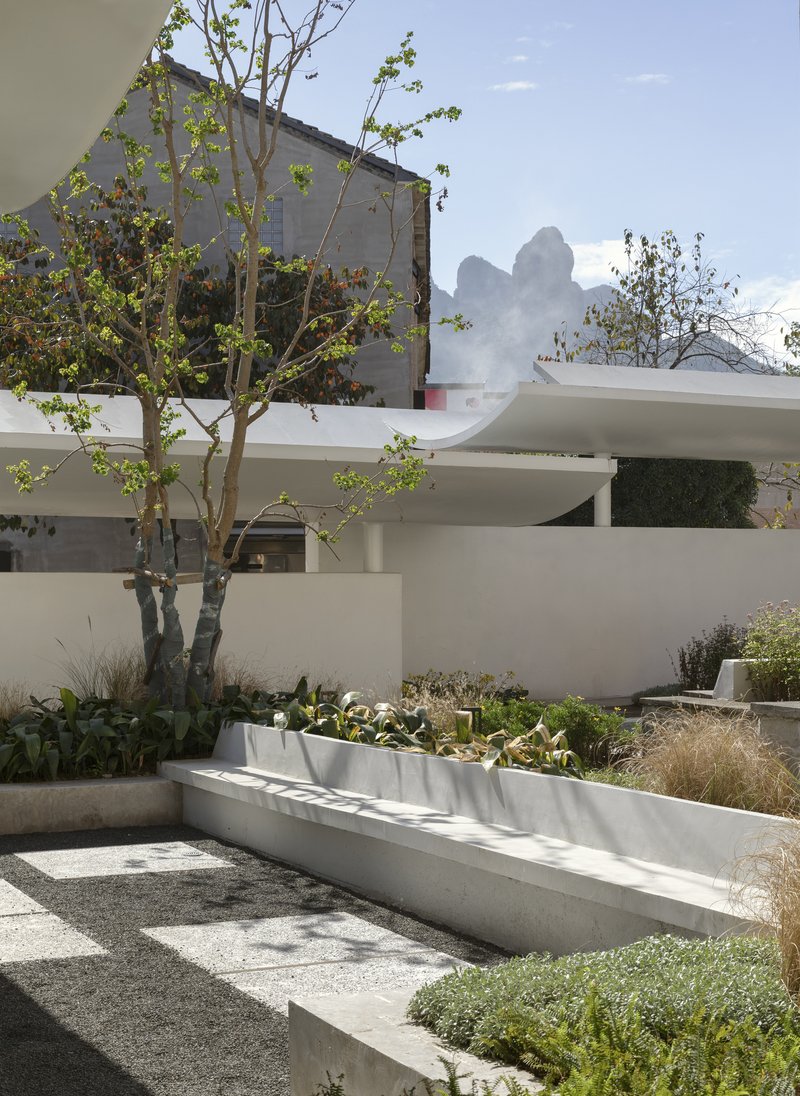
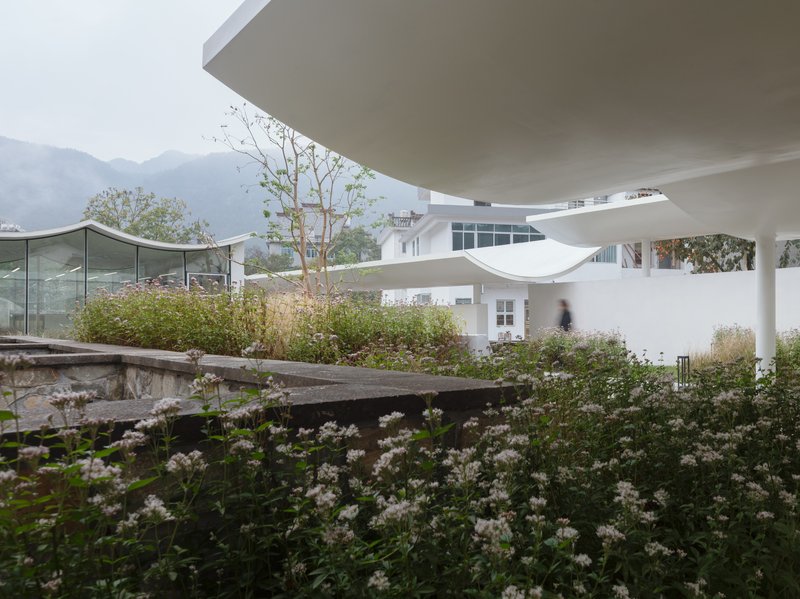
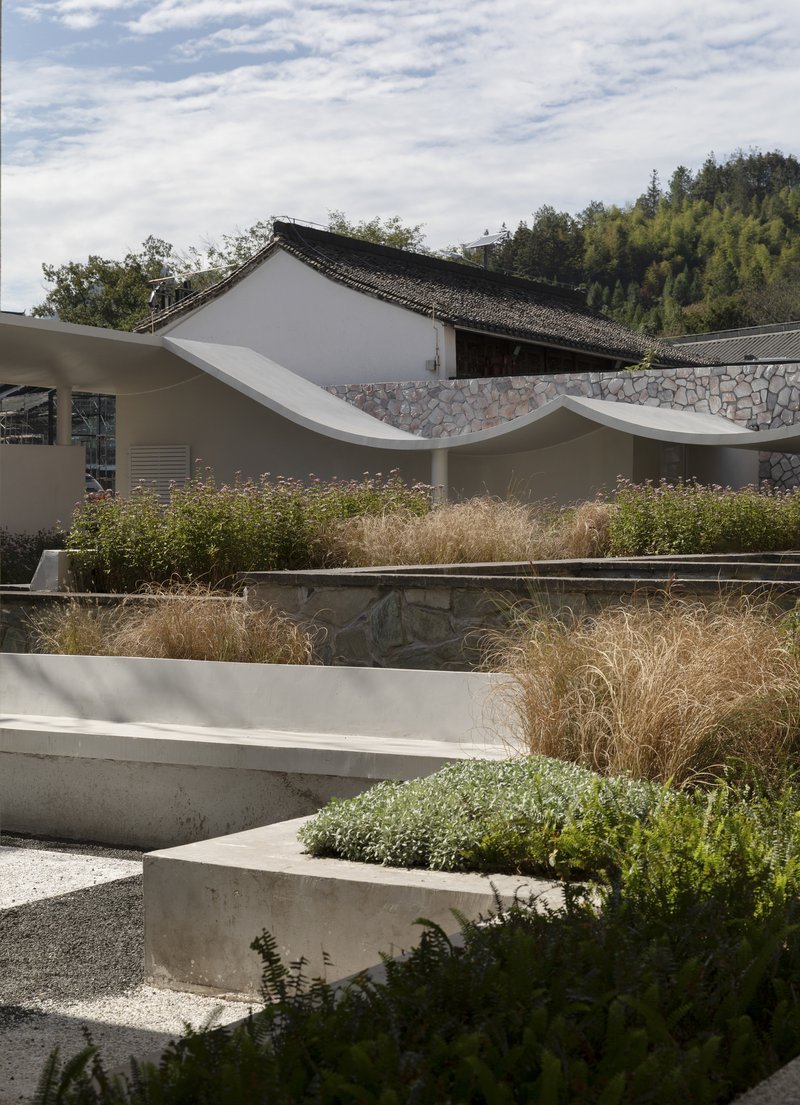
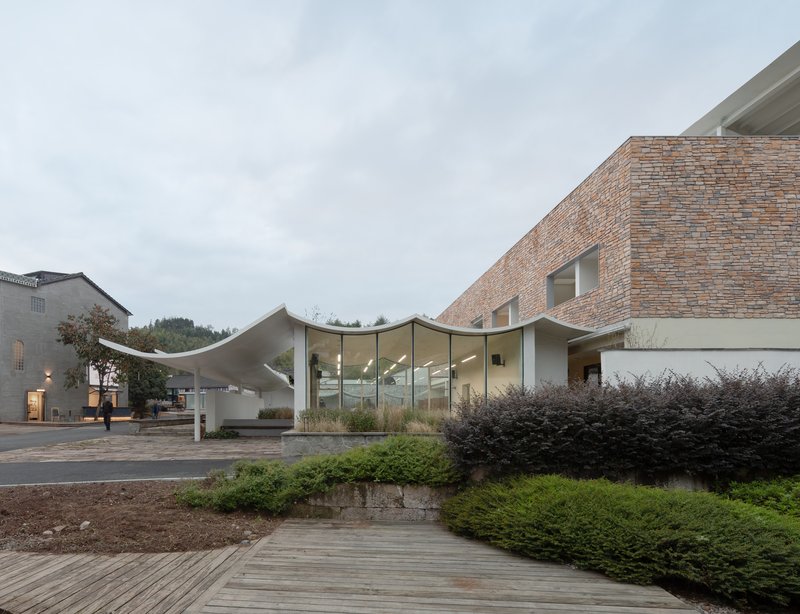
Ground-level patios, secluded and personal, await the artist's hand, while the original structure's constraints of height and breadth dictated a delicate expansion. Thus, a multifunctional hall emerged on the southeast, a venue for scholarly exchanges and intimate exhibitions. The southern playground, once bounded by a village road and perimeter wall, now unfolds beneath a sequence of gently arching steel roofs. These structures echo the silhouettes of local dwellings, subtly embracing the quotidian while framing the vibrant life beneath the persimmon tree.
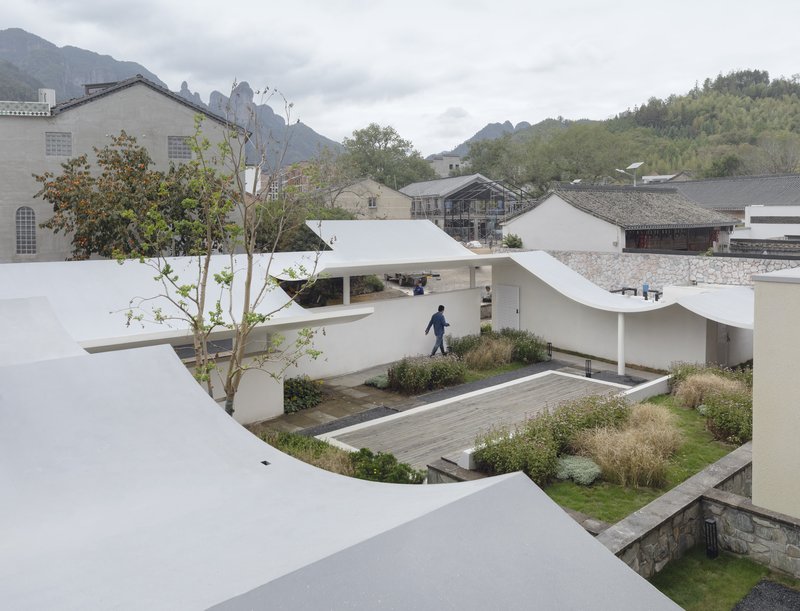
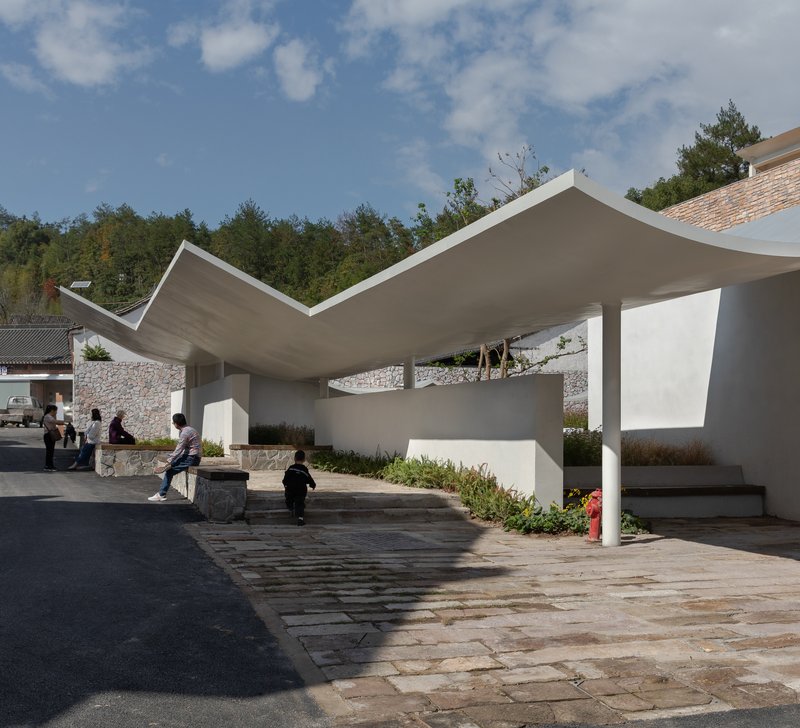
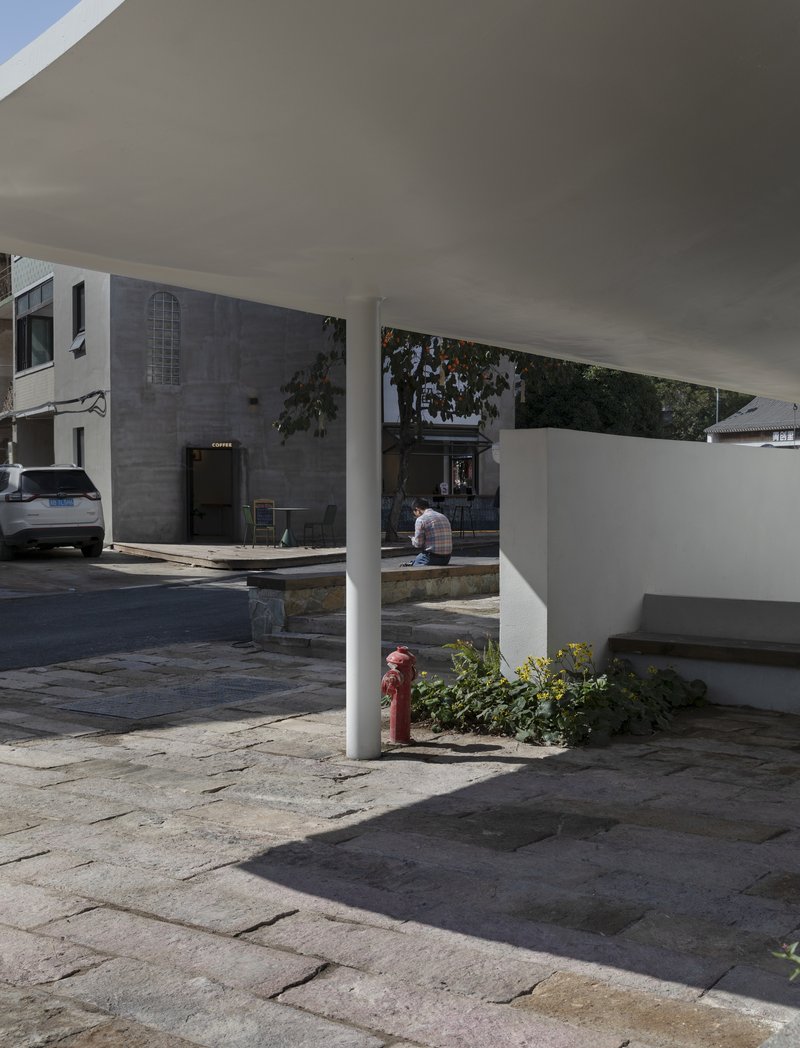
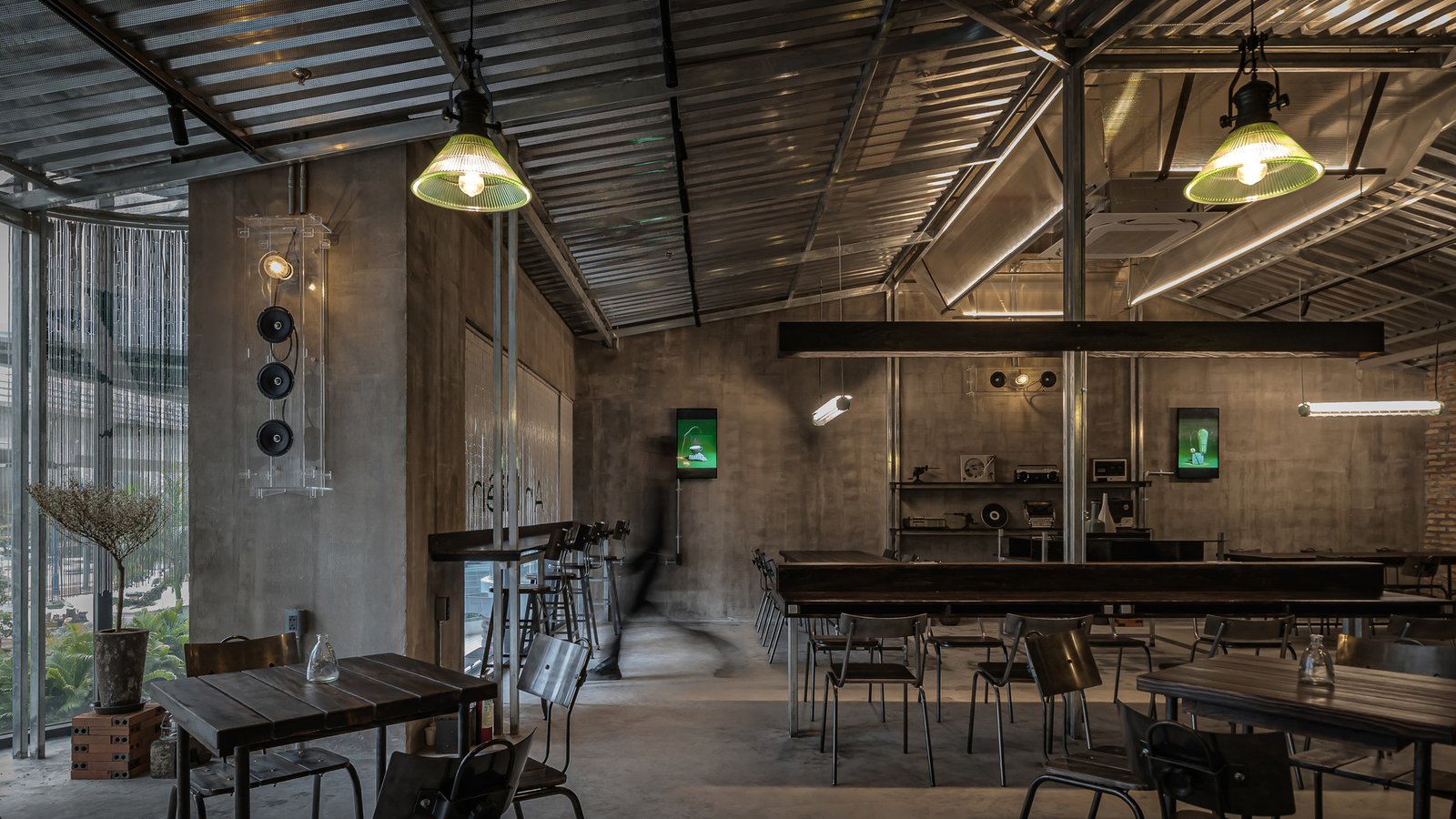
As one meanders through the village path, the community dining hall and resident square reveal themselves, previously obscured by the school wall's proximity to the road. This barrier, partially dismantled, gave way to a series of walls and a sweeping curved canopy, crafting a dual-layered corridor system that melds internal and external circulation. The corridor, a social alcove, extends a warm invitation for repose and conversation, linking Qingyi Lodge to the village's public heart. Here, beneath the airy steel canopies, amidst walls of varied heights, life unfolds on reclaimed wooden benches perched on low stone walls. Old slabs from the village ground the space, as ferns and moss weave a quiet tapestry between them.
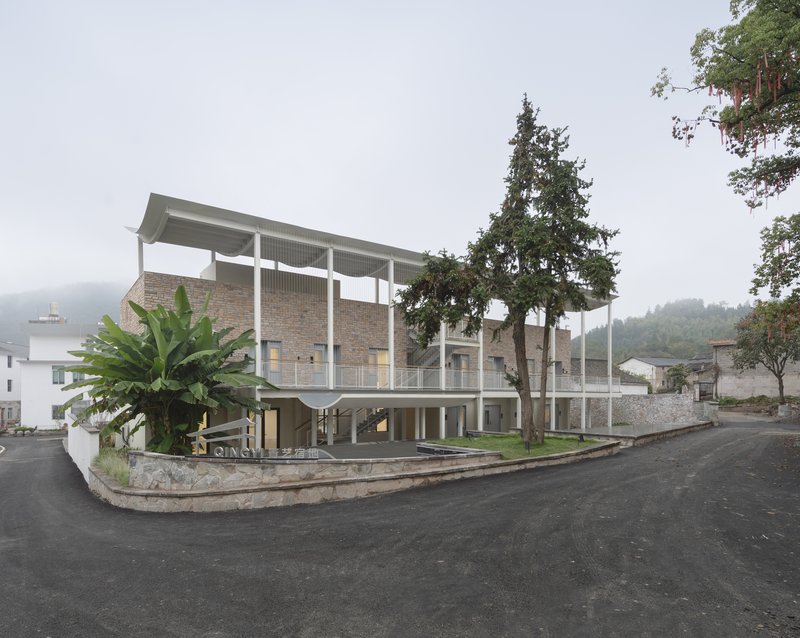
In this space, time comes to a gentle standstill. Elders bask in the sun, women share stories, and the curious wander through, each step echoing with the whispers of stone and the laughter of newfound friendships. Ascend further, and the path leads to the village square, then onward into the intimate embrace of the ancient settlement. This architectural symphony, a delicate interplay of past and present, invites all who enter to pause, to reflect, and to dream.