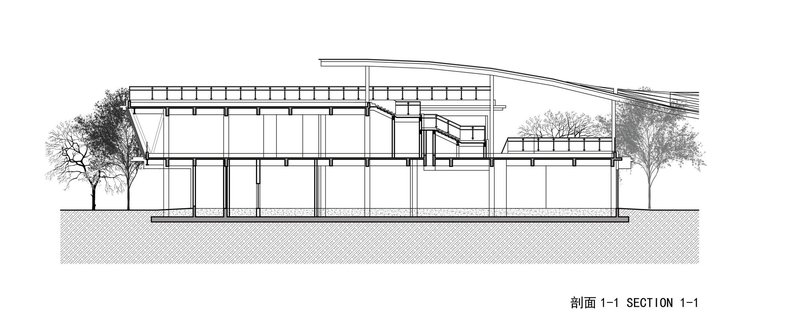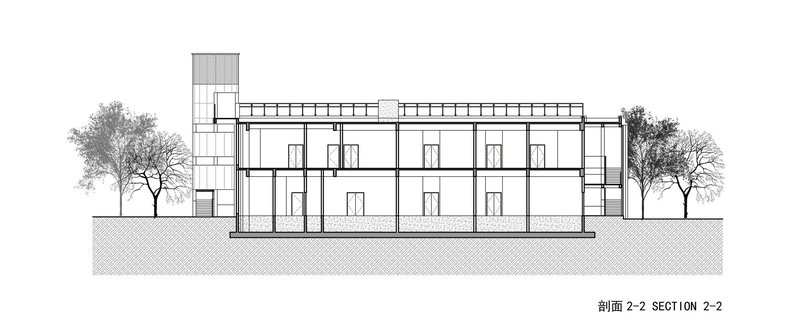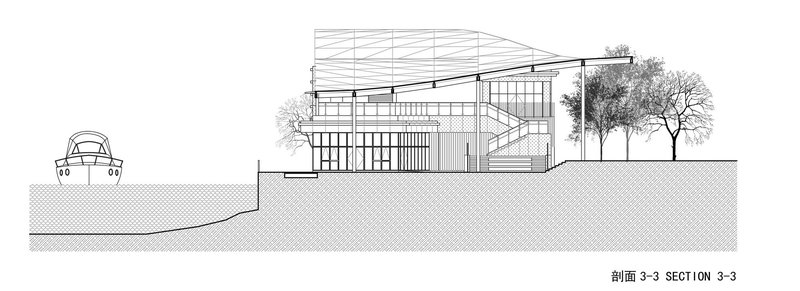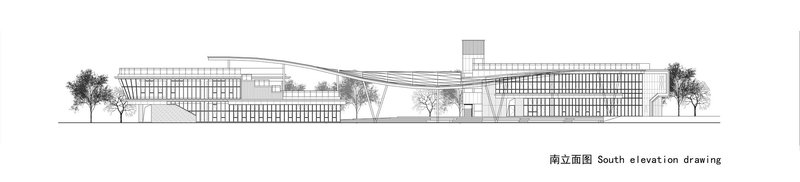
Nestled in the south-central region of Jiangsu Province lies Taixing, a city where history flows as seamlessly as the waters that cradle it. This ancient locale, a confluence of Huai and Wu cultures, is a testament to a millennium of existence, its origins rooted in the first year of Shengyuan during the Southern Tang Dynasty. Once, Taixing County was a tapestry of waterways, a city that thrived alongside its liquid lifelines. Its fortified walls, shaped like a turtle's shell, were encircled by moats and serpentine channels, a living embodiment of the Black Tortoise and White Snake, a city laid out in the mystical form of a turtle and snake.
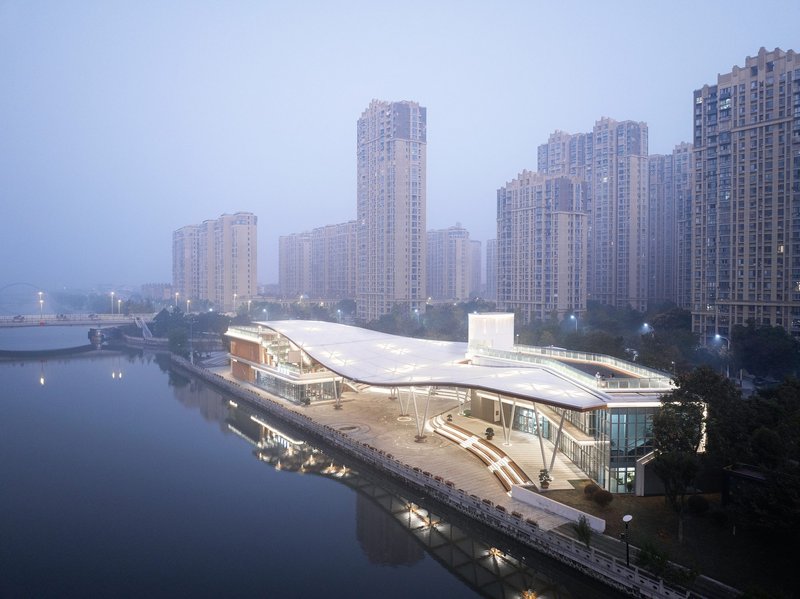
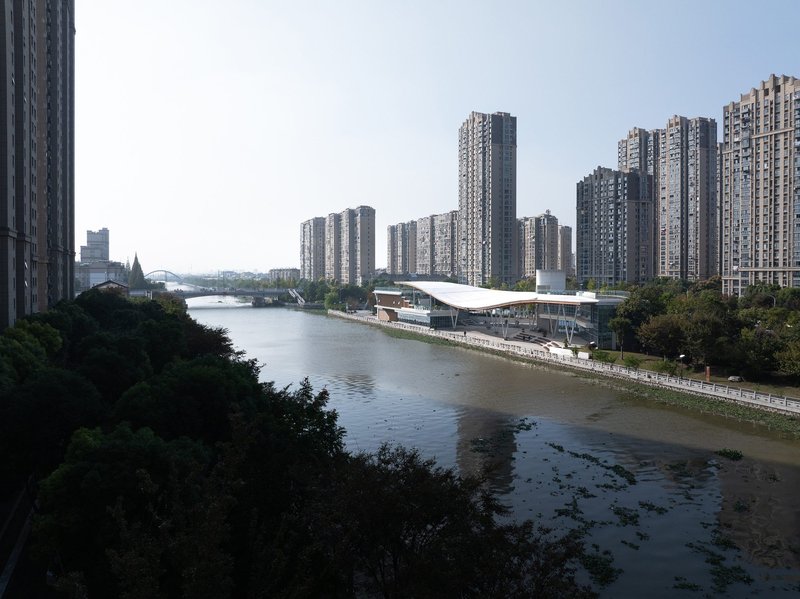
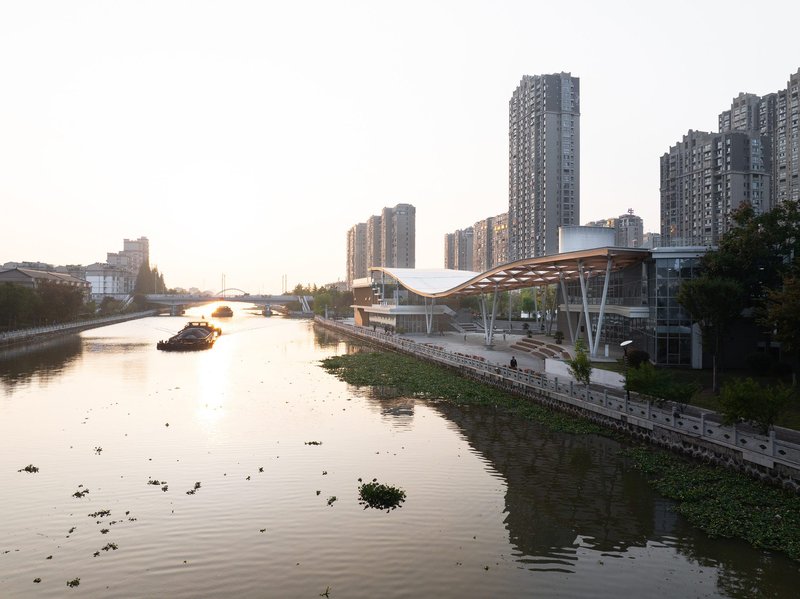
In the present day, as Taixing expands northward and eastward, the Rutai Canal and Qiangxi River serve as the arteries of a new urban landscape. The Rutai Canal, a historical link between the Yangtze River and the Yellow Sea, remains a vital waterway, nurturing the city since times long past. In 2023, Taixing embarked on a visionary project, the "Double Water Nourishing City," transforming the riverside into a scenic zone of leisure and culture. The once chaotic factories and shacks lining the rivers are being reimagined, creating spaces where people can gather, unwind, and reconnect with the essence of water.
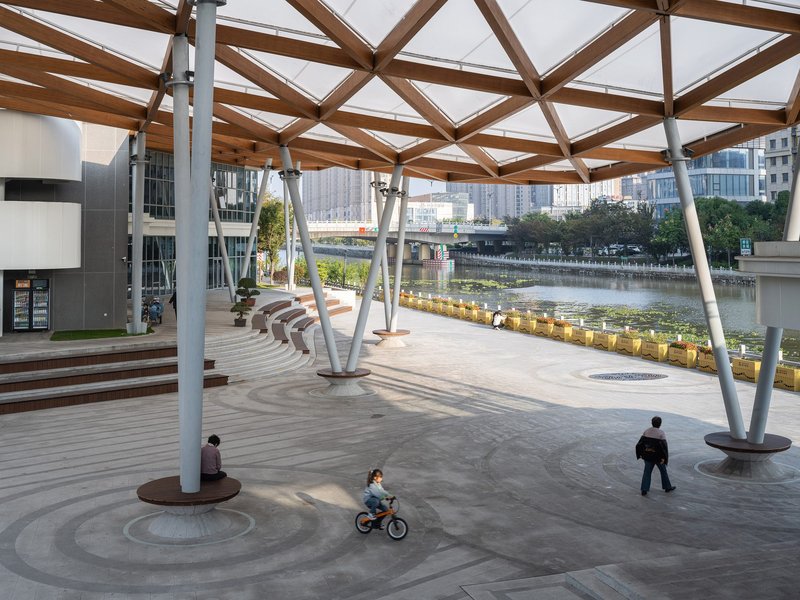
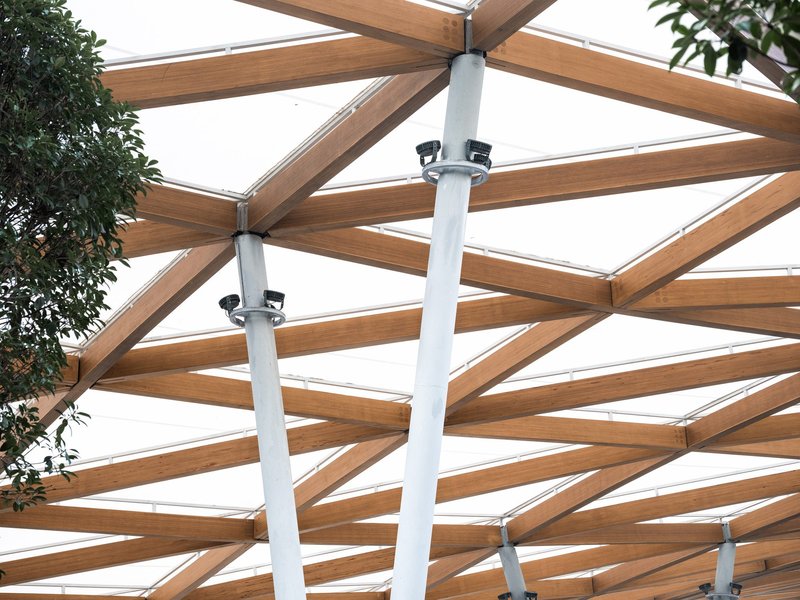
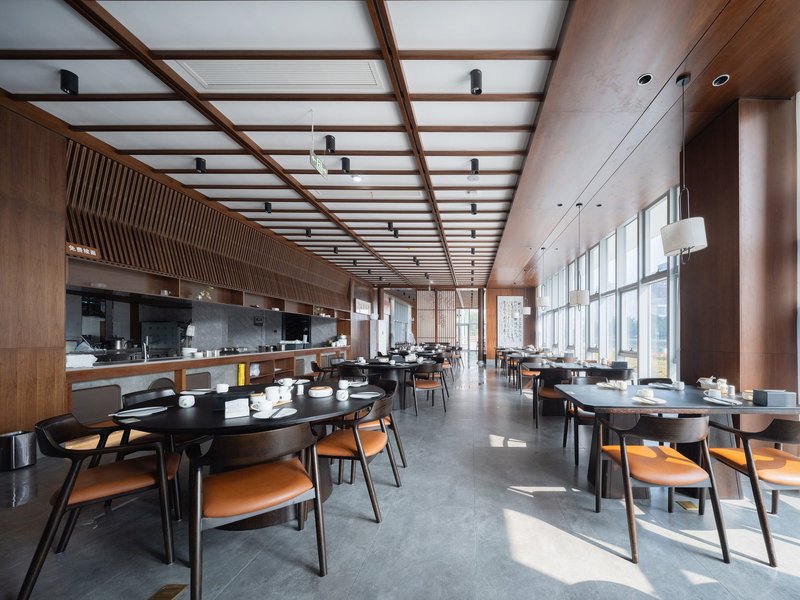
These riverside precincts become more than mere recreational areas; they are a canvas for architectural innovation and cultural expression. The challenge: to breathe new life into idle structures, imbuing them with commercial vitality while preserving their historical significance. The plan is to transform six ancillary buildings along the rivers into vibrant hubs of activity, enhancing the riverside's allure and offering a sustainable approach to urban asset management.
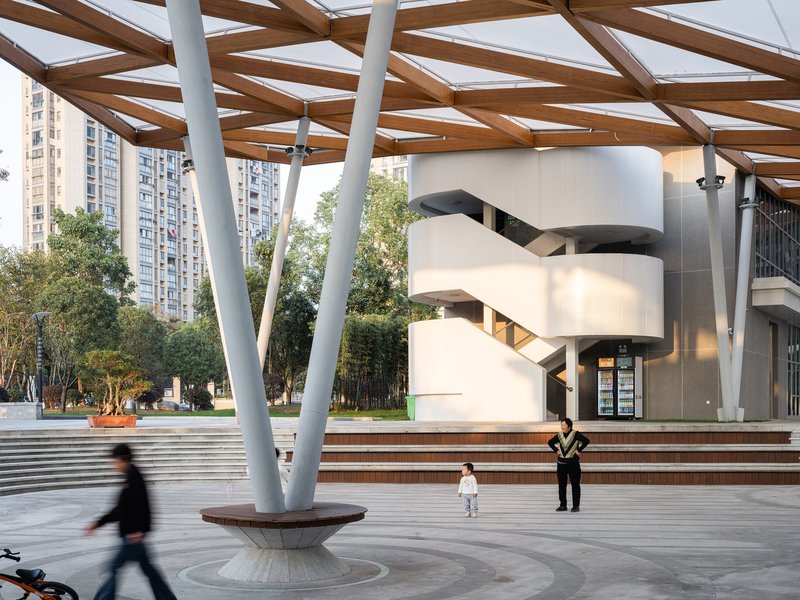
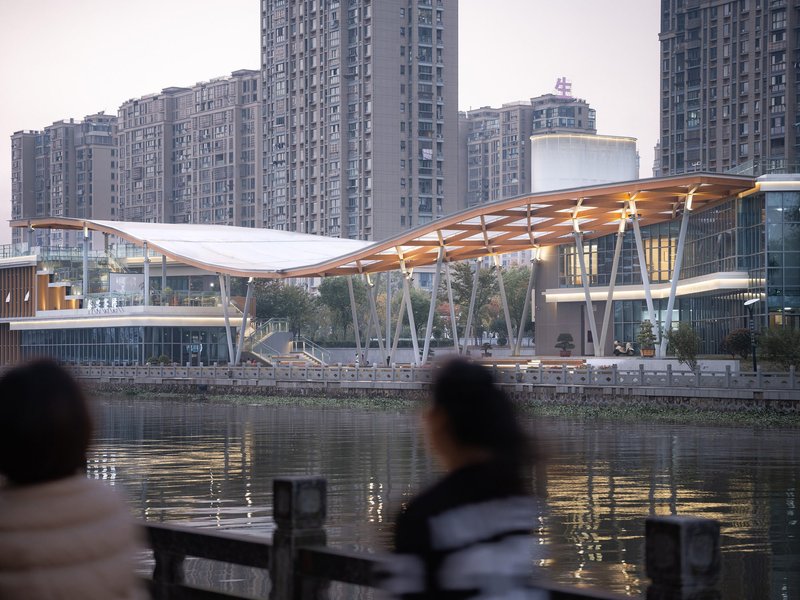
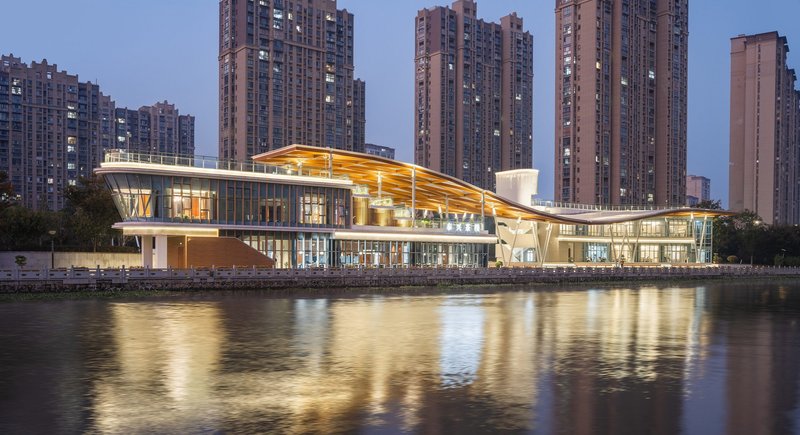
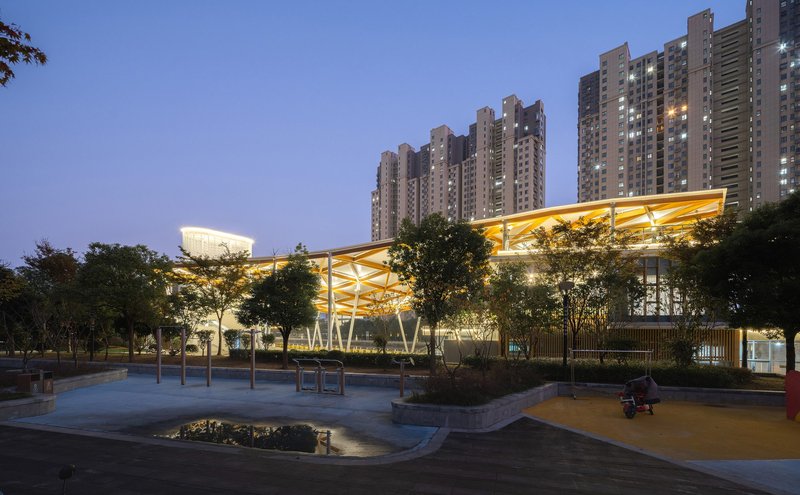
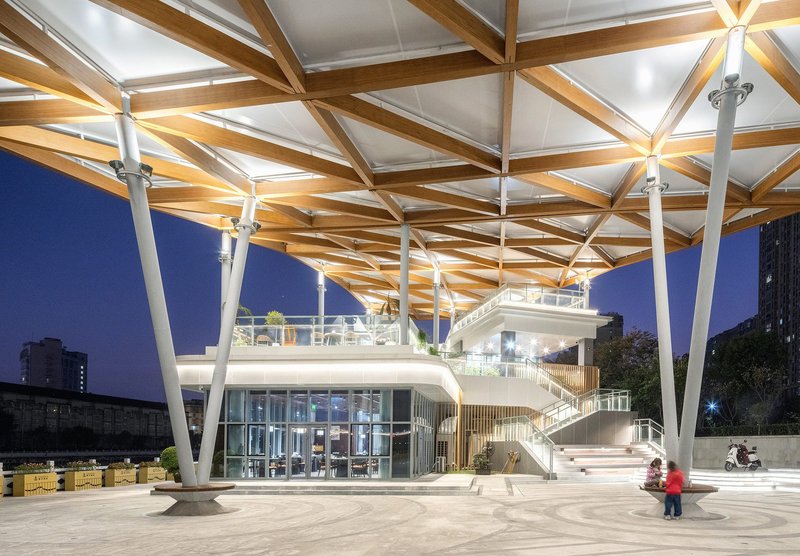
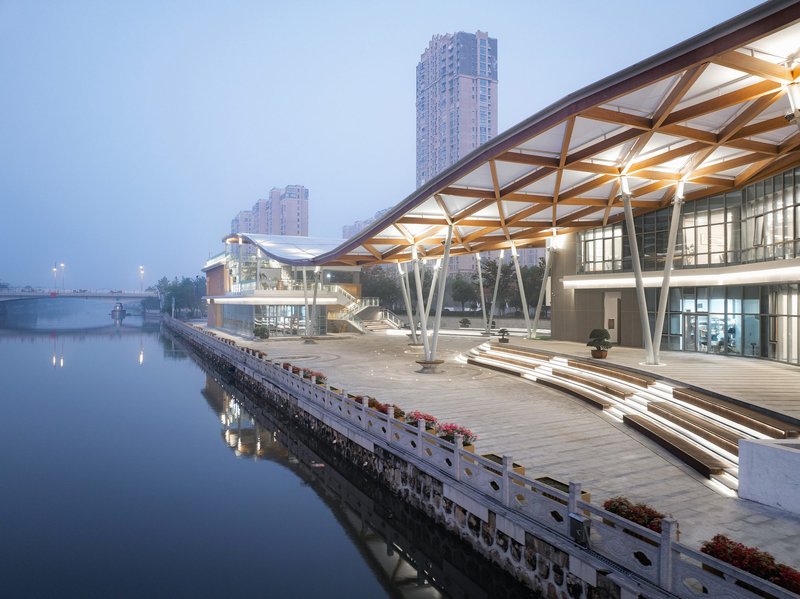
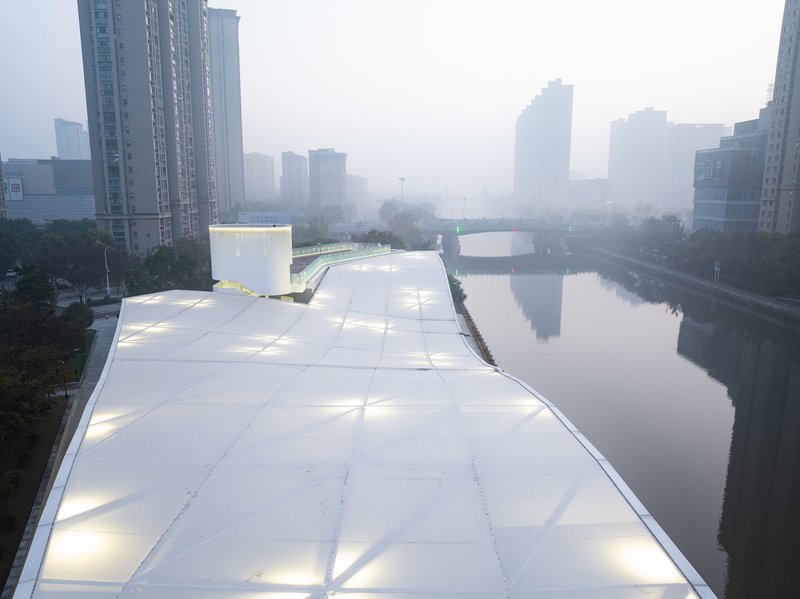
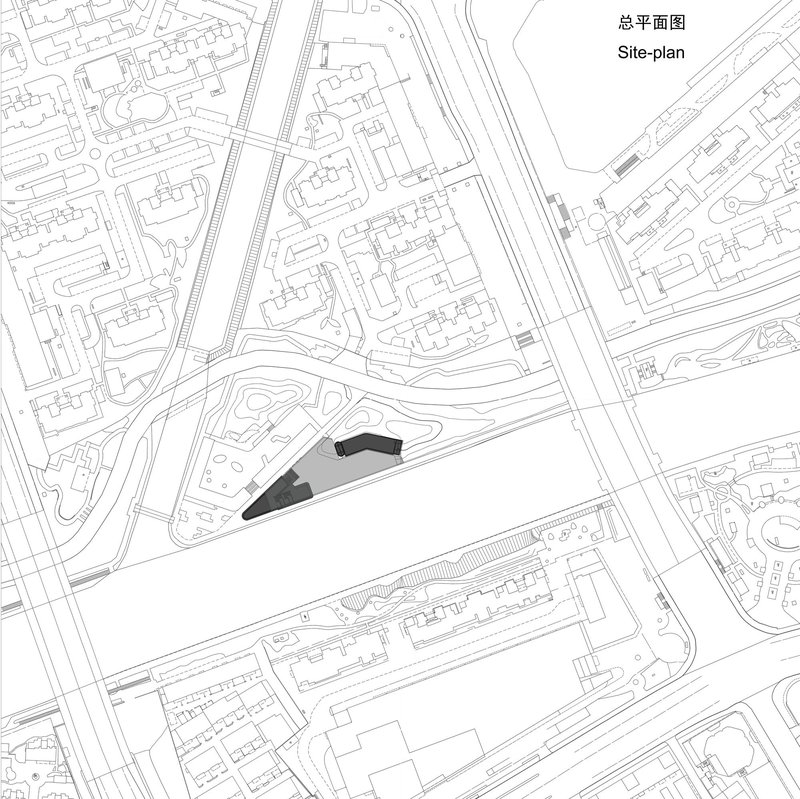
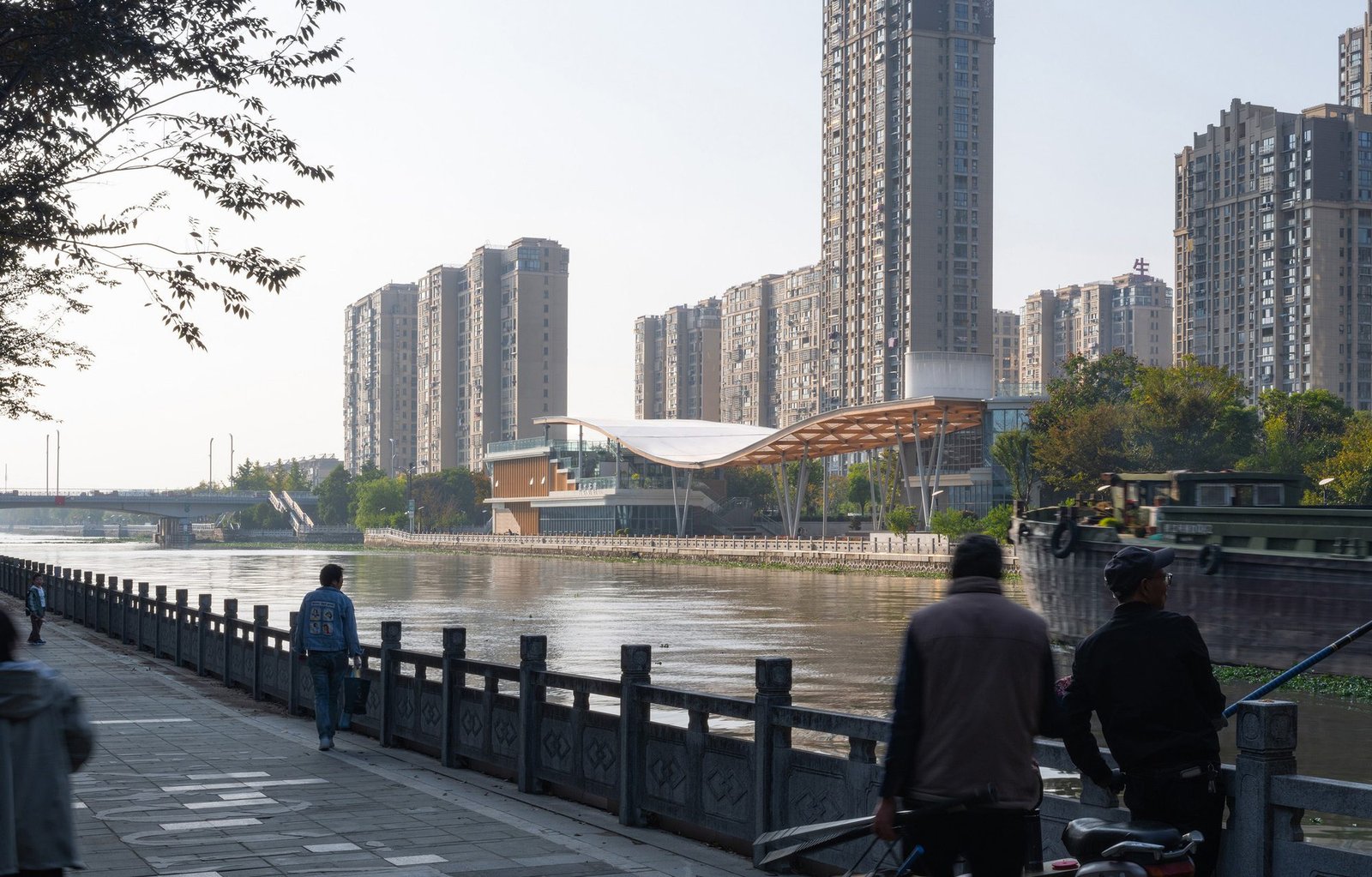
In the northwest, near the old city's northern gate, the Rutai Canal intersects with other waterways, creating a spacious waterfront enclave. This space, once bounded by urban highways and high-rise residences, is now a cherished community oasis. Here, children play in beloved playgrounds, while residents stroll along the canal's edge, drawn by the rhythmic dance of water and light.
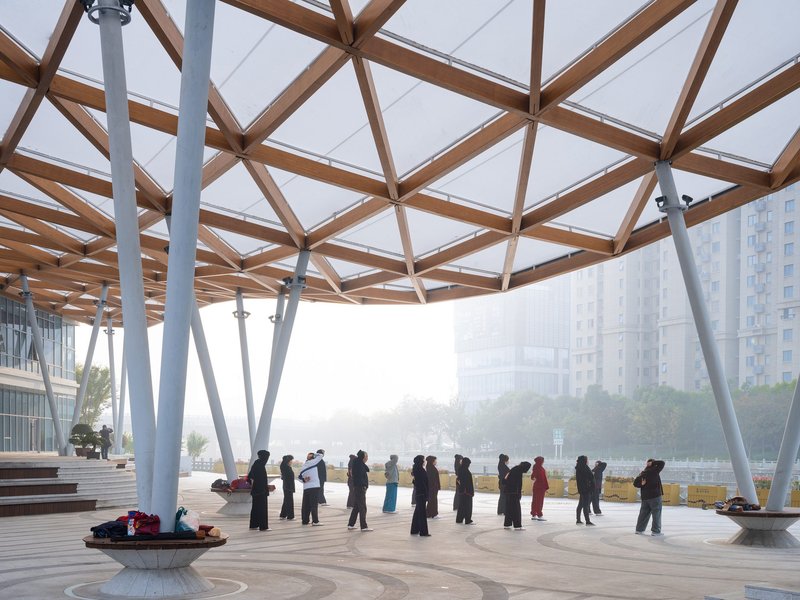
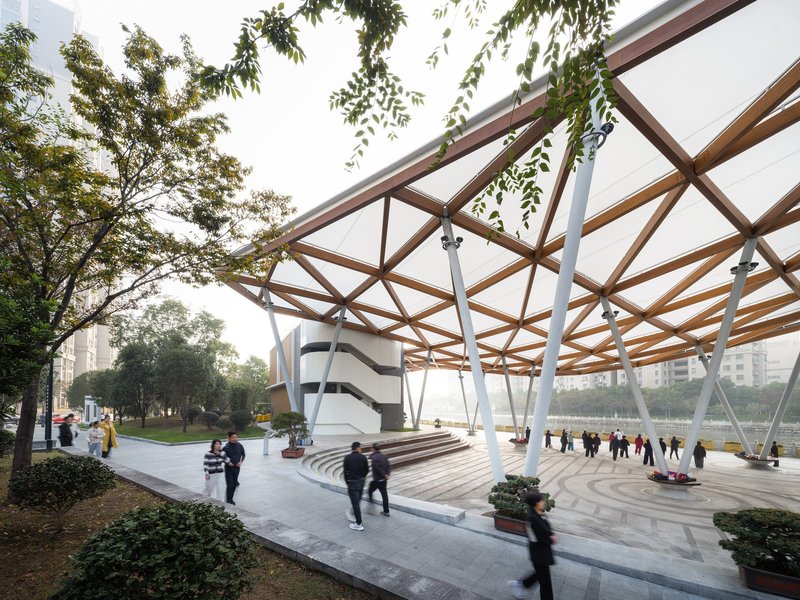
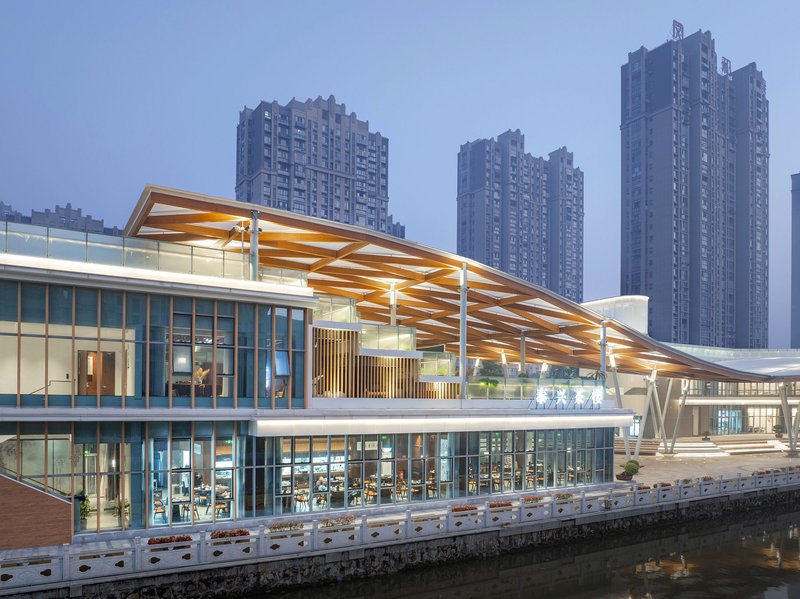
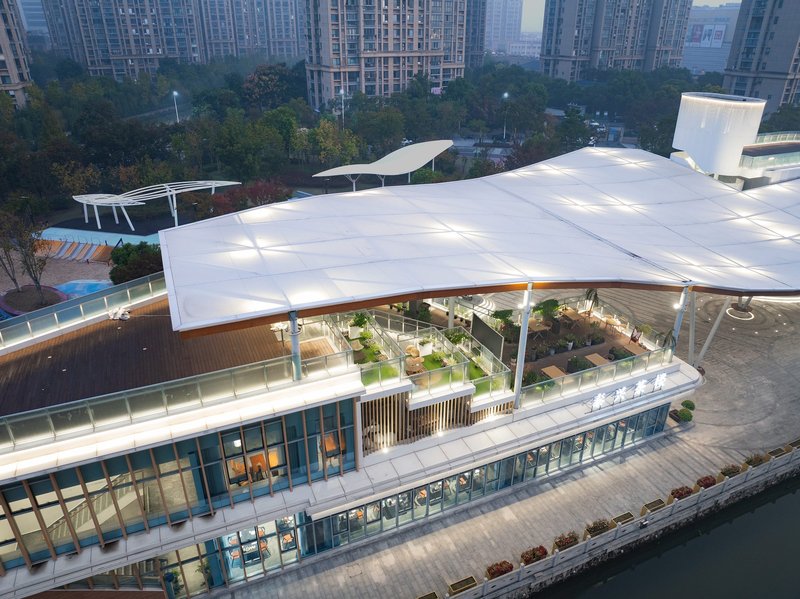
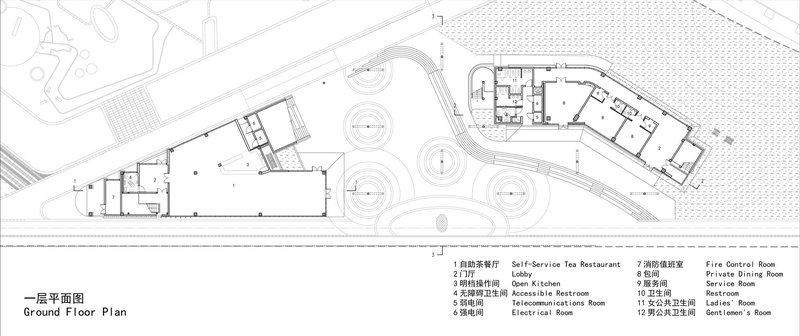
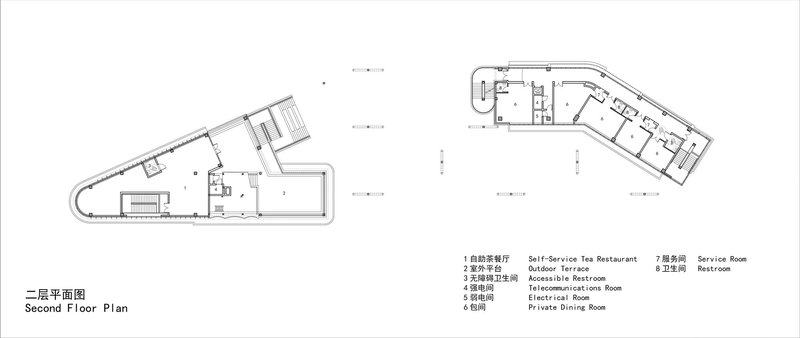
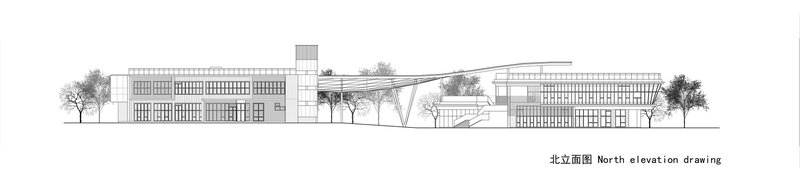
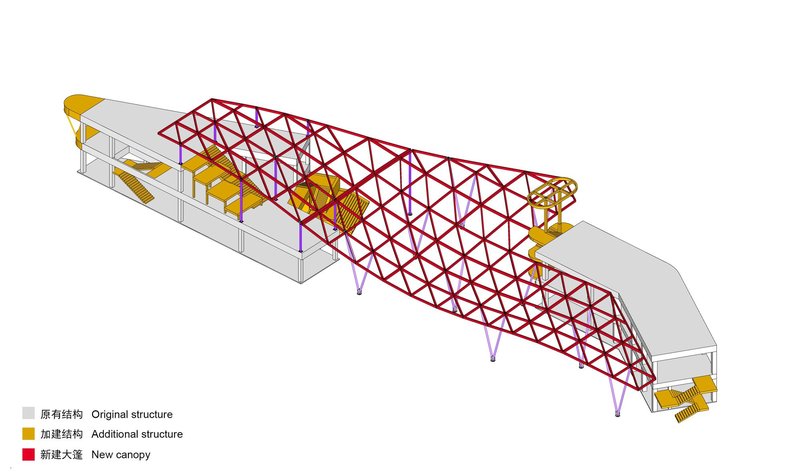
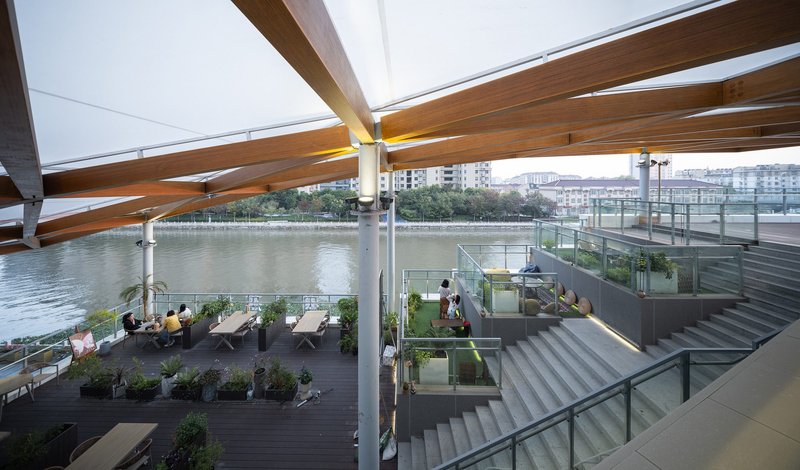
The site housed two independent structures, each with its own architectural rhythm. A V-shaped floor plan graced one, while a zigzag design characterized the other. These buildings, together with the river, envelop a triangular plot, where the new design elegantly navigates elevation changes with stairs and flowerbeds.
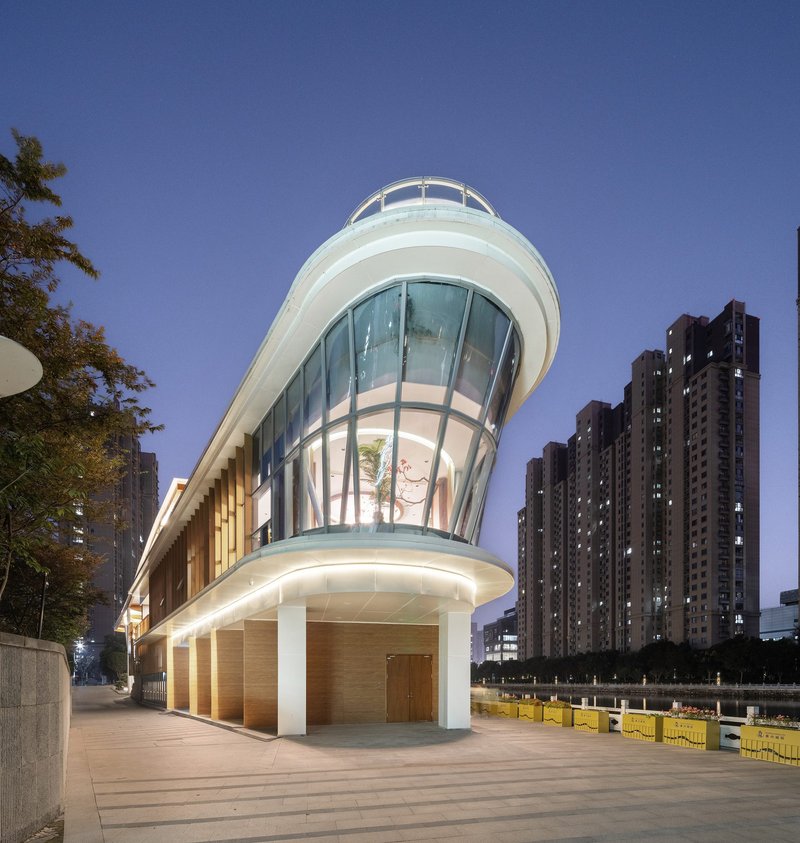
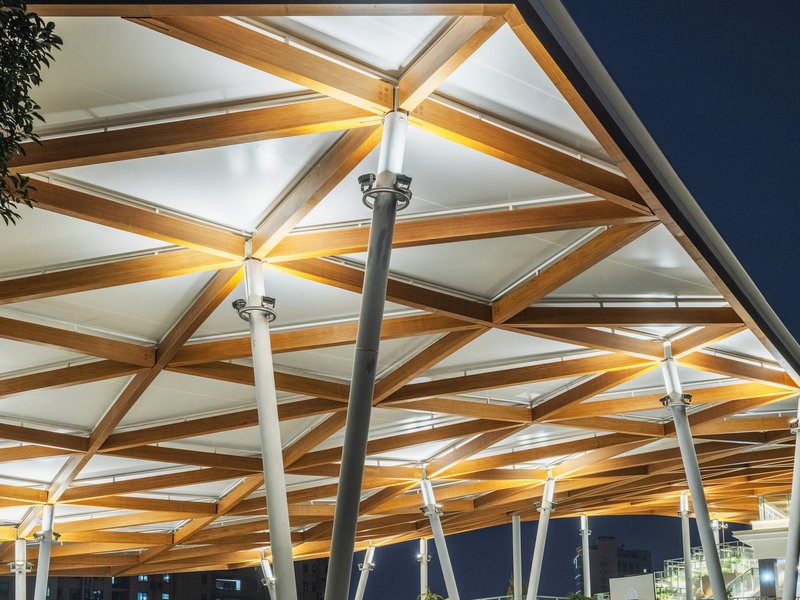
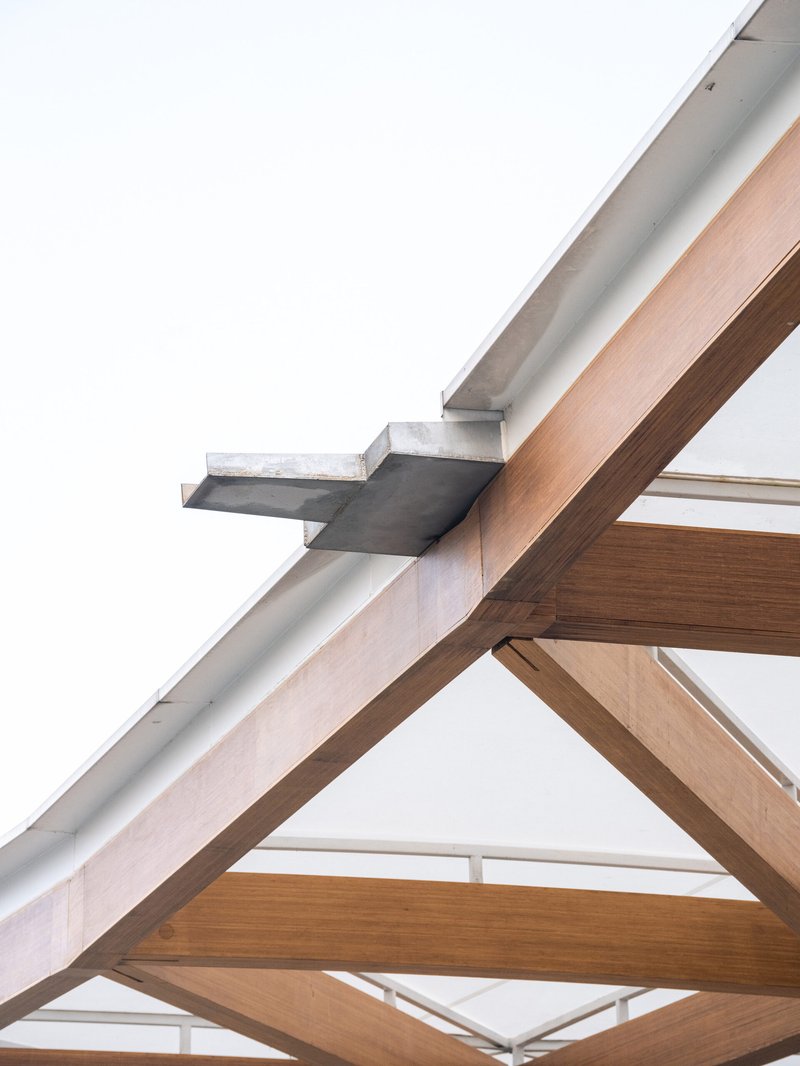
The owner's vision was clear: to endow these dormant urban assets with new operational capabilities. Yet, the task transcended the mere functional, demanding a synthesis of renovation and cultural reverence. The renewal artfully aligns the site's spatial connections with the city, seamlessly integrating functionality into the urban fabric. It extends the lifecycle of the architecture, enhancing adaptability and embracing the site's unique attributes.
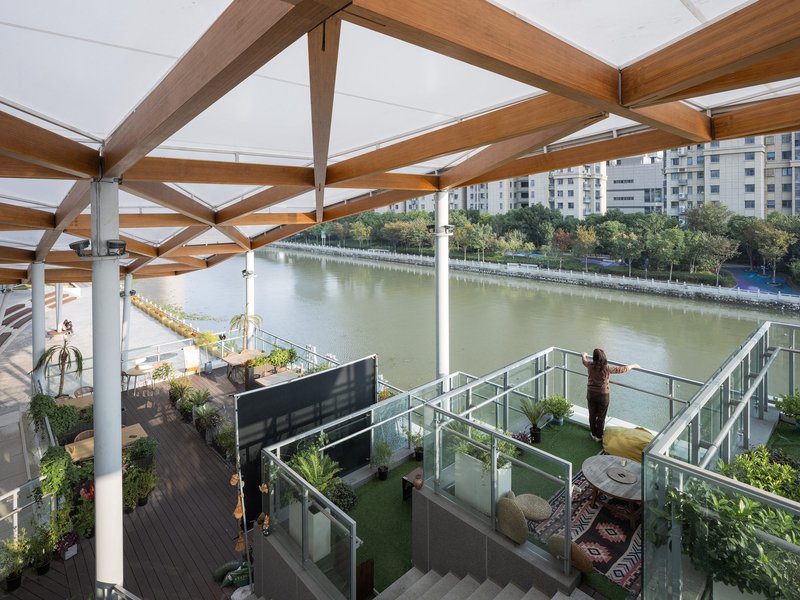
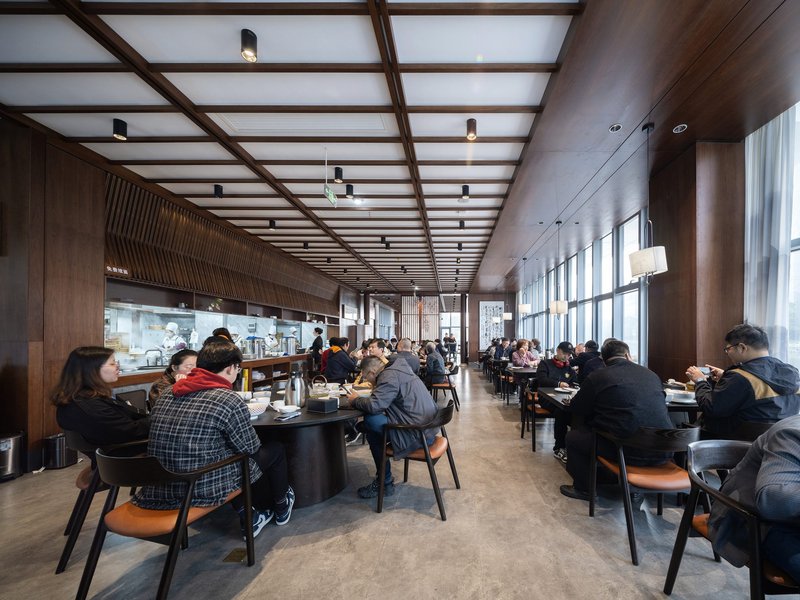
To truly capture the site's essence, one must delve into the cultural and geographical soul of Taixing. Here, water is not just a backdrop, but a cultural emblem woven into the tapestry of daily life. Along the canal, teahouses hum with life, offering fragrant teas and regional delicacies. These are the tastes of memory, the aromas of a city where the simple act of sipping tea becomes a ritual of connection.
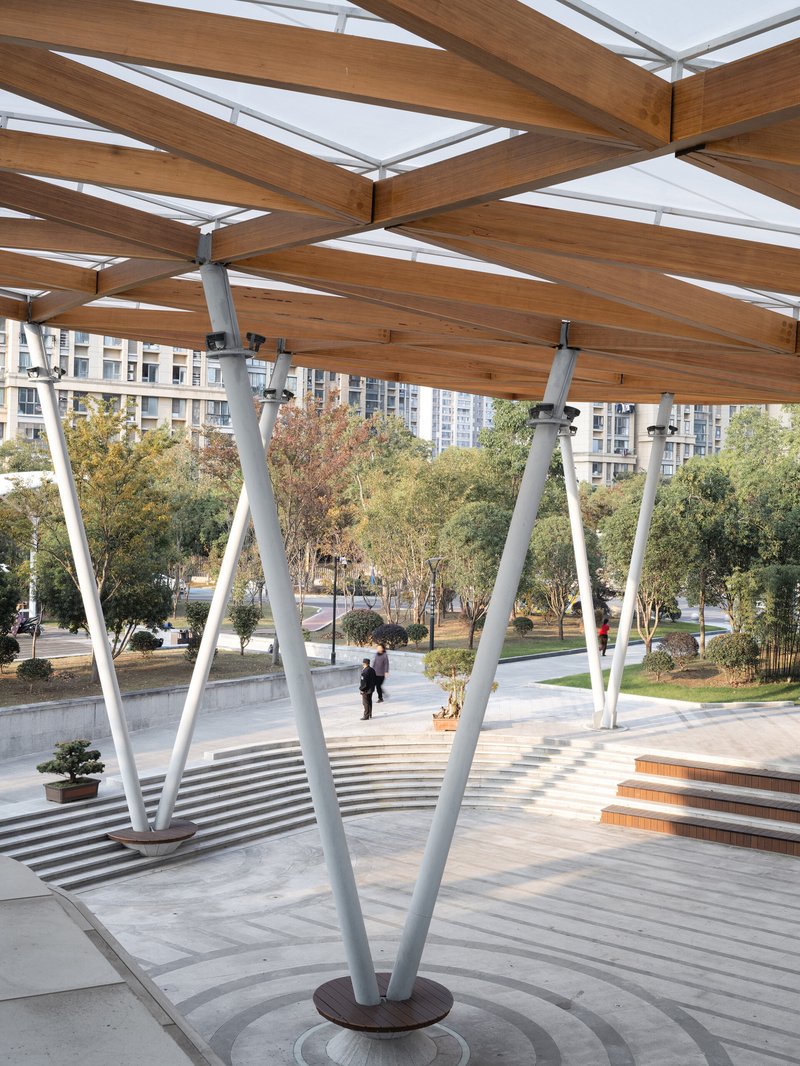
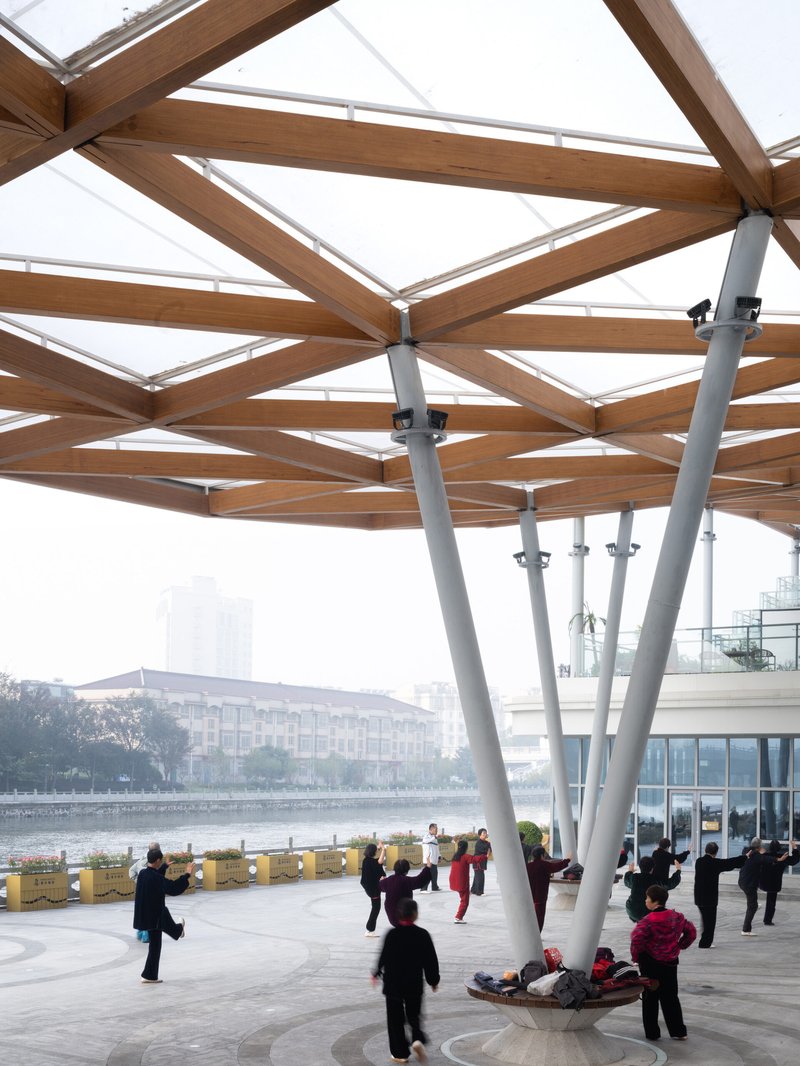
The sounds of life echo along the riverbank: the clatter of washing sticks, the melody of chess pieces under eaves, children counting passing sandboats. Morning joggers cast shadows on the shimmering water, while elderly couples pause to reminisce, bridging past and present. This vibrant tableau is the heartbeat of Taixing's waterfront, a place where architecture honors the past while embracing the future.
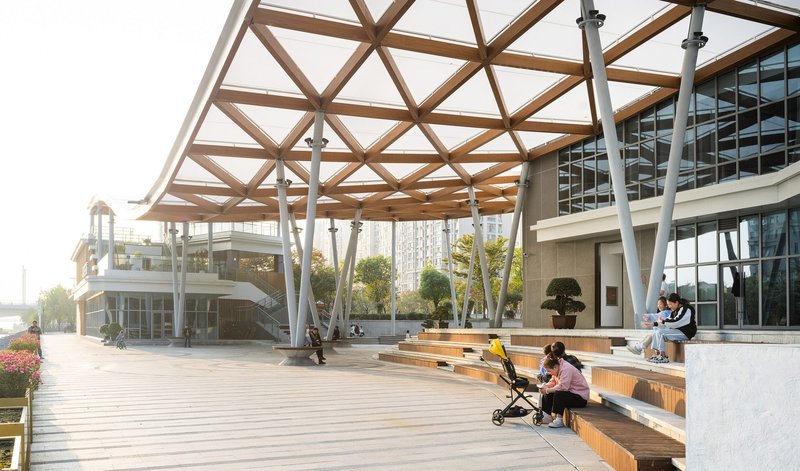
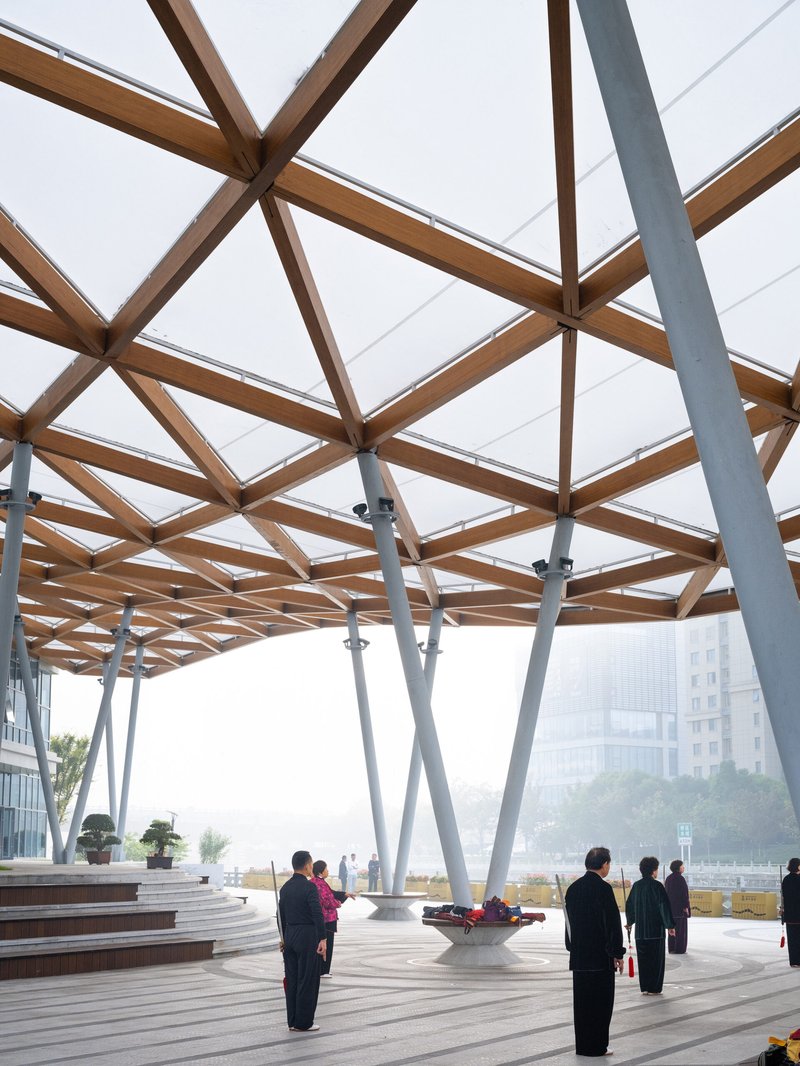
The renovation of this site aims to preserve this vibrant atmosphere, offering a sanctuary for gathering and reflection. By catering to the diverse needs of its citizens, the architecture's potential is unlocked, becoming a beacon of community and culture. As Taixing's riverside transforms, it is a reminder that architecture, like water, shapes and is shaped by the currents of time and human experience.