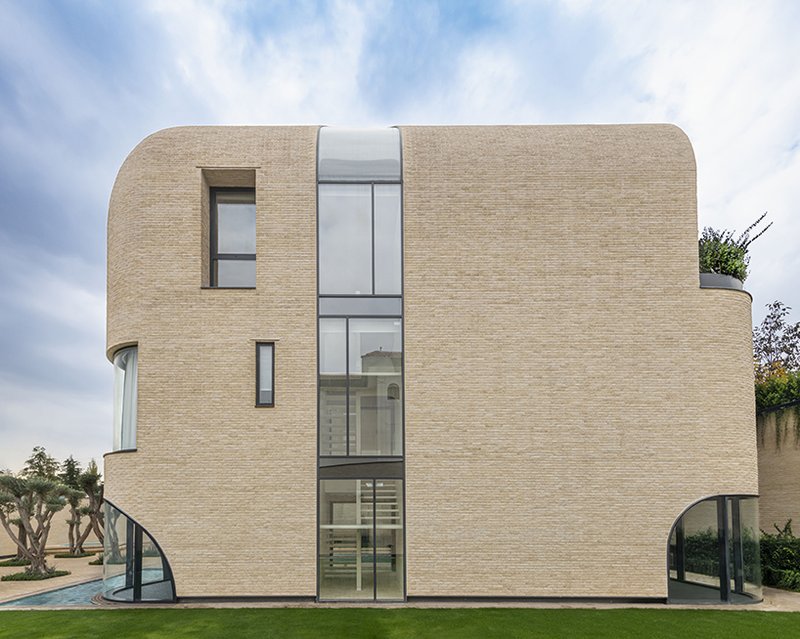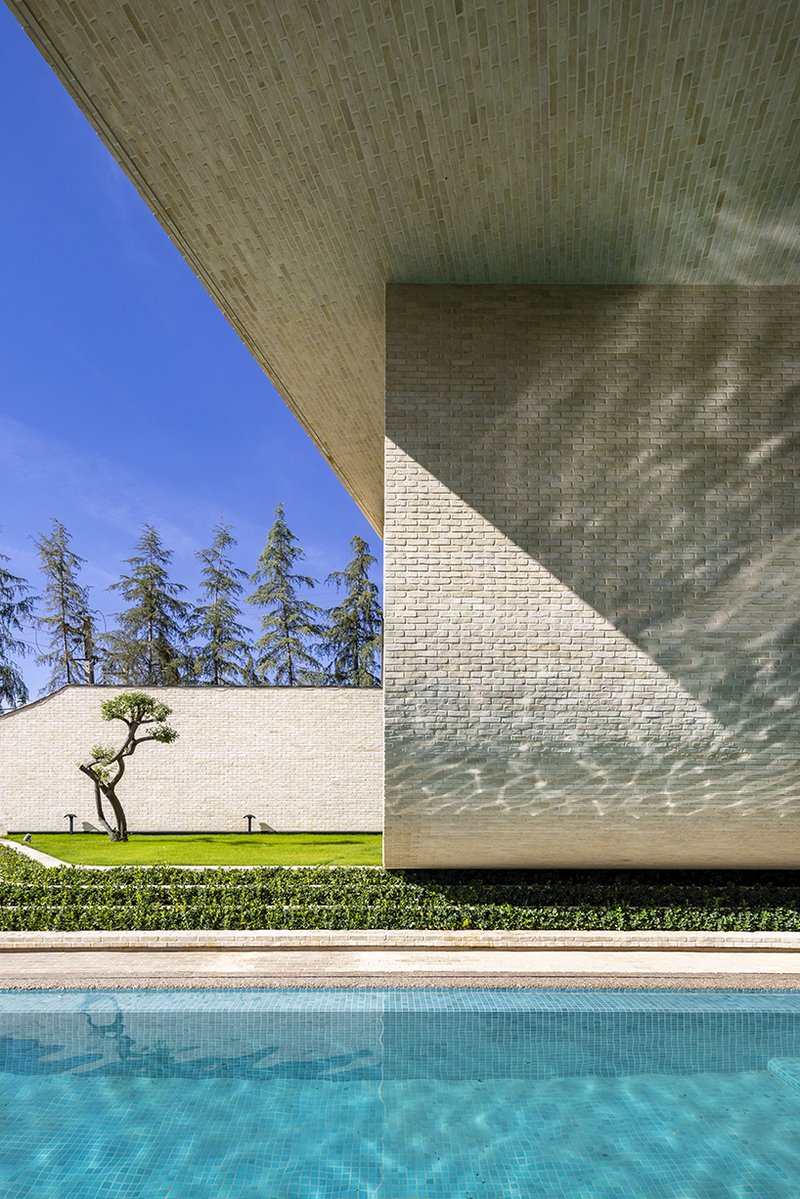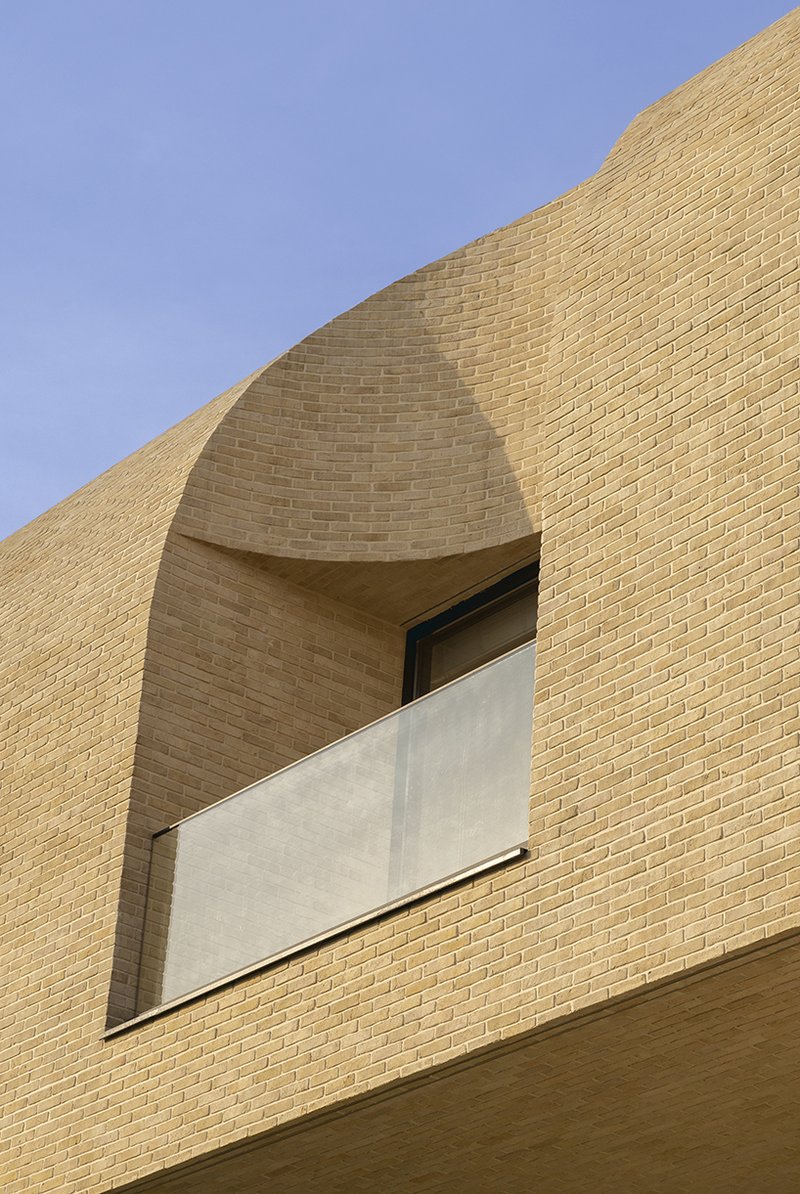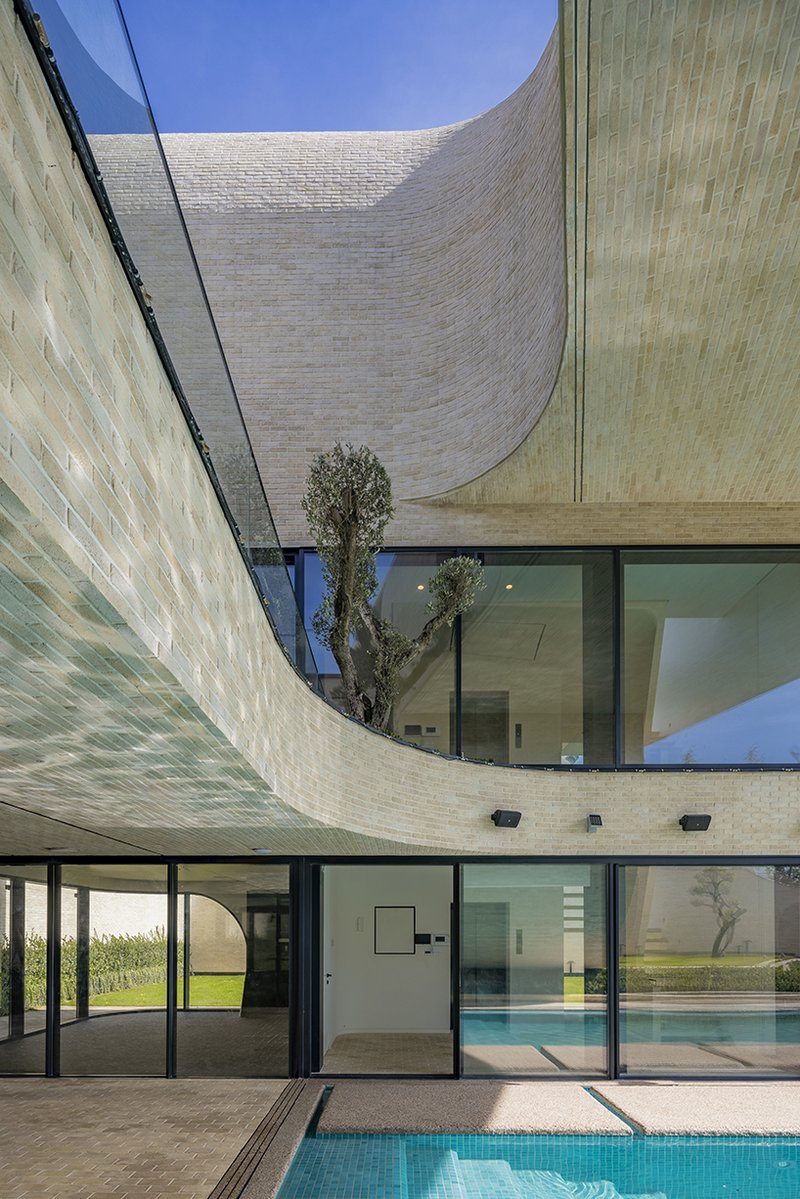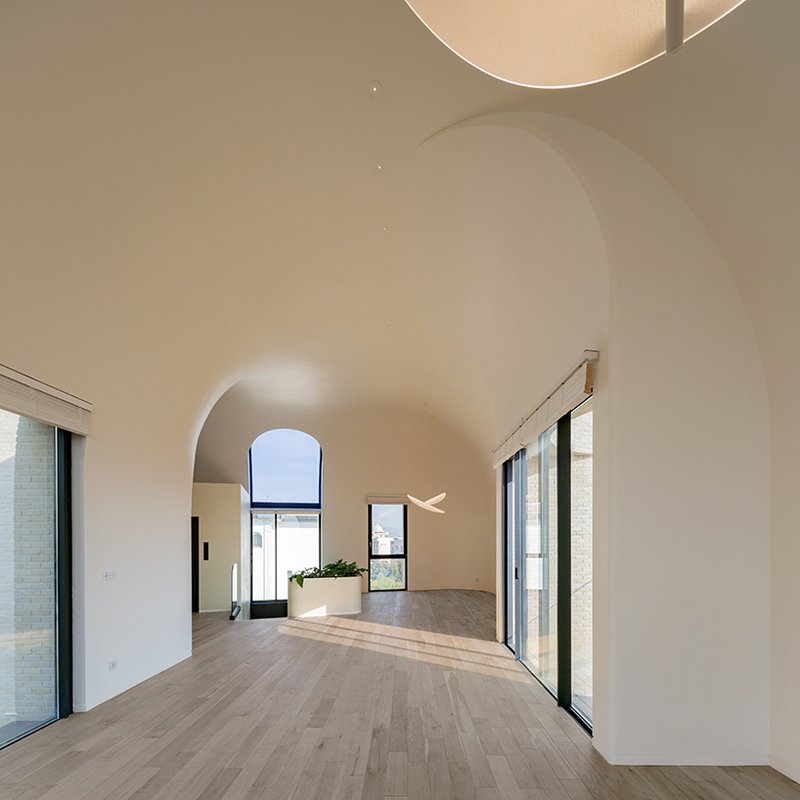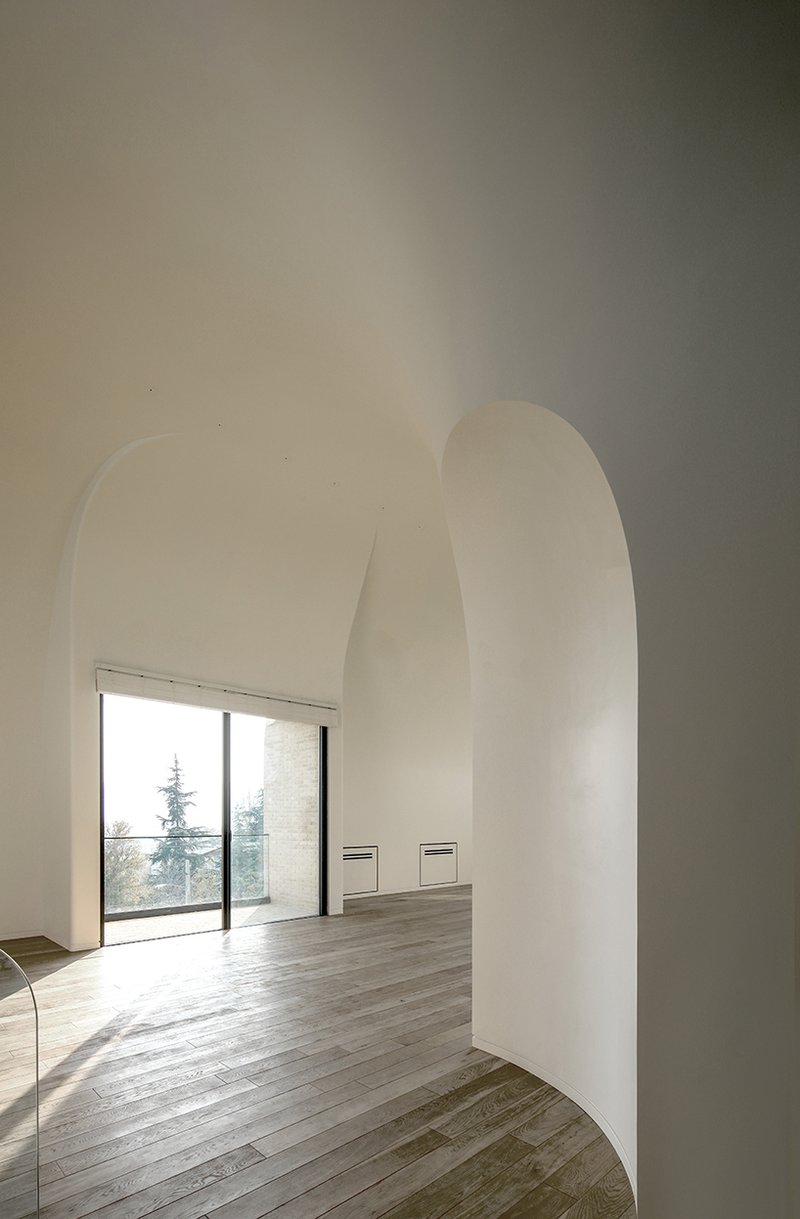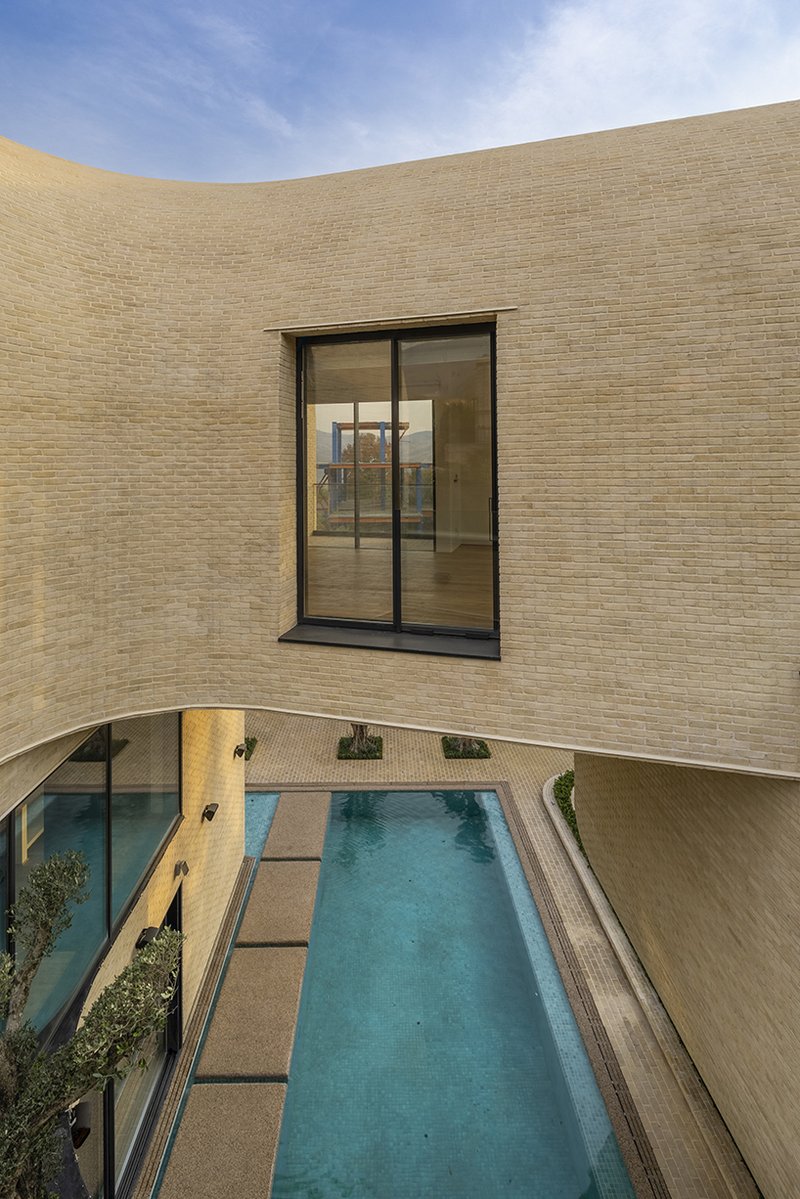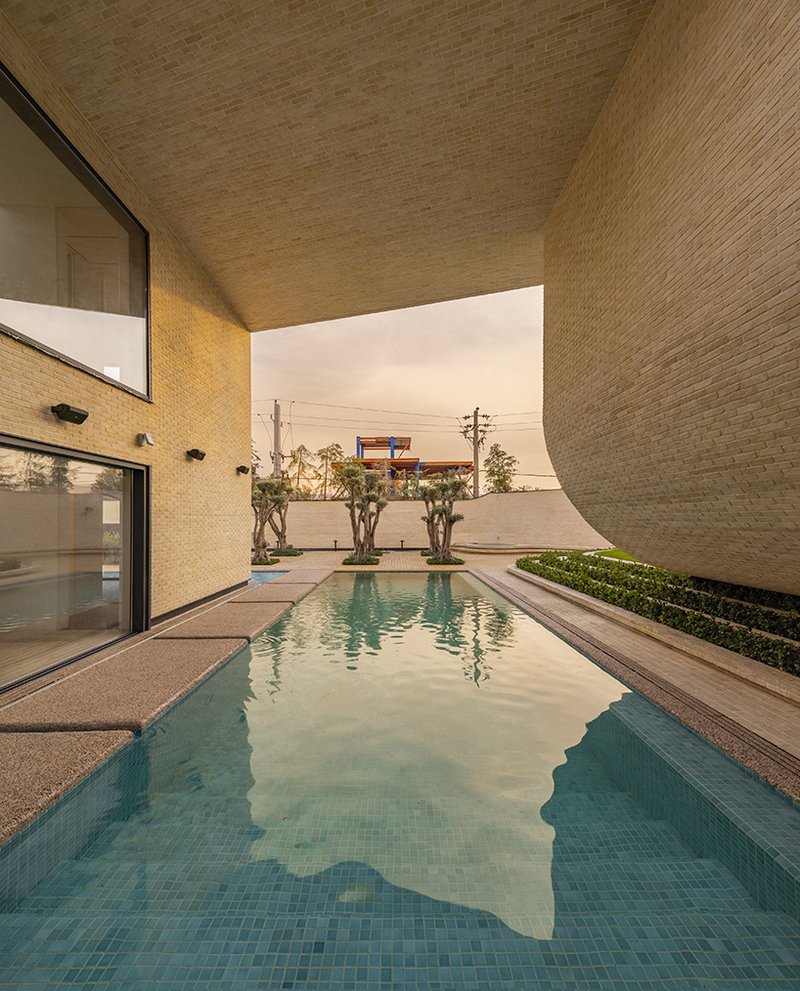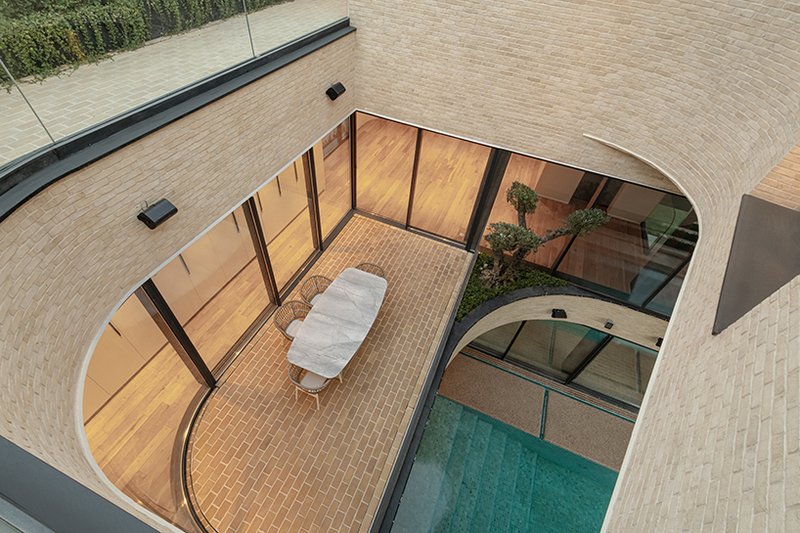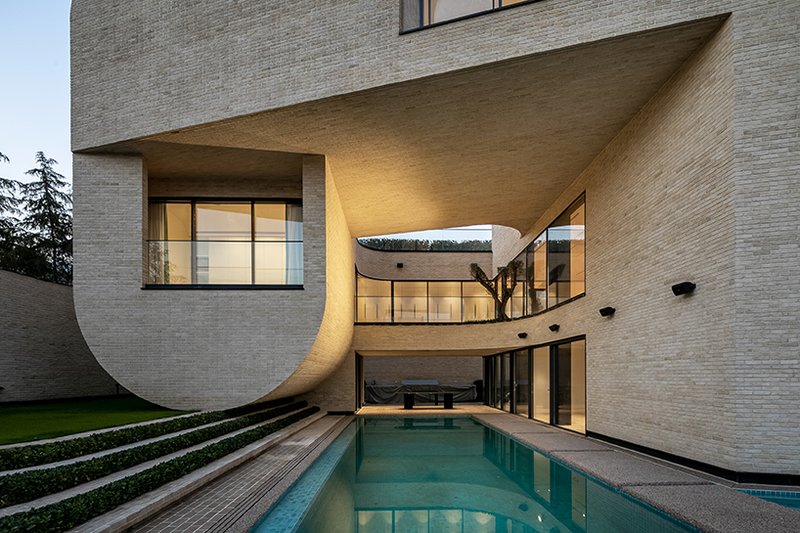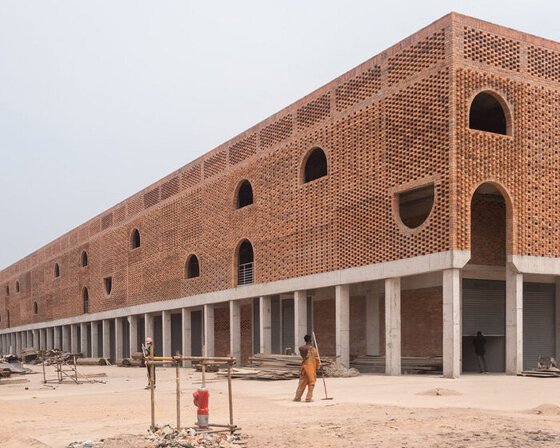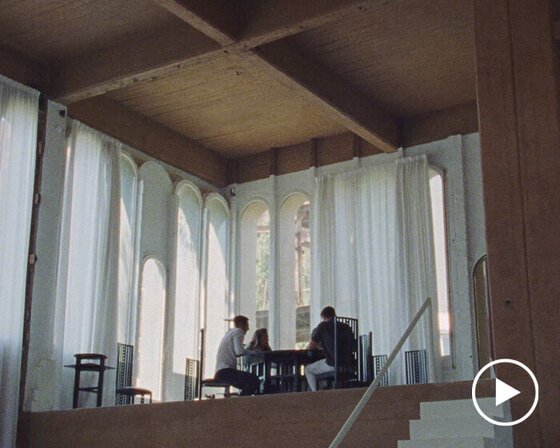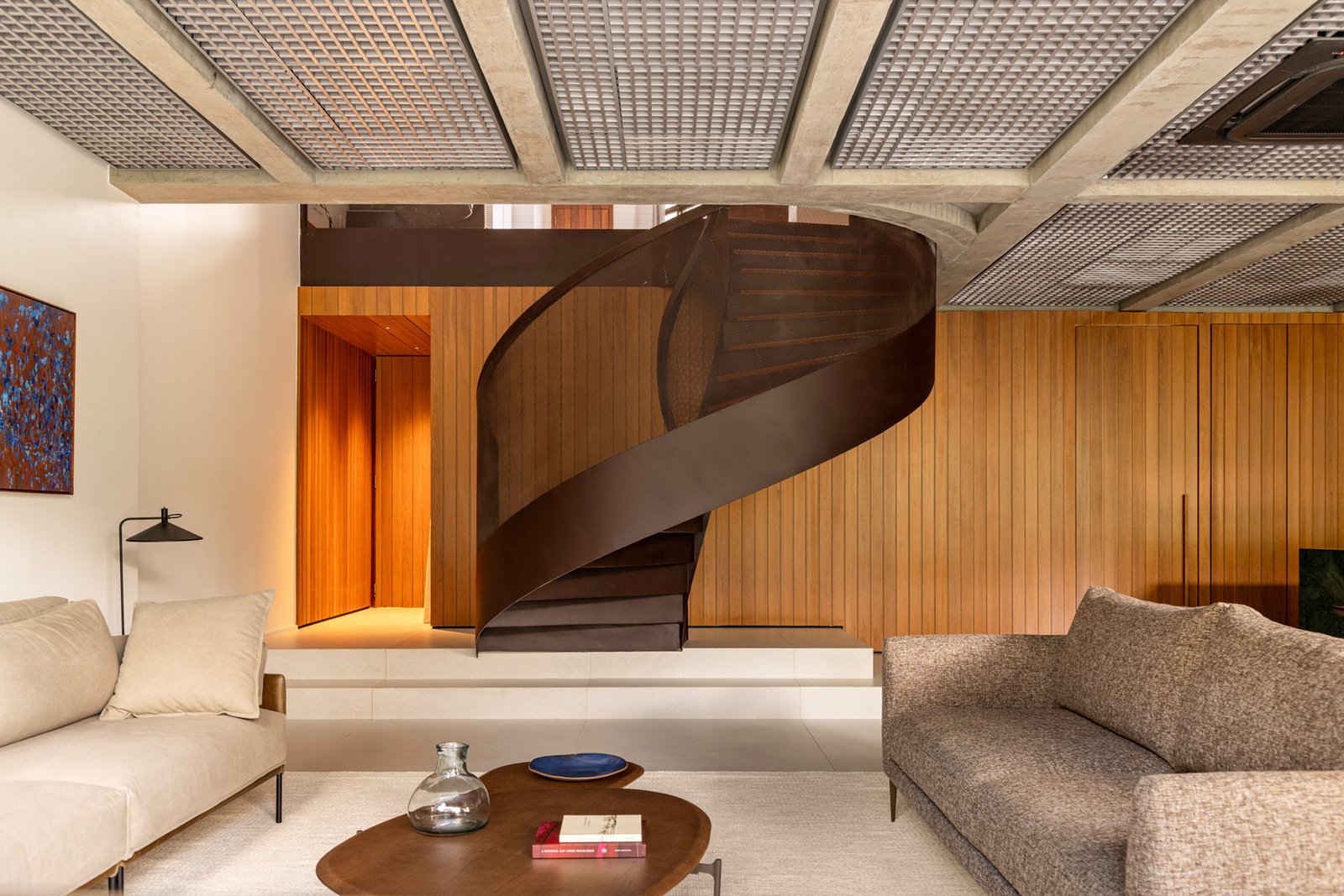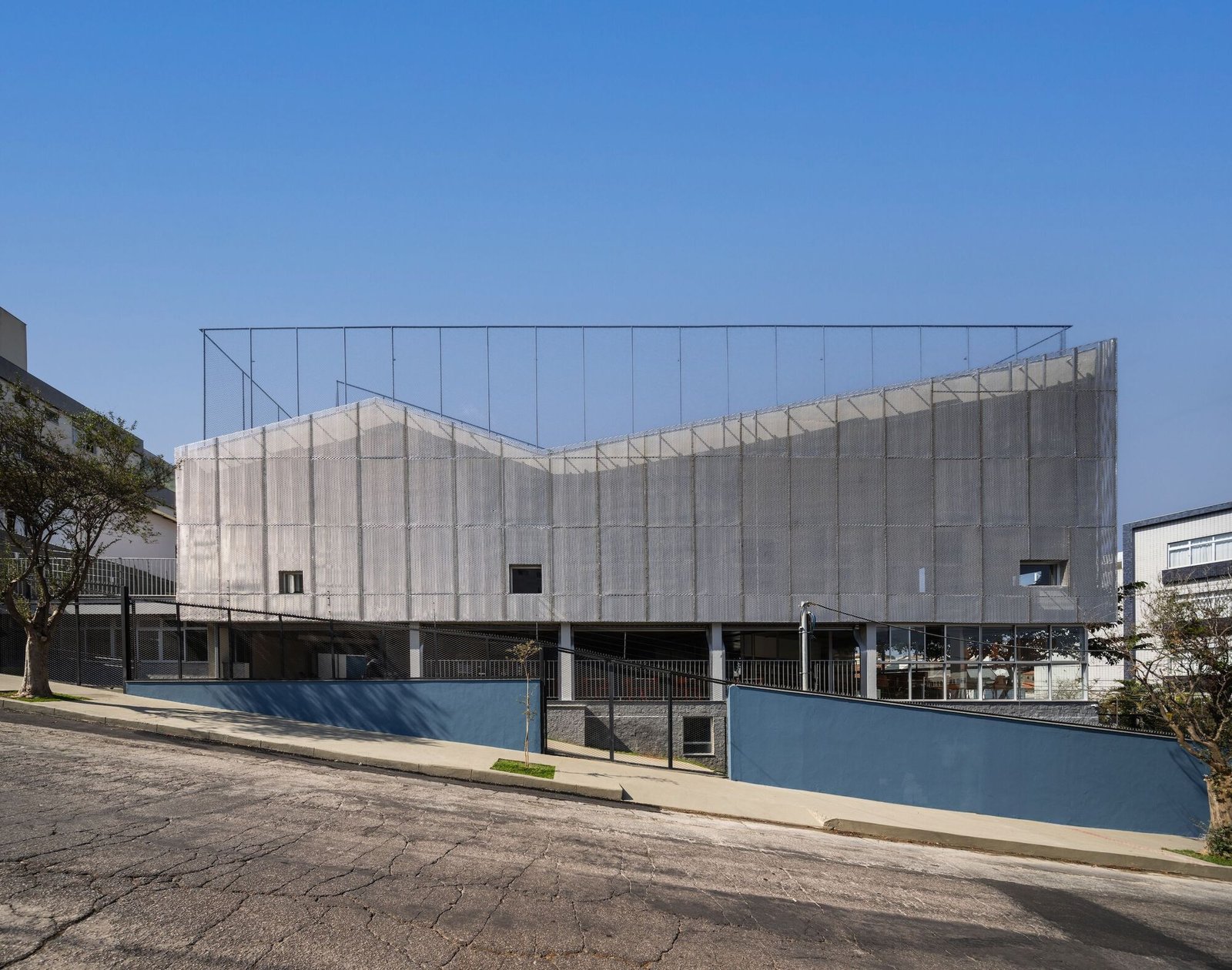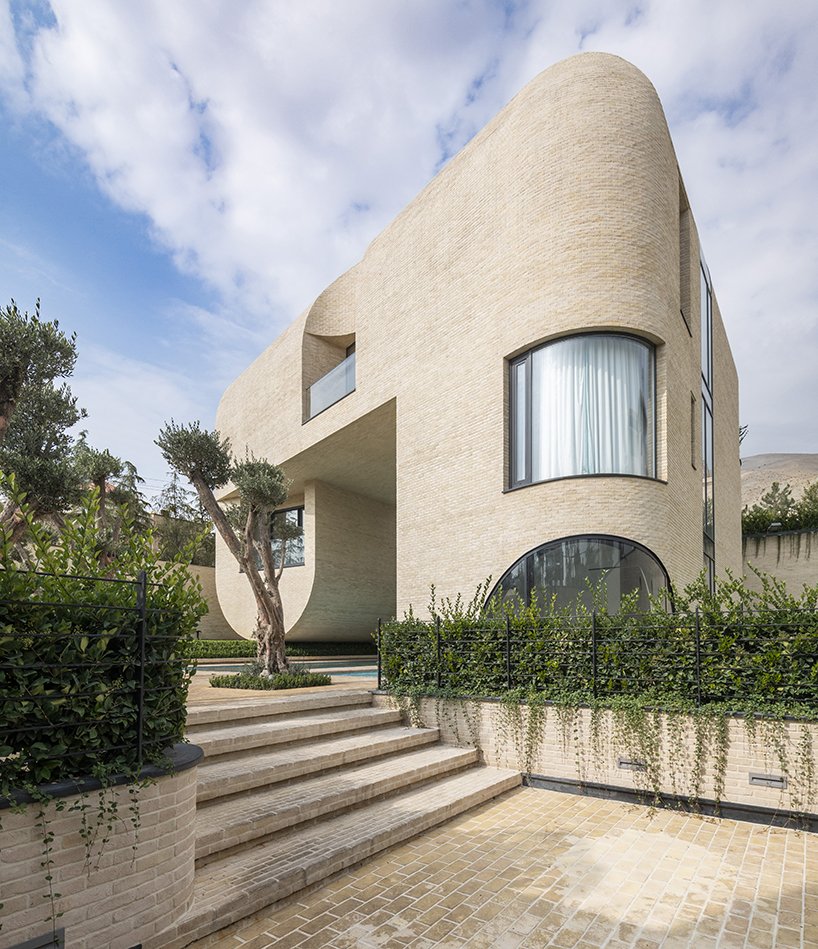
The Central Courtyard villa by NextOffice in Lavasan, Iran, follows a tunnel/bar structure that features a continuous arrangement of stacked arches. The result is an intricate residential building with a three-dimensional central courtyard. This project is a contemporary reinterpretation of one of the most enduring elements of Iranian architecture, placing a three-dimensional courtyard at its heart to address climate, privacy, and daily life in a single architectural gesture. NextOffice rethinks the traditional inward-looking courtyard typology, stretching it across the entire footprint of the residence and transforming it into a porous spatial system that organizes light, movement, and social interaction. This courtyard offers varying degrees of permeability, evident in the floor (through the pool), the walls (open to opposing views), and toward the sky. Two L-shaped elements, both in plan and section, intersect to form an opening at the core of the mass. Unlike its predecessors, this three-dimensional central courtyard is connected with the outside at various levels, and through different configurations, it generates varying degrees of enclosure, privacy, and layers within the space. The project reinterprets one of the most enduring elements of Iranian architecture. In historic Iranian homes, the central courtyard mediates between extreme environmental conditions and deeply rooted cultural expectations. It moderates intense heat and glare while creating a protected inner world, clearly separating private life from the public realm. The Central Courtyard Villa preserves these essential qualities but refuses to treat them as fixed relics. Instead, the studio opens the courtyard outward and upward, allowing its influence to flow through every level of the building. The project pushes the idea of the courtyard beyond its conventional boundaries. Rather than a simple open void, it becomes a layered, three-dimensional space generated by a series of stacked tunnels and ribbon-like volumes connected by continuous arches. This structural stacking produces a network of terraces, voids, and framed openings that blur the line between inside and outside. The result is a house that oscillates between introversion and extraversion, offering residents a constantly shifting spectrum of spatial experiences. Permeability shapes the entire composition. On the ground level, a pool punctures the floor plane and introduces water as both climate moderator and sensory element. Facades on opposite sides open generously toward the courtyard, while the ceiling dissolves to the sky above. These gestures create an architecture that feels soft and negotiable, where enclosed rooms and semi-open spaces feed off one another and remain in continuous dialogue. The tectonic logic of the villa reflects this hybrid character. A conventional beam-and-column system works alongside this spatial fluidity.