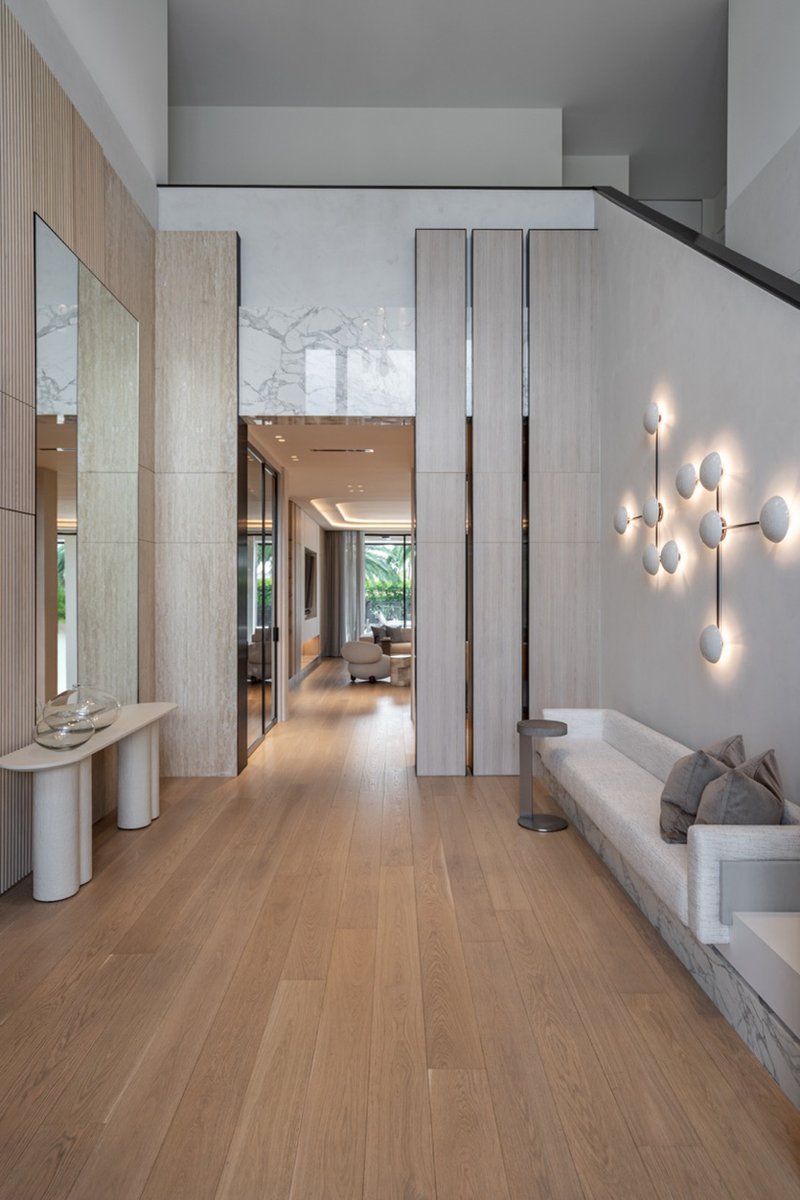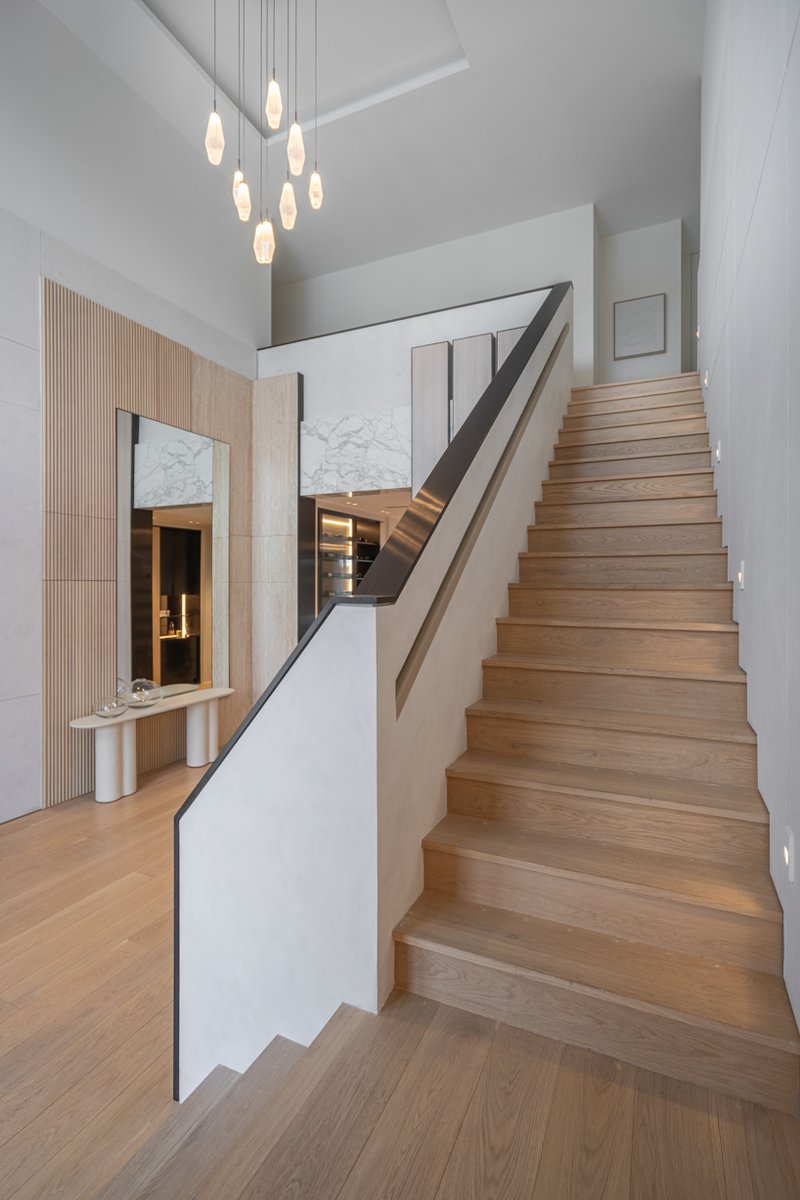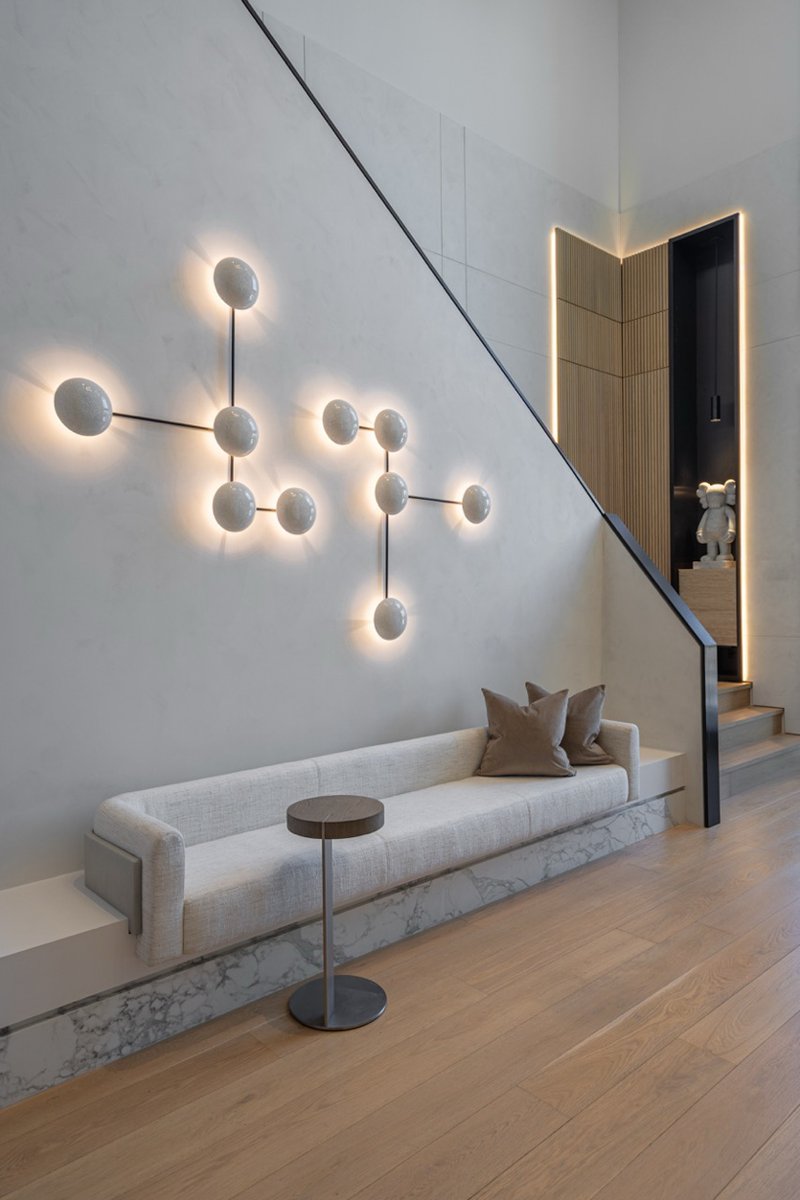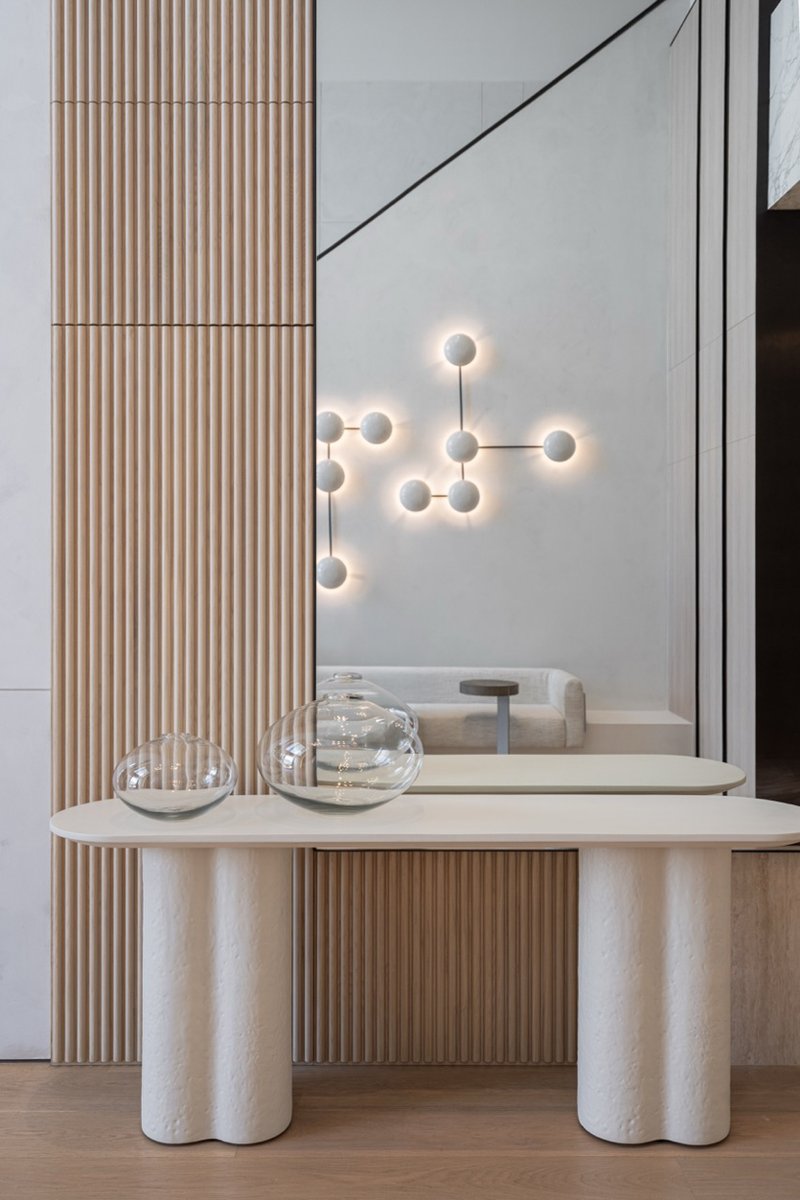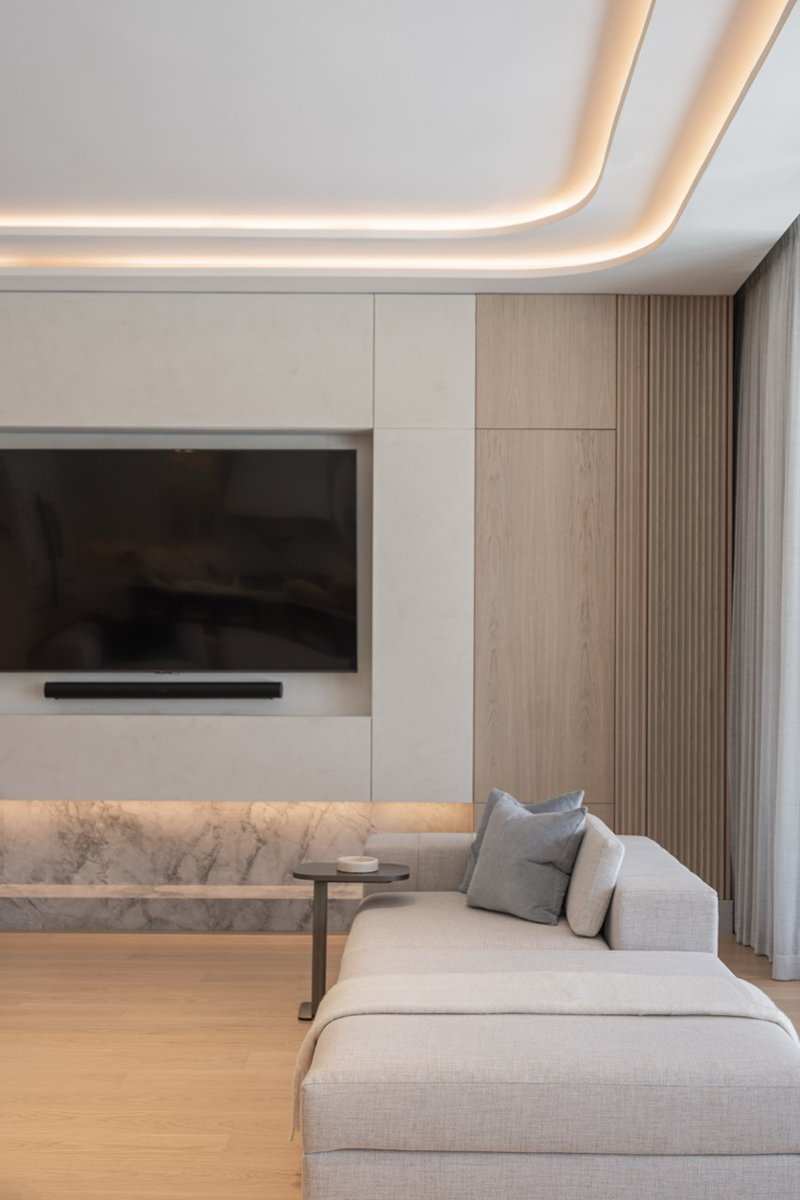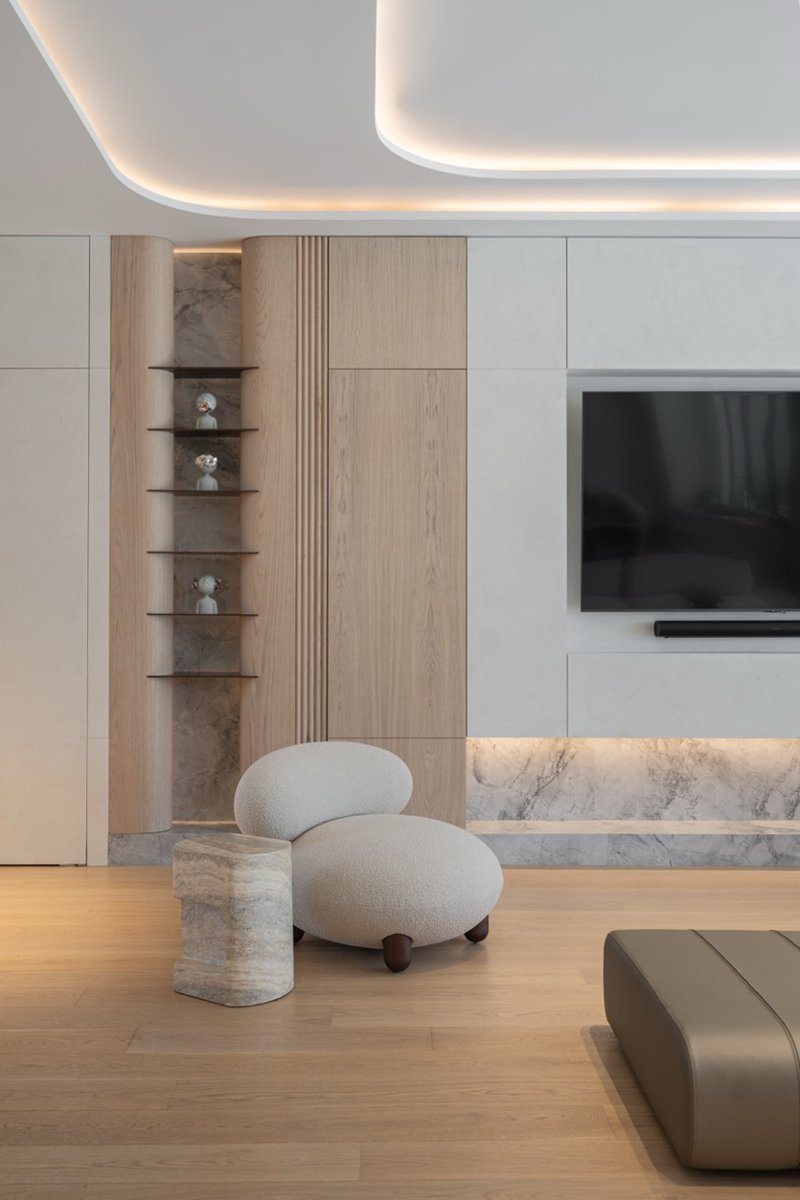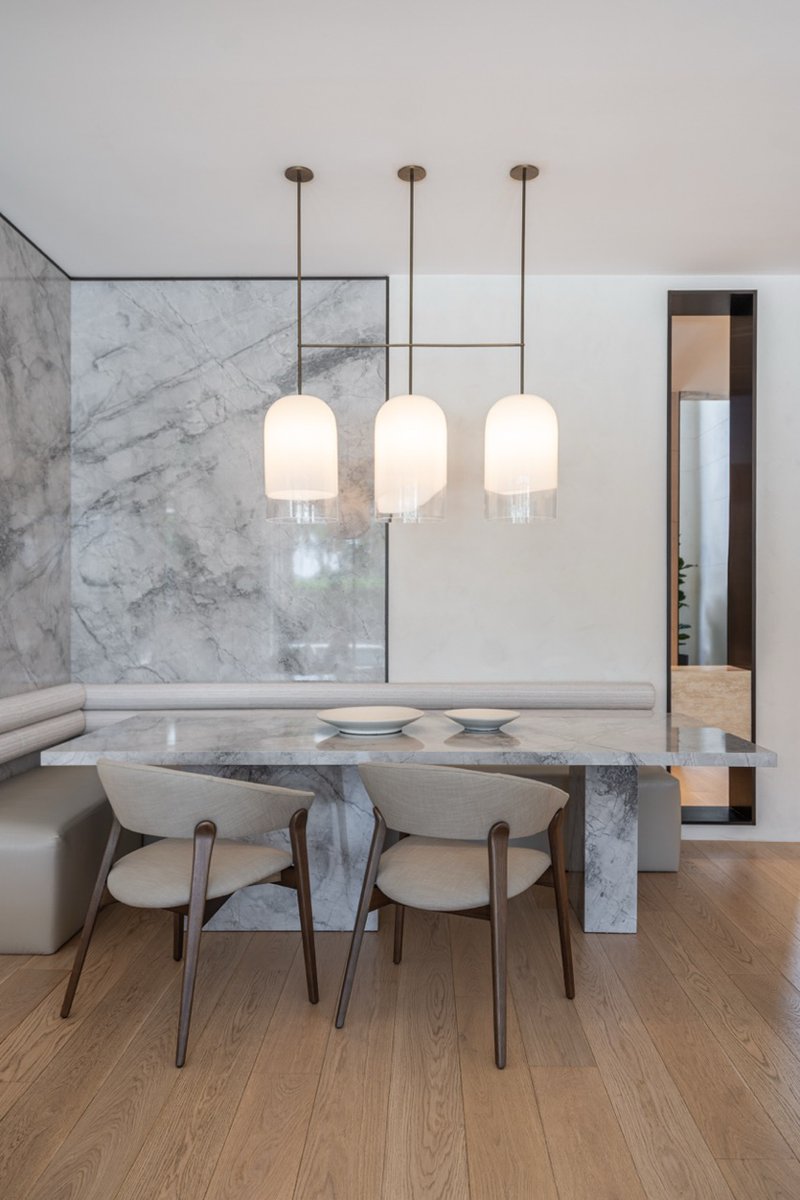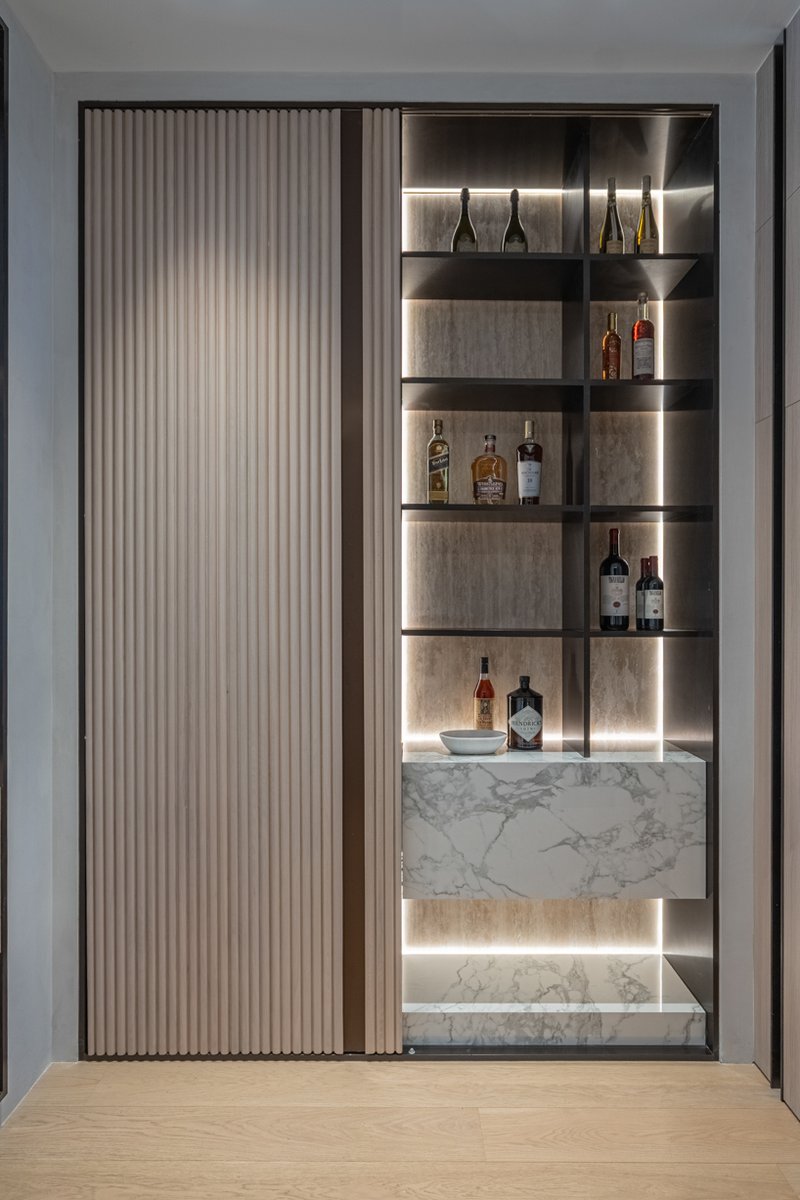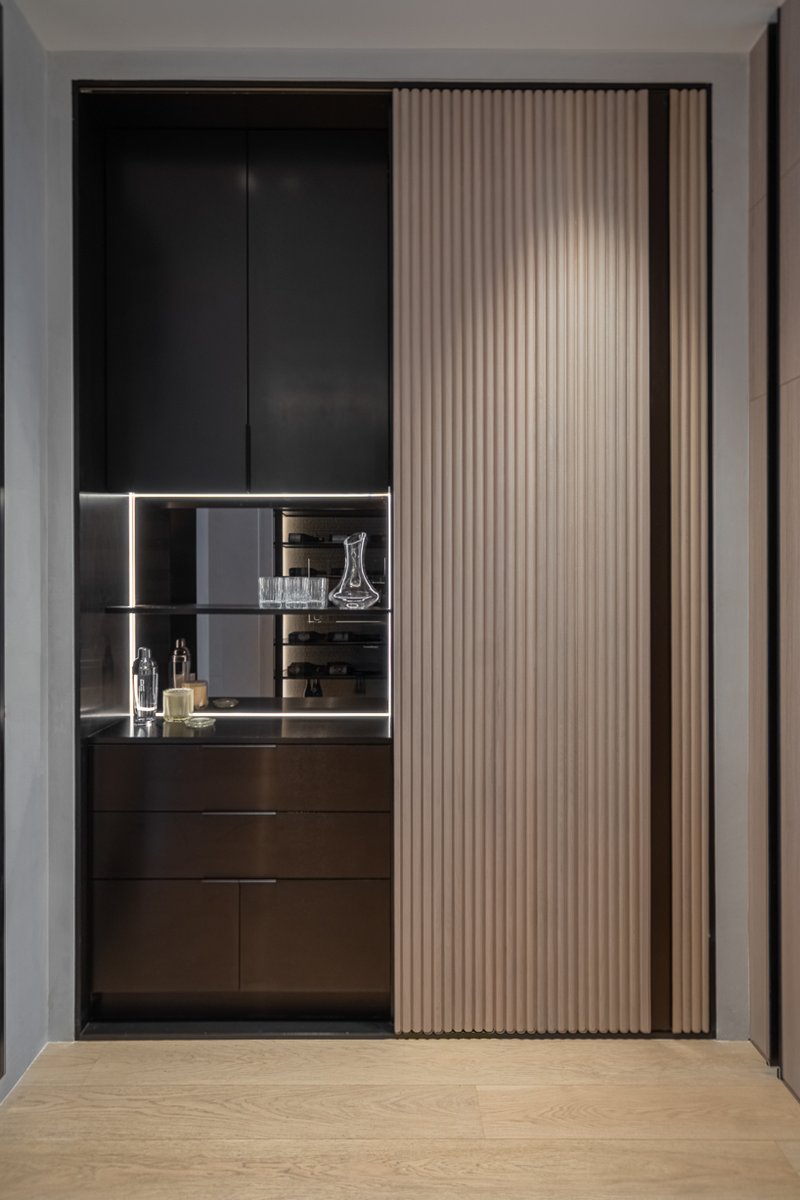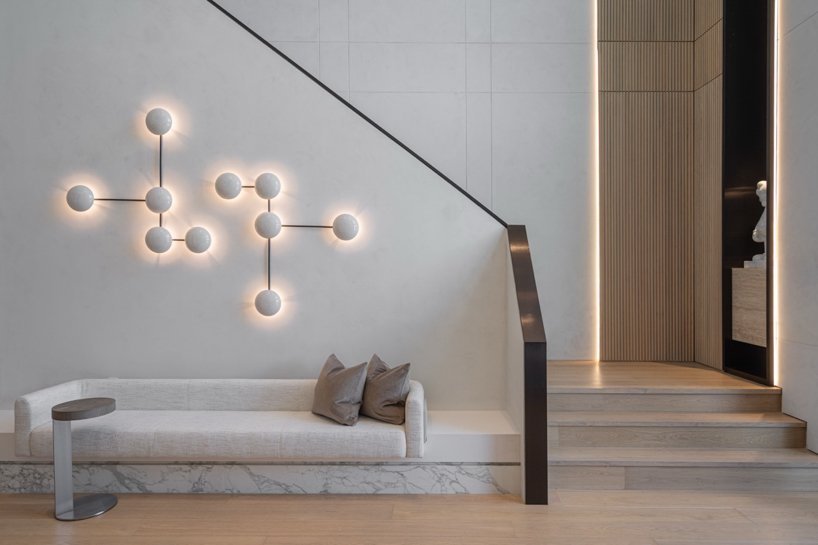
A contemporary residence in Fort Lauderdale, Florida, has undergone an interior renovation led by Sandra Britt Interiors, emphasizing architectural planning, material consistency, and sustainable specification. The project focuses on key public areas of the home, utilizing spatial organization and built-in elements to establish a cohesive interior framework rather than relying on decorative intervention. Completed in 2025, the renovation encompasses the foyer and staircase, living and dining spaces, integrated millwork, and a dedicated wine and liquor display. The design approach prioritizes circulation, proportion, and clarity of form, allowing architectural elements to structure the interior experience. By concentrating on these core spaces, the project establishes continuity throughout the home while limiting the scope of intervention. The architectural planning of the renovation was developed through close collaboration between Senior Interior Designer Sabina Kunitsyna and Principal Brittnie Giles of Sandra Britt Interiors. A background in architectural training informed the spatial strategy, with attention given to how materials, built-ins, and transitions between spaces contribute to an overall sense of cohesion. Rather than treating each room independently, the renovation was conceived as a connected interior system. Material selection plays a central role in both visual consistency and environmental consideration. Engineered wood flooring by Egger was specified throughout the interior to provide durability and uniformity while offering a more resource-efficient alternative to traditional hardwood. In select areas, large-format sustainable porcelain slabs replace natural stone, reducing material extraction while maintaining surface continuity and visual depth. Custom millwork elements are integrated throughout the project. A concealed liquor display, hidden behind a fluted wood sliding panel, serves as a flexible architectural feature. When opened, illuminated shelving and metal detailing are revealed; when closed, the element aligns seamlessly with the surrounding wall plane. Curved ceiling surfaces with integrated lighting introduce variation within the rectilinear layout, supporting visual continuity while softening spatial transitions. Furniture and lighting selections were made to reinforce the architectural framework. Seating pieces, including the Flock chair by Noom, complement the spatial geometry without dominating the interiors. Lighting elements such as the Moni Triple pendant by Articolo contribute ambient illumination while maintaining a restrained visual presence. Overall, the renovation by Sandra Britt Interiors Studio demonstrates an approach to contemporary residential interiors grounded in architectural planning, controlled material palettes, and long-term usability. Through careful coordination of spatial structure, the renovation invites a sensory experience that reflects a harmonious balance between form and function.